Federal Court: Third-Country Deportations Violate Constitution
Massachusetts judge blocks Trump policy deporting Cubans to countries they weren't born in, ruling it violates due process rights.
5 min read
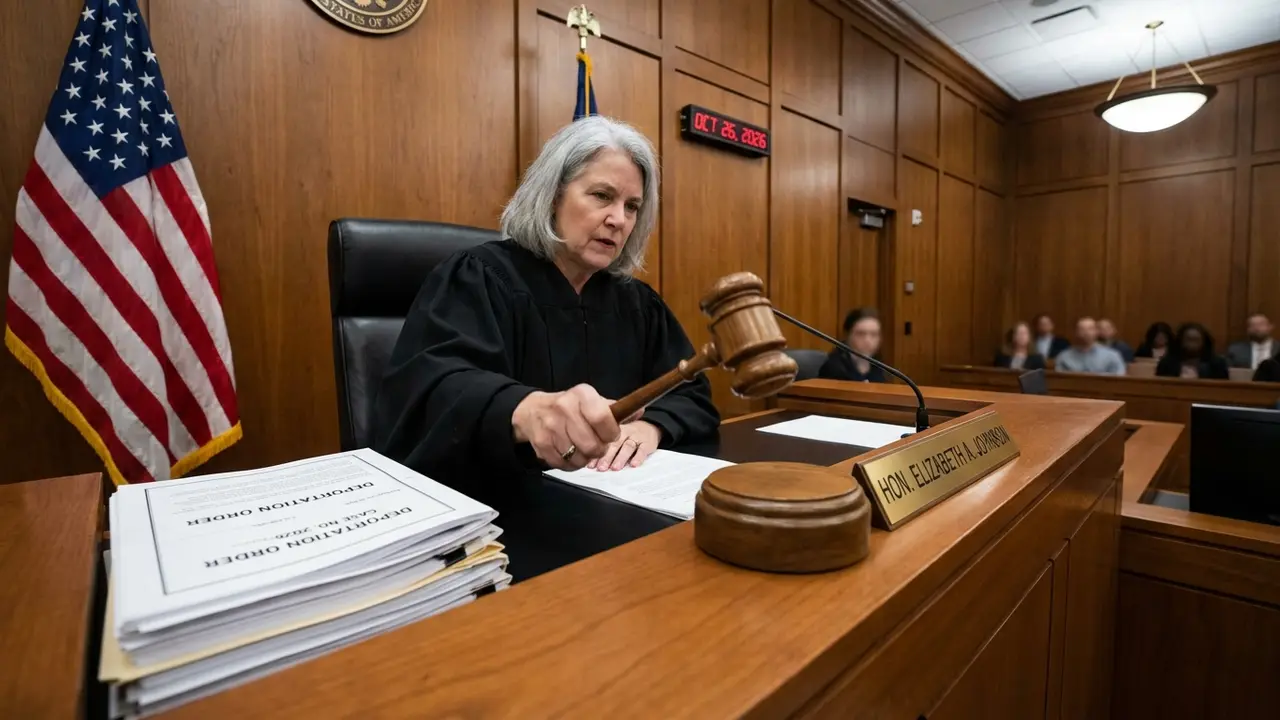
Illustration: Aroma de Cuba (AI)
A federal judge in Massachusetts ruled unconstitutional the Trump administration’s policy allowing deportations of migrants to “third countries” —nations other than their countries of origin— without providing prior notice or opportunity to object.
The Ruling That Changes Everything
Judge Brian Murphy ruled Wednesday, February 25th, in favor of a group of immigrants, including two Cuban nationals, who filed a class-action lawsuit against the Department of Homeland Security (DHS) last year.
“It is not fine, nor is it legal,” Murphy wrote in his 47-page decision, citing federal immigration laws and protections against persecution or torture.
The decision is paused for 15 days to give the Trump administration time to appeal.
Cubans Affected by the Policy
The case arose when the Trump administration attempted to deport eight men with criminal histories to war-torn South Sudan with less than 24 hours’ notice and no opportunity to raise fear-based claims.
Among those affected were two Cubans, along with migrants from Laos, Mexico, Myanmar, South Sudan, and Vietnam. They were held at a U.S. naval base in Djibouti after Murphy initially blocked their deportation.
What Are “Third Countries”?
The policy, implemented in March 2025 and reaffirmed in July, allows deportations to:
- Costa Rica and Panama (for non-Central American migrants)
- Rwanda (for various nationalities)
- El Salvador (especially Venezuelans to CECOT mega-prison)
Due Process Violations
Under this policy, immigration officers were not required to:
- Provide written notice of the destination country
- Offer opportunity to contest the removal
- Ask about fears of persecution or torture
Migrants could only challenge their removal if they “affirmatively” expressed fear, but officers were not obligated to ask.
Documented Violations Cases
The O.C.G. Case
Murphy documented the case of a Guatemalan national (O.C.G.) who:
- Had no known criminal history
- Was granted legal status preventing deportation to Guatemala
- Was illegally sent to Mexico where he had been raped
- Was quickly deported to Guatemala, where a judge had determined he would likely face persecution
“In response to his being granted that protection, Defendants threw him on a bus to Mexico, where he had just been raped, and where he was quickly sent back to Guatemala, the place an immigration judge had just found he would likely be persecuted,” Murphy wrote.
Trump’s Defense
DHS defended the policy arguing that:
- It’s necessary because some origin countries refuse to accept deportees
- They have “constitutional authority” to remove these “criminal illegal aliens”
- The decision “will not stand” being from a “Biden judge”
The White House condemned the decision, calling it “unlawful” and promising it “will not stand.”
Complex Legal Precedent
This ruling comes after the Supreme Court issued two emergency stays in favor of Trump in this same case, allowing deportations to continue while cases proceeded in lower courts.
In June 2025, the Supreme Court cleared the way for migrants held in Djibouti to be finally deported to South Sudan.
Immediate Impact for Cubans
What Changes Now?
- Due process required: Written notice of destination country
- Opportunity to object: Express specific persecution fears
- Mandatory assessment: If government determines risk of torture or persecution
High-Risk Countries
Cubans have been considered for deportation to:
- Rwanda - country with historic ethnic tensions
- El Salvador - where Venezuelans are detained in CECOT
- Costa Rica - which has closed migration routes
What to Do if Facing Deportation?
Rights Under the New Ruling
- Demand written notice of destination country
- Express specific fears of persecution or torture
- Document family connections in proposed destination countries
- Request legal representation before any removal
Available Legal Resources
- CAT protection claim (Convention Against Torture)
- Withholding of removal application
- Appeal of administrative determinations
- Judicial review of DHS decisions
Legal Community Reaction
Immigration attorneys celebrated the ruling as “historic” and “protective of fundamental rights,” while mass deportation advocates criticize it as “judicial obstruction.”
The American Civil Liberties Union (ACLU), which represented the plaintiffs, called the decision a “victory for the rule of law.”
Frequently Asked Questions
Does this affect all Cubans in deportation proceedings?
Yes, any Cuban facing deportation to a “third country” has the right to due process under this ruling.
Can Trump appeal this decision?
Yes, he has 15 days to appeal. The Supreme Court has already favored Trump’s positions in this case previously.
What countries remain available for deportations?
The ruling doesn’t prohibit deportations, only requires due process. Cuba, as the country of origin, continues accepting deportees.
How does this affect the mass deportation plan?
It significantly slows the process by requiring individual notices and hearings for each “third country” case.
This ruling represents a crucial moment in the legal battle over Cuban migrants’ rights and the scope of executive power in deportations. The final decision will depend on appeals courts and possibly the Supreme Court.
Sources consulted:
- CBS News: Complete coverage of the judicial ruling
- The Washington Post: Legal analysis of the decision
- The New York Times: Deportation policy context
- Federal Court documents from Massachusetts District Court
How we got here
Background
The first thing we published on this topic.
US Diplomat: 'Cuban Regime Won't Survive 2026'
Mike Hammer, head of the US mission in Havana, says the Cuban government faces a critical moment and sends message of hope to the people.
Cuban Government Promises Pensions Despite Energy Crisis
Finance Minister assures pensions are guaranteed in 2026 budget, while acknowledging partial increase 'doesn't fully solve' retirees' situation.
Related articles
Migrants march from Tapachula: 'We feel like prisoners'
Cubans and Central American migrants march 500 kilometers from Tapachula protesting bureaucratic delays and lack of work opportunities in Mexico.

Thousands of young Cubans protest in Havana against the U.S. embargo
A massive 'Anti-imperialist Parade' swept along Havana's Malecón, joined by President Miguel Díaz-Canel and thousands of young protesters.

French and Cuban Foreign Ministers Meet in Paris Amid Tense Context
Jean-Noël Barrot and Bruno Rodríguez discussed human rights, Cuba's crisis, and US threats in Paris on February 20. Europe is carving out its own space.

Prison Riot in Cuba's Canaleta Leaves at Least Seven Dead
Inmates at the high-security Canaleta prison in Ciego de Ávila rioted over hunger and abuse. NGOs report seven killed in police crackdown.

Cuban Dissident Influencers from El4tico Held in Provisional Prison
Ernesto Ricardo Medina and Kamil Zayas, creators of El4tico, face charges of propaganda against the constitutional order in Holguín.
Morón Protests: PCC Seat Set on Fire Amid Serious Repression
Protesters in Morón, Cuba, set fire to Communist Party headquarters amid extreme blackouts. At least one young man reported wounded by gunfire.