Euro and Dollar Smash All-Time Records in Cuba's Informal Market
The European currency hits 588 CUP while the dollar stands at 520, deepening the economic crisis and the free fall of the Cuban peso.
3 min read
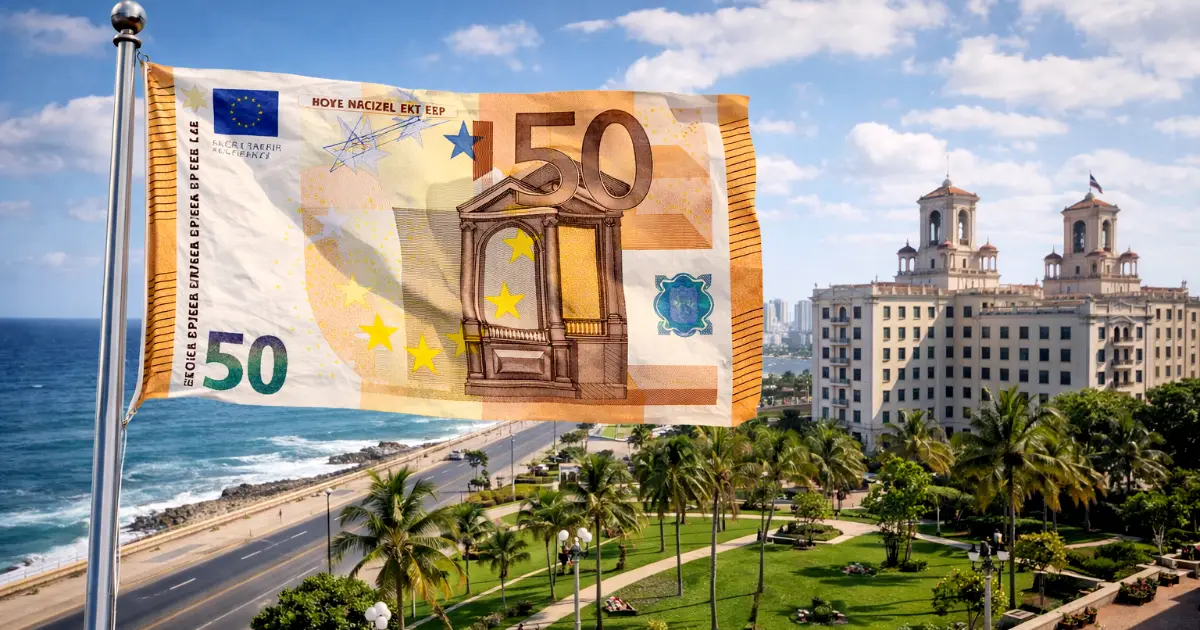
Photo: CiberCuba
The informal foreign exchange market in Cuba has once again shaken the island’s fragile economic stability this Tuesday, April 7, 2026. After weeks of relative calm, both the Euro and the US Dollar have reached unprecedented levels, confirming the unstoppable devaluation of the Cuban Peso (CUP) and the suffocating inflation hitting families.
New Historical Highs
According to daily monitoring by platforms like El Toque and reports from CiberCuba, the Euro has climbed to 588 CUP, breaking its previous record. Meanwhile, the US Dollar remains steady at the 520 CUP mark, solidifying an upward trend that seems to have no ceiling in the short term.
This escalation in the value of foreign currencies is not an isolated event. It responds to a combination of critical factors: the chronic shortage of basic products, the complete lack of confidence in the national currency, and the desperate need for Cubans to acquire foreign exchange for emigration or to purchase goods in Freely Convertible Currency (MLC) stores.
Impact on the Average Cuban’s Pocket
For the average citizen, these numbers translate into a drastic loss of purchasing power. With a minimum wage of around 2,100 CUP, a state worker would need nearly three months’ worth of total salary just to buy 10 US dollars on the black market.
Galloping inflation directly affects the prices of food and basic services, many of which are already priced based on the informal dollar’s exchange rate. “Every time the dollar goes up, everything in the corner store and the farmers’ market goes up,” commented a resident of Old Havana surveyed by independent media.
A Scenario of Uncertainty
The Cuban government has attempted to curb this trend with measures that, so far, have proven ineffective. The lack of an official foreign exchange market with competitive rates and the persistent energy crisis —with blackouts exceeding 15 hours daily in some regions— fuel the distrust of investors and the general population.
Economic experts warn that, as long as there is no deep structural reform that incentivizes national production and stabilizes the macroeconomy, the Cuban Peso will continue its free fall against foreign currencies.
Frequently Asked Questions (FAQ)
1. What is the current price of the Euro and the Dollar in Cuba’s informal market today? As of April 7, 2026, the Euro is trading at 588 CUP and the US Dollar at 520 CUP in the informal market.
2. Why is the price of foreign currencies rising in Cuba? The surge is driven by high demand for imports and emigration, low supply of foreign currency from the state, uncontrolled inflation, and a lack of confidence in the Cuban peso.
3. How does the rising dollar affect food prices? Since many supplies and final products are imported, the increase in the informal dollar is directly passed on to the consumer in private markets and businesses.
4. Is there an official market to buy dollars in Cuba? While Exchange Houses (CADECA) exist, the availability of foreign currency for sale to the public is extremely limited and subject to appointment systems that can take months.
Related Links & Interest
- Impact of inflation on the Cuban basic basket
- The energy crisis and its relationship with the currency market
- The role of remittances in the household economy
- CiberCuba: The Euro skyrockets in Cuba hitting a new high
- Directorio Cubano: The Dollar hits a new record
How we got here
Background
The first thing we published on this topic.
How Cubans Are Surviving the Fuel Rationing Crisis
Neighbors unite to cook with firewood, power cuts lasting up to 18 hours, and echoes of the Special Period. Testimonies from Havana on the energy crisis.
Cuba's Economy Contracted 5% in 2025: Study Reveals Crisis
Study confirms Cuba GDP decline, 1.5 million emigration, rising infant mortality. Critical juncture.
Related articles

Unrealistic Goal? Cuba Projects 1% GDP Growth in 2026
Experts and economists question the 1% GDP growth target announced by the Cuban government for 2026, calling it unfeasible given the current crisis.

Cuban with I-220A Shows Luxury House in Cuba: Sparks Controversy
A Cuban I-220A beneficiary displays properties and vehicles in Cuba while the island faces energy crisis and thousands live in poverty.

Cuba Opens Private Fuel Imports Amid Energy Collapse
Faced with a 2,000 MW deficit and state failure, Cuban private enterprises begin importing petroleum under the oversight of Trump and Díaz-Canel.

Gasoline in Havana Reaches 4,000 CUP per Liter on the Black Market
Extreme fuel shortages in Cuba drive prices sky-high on the black market, where a liter of gasoline is now trading for 4,000 Cuban pesos.
Cuba Officially Opens Doors to Investment from Exile Community
The Government of Cuba announces that it will allow Cuban residents abroad to invest and own businesses on the island to alleviate shortages.
Economy in Cuba: EIU Projects 7.2% Contraction in 2026
The Economist Intelligence Unit warns that the Cuban economy will suffer a dramatic 7.2% drop this year, accumulating a 23% collapse since 2019.