Blockade Cuts Cuban Children's Cancer Survival Rate from 80% to 65%
Lack of first-line medications forces doctors to use alternative treatments. Medical staff fights to maintain care quality amid crisis.
3 min read
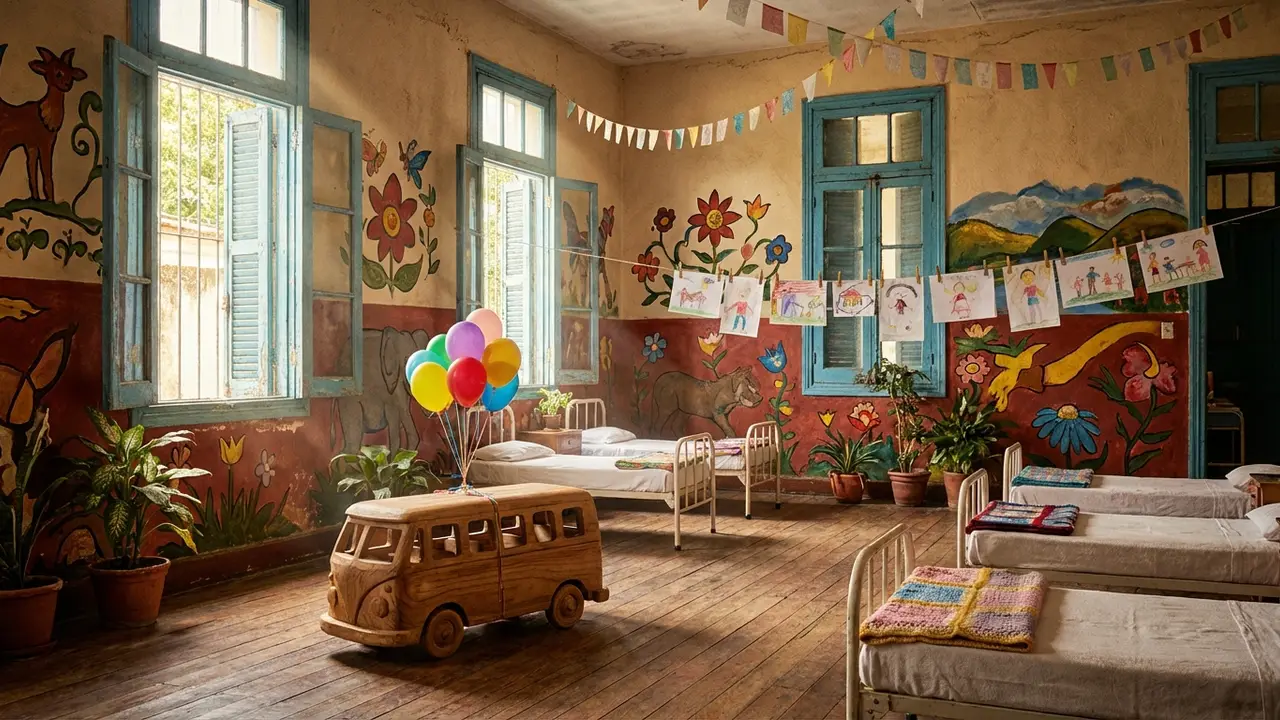
Illustration: Aroma de Cuba (AI)
At Havana’s National Institute of Oncology and Radiobiology, the walls of the pediatric oncology ward tell a story of hope. A mural shows a smiling child riding toward the end of a rainbow. A small red wooden bus carries balloons and balls on its roof. The young patients’ drawings burst with intense colors—a visual spell against despair.
But behind that chromatic celebration, Cuban doctors are fighting an increasingly difficult battle.
The Falling Numbers
According to Dr. Carlos Alberto Martínez, head of the Cancer Control Section at the Ministry of Health, Cuba had achieved a medical feat: an 80% survival rate for childhood cancer, comparable to developed countries that reach between 80% and 90%.
That figure is no longer sustainable.
“Due to resource limitations, they’ve had to modify treatment protocols,” Martínez explains. “Instead of first-line medications, we use second-line medicines. And that has caused survival rates to drop to 65%.”
A 15-percentage-point drop that, translated into human lives, means children who could have been saved.
”Very Painful as a Professional”
Dr. Luis Curbelo Alonso, the Institute’s director, describes the frustration of those who dedicate their lives to fighting cancer: “You have the knowledge, the expertise, the team to address something that could be curable or controllable, yet you don’t have the medication. It’s very painful as a professional, very cruel.”
Dr. Mariuska Forteza Saéz, head of pediatric oncology, expands on the situation: “The situation is very serious. It already was regarding supplies and medications. But now it’s getting worse.”
The problems extend beyond medicine. Transportation to reach the hospital has become complicated due to fuel shortages. The special foods that cancer patients require are difficult to obtain. Remittances that some families received from abroad have become more complicated.
“Wherever you look, there’s an extra complication,” Forteza summarizes.
An Oasis of Color Amid Crisis
The pediatric oncology ward has 20 beds and currently cares for 12 children, many from provinces outside Havana. The environment deliberately contradicts the gravity of the situation.
“A child who has cancer is no longer a child who will play or go to school,” explains Forteza. “Their social life will change completely. You need to accompany that child and their family with all the necessary psychosocial support.”
That’s why the walls look like those of a cheerful school rather than a hospital. That’s why there are desks full of watercolors and nothing in black and white. That’s why a child rides toward a rainbow in the entrance mural.
The Irony of Rejected Solidarity
Fernando González of the Cuban Institute of Friendship with the Peoples recalls a revealing moment: when Hurricane Katrina devastated Louisiana, Cuba formed the Henry Reeve Brigade and offered to send doctors to help with recovery efforts. The United States rejected the help.
Cuba has sent medical brigades to Italy and Andorra during the COVID-19 pandemic. It has shared vaccines developed by its scientists. Meanwhile, Heberprot-P, a Cuban medication that prevents amputations in diabetic patients, cannot reach the American patients who need it.
“We will continue resisting. We will continue seeking alternatives to sustain what we’ve achieved,” Dr. Martínez assures.
On the walls of the pediatric oncology ward, the child in the mural keeps riding toward his rainbow. Cuban doctors continue fighting so that more children can cross that door to a better world, even as the path grows harder each day.
Source: La Jornada
Frequently asked questions
What was Cuba's childhood cancer survival rate before the intensified blockade?
Why has the survival rate for children with cancer in Cuba dropped?
How many oncology centers does Cuba have?
Is cancer treatment free in Cuba?
Sources
- La Jornada · jornada.com.mx
How we got here
Background
The first thing we published on this topic.
Cuba Postpones IT Convention 2026 Due to Energy Crisis
Cuba's main technology event, scheduled for March, is indefinitely postponed due to the 'extraordinary situation' facing the country.
Cuba Emergency: Universities Closed, 4-Day Work Week
The Cuban government closes universities, reduces school hours, limits hospital surgeries, and shortens the work week amid the fuel crisis.
Related articles
Guiteras Power Plant Fails Again: Energy Deficit Approaches 2,000 MW
Cuba's largest power unit goes offline due to boiler crack. Blackouts intensify across the island as the energy crisis deepens.
Cuban Bishops Cancel Vatican Visit Due to Fuel Crisis
The ad limina visit of Cuban bishops to Pope Leo XIV, scheduled for February, was canceled due to lack of aviation fuel on the island.
Cuba Loses 40% of Tourists as Canada Suspends All Flights
With all Canadian flights cancelled, Cuba loses 40% of its tourists amid the US oil blockade crisis.
Russia Halts Cuba Flights, Evacuates 4,000 Tourists Amid Crisis
Russian airlines Rossiya and Nordwind halt operations to Cuba due to jet fuel shortage. Russia is the island's second-largest source of tourists.
Dollar Breaks 500 Cuban Peso Barrier in Black Market
The US dollar hit a historic high of 500 Cuban pesos, just two months after the government implemented a floating exchange rate to control the informal market.
Cuba's Health Ministry Creates Brigades Amid Energy Crisis
MINSAP reduces hospital staff, suspends surgeries, creates mobile brigades amid fuel shortage.