New Deportation Route: US Sends Cubans to Tapachula, Mexico, Not Cuba
Mexico receives 2-3 weekly deportation flights from US in new strategy leaving 60,000 migrants stranded at southern border.
5 min read
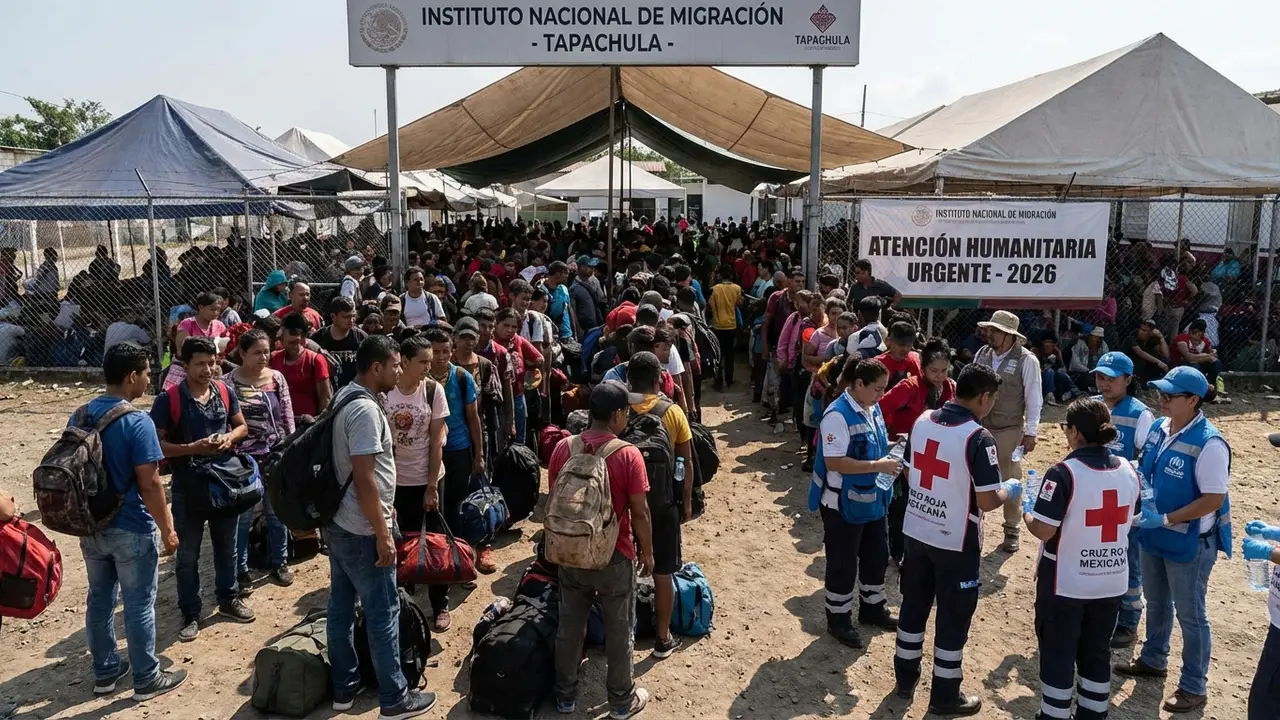
Illustration: Aroma de Cuba (AI)
Trump’s immigration policy has taken an unexpected turn: the United States is now deporting Cubans directly to Mexico, specifically to Tapachula on the Guatemalan border. This new strategy is converting Mexico into a forced destination for thousands of Cubans who, after years or decades on US soil, must rebuild their lives far from both Cuba and the country where they thought they had built their futures.
Tapachula: The New Deportation Destination
According to information confirmed by Chiapas state authorities, between two and three weekly flights are arriving in Tapachula with migrants deported from the United States. Eduardo Antonio Castillejos Argüello, Undersecretary of Human Mobility of the Southern Border Secretariat, explained that the city already hosts a large Cuban population forced to seek informal employment while attempting to regularize their status.
“We have a large population of Cuban nationality here in Tapachula (…) who need access to services, but above all, to employment,” the official told EFE agency.
Luis Rey García Villagrán, director of the Center for Human Dignification, estimates approximately 60,000 migrants are stranded in the area, particularly Haitians and Cubans, criticizing that no institution fully assumes responsibility for addressing the situation.
Human Stories Behind the Numbers
The Case of the Cuban Deported After 40 Years in the US
One of the most striking stories involves a Cuban who arrived in the United States at just one year old and was deported to Mexico after more than four decades living in that country. The man shared that he was a legal permanent resident but lost that status after committing a crime, which he did not specify, and had an outstanding deportation order dating back to 2000.
According to his testimony, in December 2025, he went to report to an ICE office and ended up being detained. After 66 days in detention centers, he was first transferred to Chihuahua and finally released in Tapachula, from where he managed to travel to Cancun in an attempt to rebuild his life.
Felipe Muñoz: 70-Year-Old Barber Starting Over
Another emblematic example is Felipe Muñoz, a 70-year-old Cuban barber who was also deported from the United States and decided to start from scratch in Mexico. Set up in a park in Villahermosa, Tabasco state, he offers haircuts for 50 pesos to passersby.
Wearing a white coat and using tools bought on credit that he still has from the US, Muñoz makes a living in Juarez Park, relying on more than three decades of experience as a barber.
“I am here earning an honest living, cutting hair,” he told Mexican media Tabasco Hoy.
A New Migration Pattern: Cuba → US → Mexico
This strategy represents a fundamental shift in deportation patterns. Traditionally, Cubans deported from the United States were sent directly to Cuba. Now, Mexico has become a forced intermediate destination, creating what we could call a “triple displacement” - movement from Cuba to the US, then to Mexico.
Mexico, which for years was primarily a transit country for those seeking to reach US territory, has now become a forced destination for many, amid the tightening of immigration policies since Donald Trump’s return to the White House in January 2025.
Political Context: Maximum Pressure Strategy
This new deportation route is part of the Trump administration’s broader strategy of exercising “maximum pressure” on Cuba and Cuban migrants. By deporting to Mexico instead of directly to Cuba, the United States:
- Avoids direct negotiations with the Cuban government
- Transfers the migration burden to Mexico
- Creates an additional deterrent effect for future migrants
- Complicates family reunification processes
Frequently Asked Questions
Why does the US deport Cubans to Mexico instead of Cuba?
This new strategy allows the United States to avoid direct negotiations with the Cuban government while transferring migration responsibility to Mexico, creating an additional deterrent effect.
How many deportation flights arrive in Tapachula weekly?
According to Chiapas authorities, between two and three weekly flights are arriving in Tapachula with migrants deported from the United States.
What options do Cubans deported to Mexico have?
Deportees can attempt to regularize their status in Mexico, seek informal employment while resolving their situation, or try to return to Cuba. Many remain stranded without clear institutional support.
How many migrants are currently stranded in Tapachula?
Luis Rey García Villagrán, director of the Center for Human Dignification, estimates approximately 60,000 migrants are stranded in the area, including Haitians and Cubans.
Conclusion: A New Migration Reality
As deportation flights continue to southern Mexico, Tapachula is becoming one of the main points where Cuban stories converge - people who, having lost their status in the United States, are trying to start anew, far from the island and also far from the country where they believed they had built their lives.
This new deportation route not only reflects the hardening of US immigration policies but also demonstrates how the Cuban migration crisis is acquiring regional dimensions that go beyond traditional bilateral relations between Cuba and the United States.
For more information about deportation cases and legal resources for Cuban migrants, consult our related articles on deportations and migration processes.
How we got here
Background
The first thing we published on this topic.
Cuba Records Second Magnitude 5 Earthquake in Three Days Near Santiago
A 5.0 magnitude tremor shook eastern Cuba, two days after a 5.6 quake in Guantánamo that damaged homes
45,000 Cubans Face Deportation Orders in the US
Some 550,000 Cubans vulnerable under Trump's immigration policies. Separated families and a community under pressure.
Related articles
Direct Cuban Deportations to Tapachula: New Route That Bypasses Havana
US sends 2-3 weekly flights with deported Cubans directly to Tapachula, Mexico, avoiding Cuba in an unprecedented Trump administration tactic.
I sold my house to leave: Cubans stranded in Mexico
Thousands of Cubans deported to Mexico live in migration limbo without home, work, or future prospects. A silent humanitarian crisis.
Record Deportations: Cubans Trapped in Mexican Immigration Limbo
US deports Cubans to Mexico in historic numbers, creating a humanitarian crisis where thousands live in limbo with no return options.

Discovery in Mexico: bodies could belong to Cuban rafters
Mexican authorities reported finding two bodies off the Gulf coast, which could belong to missing Cuban migrants.

Migration Limbo: Nearly 6,000 Cubans Deported to Mexico
A federal judge reveals the Trump administration deported thousands of Cubans to Mexico under an informal agreement, leaving them in legal limbo.

Trump Boasts Deportations While Immigration Data Vanishes
Trump administration drastically reduces access to migration statistics while reporting contradictory figures on mass deportations.