Record Deportations: Cubans Trapped in Mexican Immigration Limbo
US deports Cubans to Mexico in historic numbers, creating a humanitarian crisis where thousands live in limbo with no return options.
4 min read
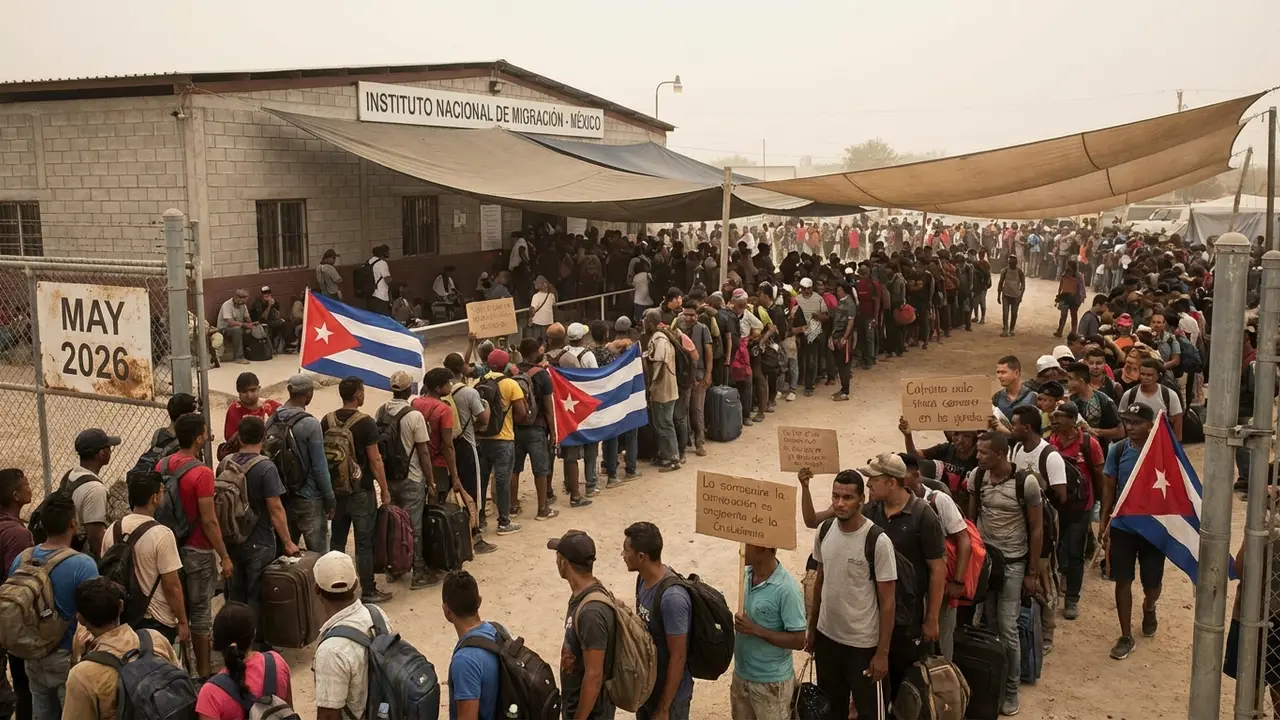
Illustration: Aroma de Cuba (AI)
The Cuban migration crisis has reached a critical turning point: the United States is deporting Cubans in record numbers, but with a devastating difference from previous administrations. While some are being sent back to an island mired in deep crisis, thousands more are being deported to Mexico, where they remain trapped in an unprecedented migration limbo.
The New Reality: Mexico as Deportation Destination
For the first time in decades, the Trump administration is implementing a systematic policy of third-country deportations that breaks with the historical pattern of treatment toward Cubans. According to recent reports, more than half of the Cubans deported in 2026 are not returning to Cuba, but being sent to Mexico.
“Cubans are being deported from the United States in record numbers. Some are being sent back to an island in deep crisis. Others are being deported to Mexico, where they are living in limbo,” reported The New York Times.
This policy marks a radical change from previous Republican and Democratic administrations, which generally treated Cubans as political refugees with a fast track to U.S. residency.
The Mexican Limbo: A Silent Humanitarian Crisis
Cubans deported to Mexico face a particularly desperate situation:
- No legal status in Mexico: They don’t qualify for special protection
- Impossibility of return to Cuba: Many fear political persecution
- Limited resources: No access to basic services or legal work
- Family separation: Their families remain in the United States
Testimonies from Limbo
Humanitarian organizations report that deportees to Mexico live in precarious conditions, depending on charity and with no clear prospects for legal resolution. Many attempt to return to the United States, perpetuating a cycle of detention and deportation.
ICE Eliminates Historic Protections
The Trump administration’s new policy includes:
- Elimination of special treatment for Cubans under the Cuban Adjustment Act
- Mass deportations regardless of length of residence
- Use of third countries like Mexico to evade agreements with Cuba
- Maximum pressure on the I-220A humanitarian program
Impact on I-220A
Cubans with I-220A documents, who previously had protections, now face:
- Immediate ICE detentions
- Accelerated deportation without full hearings
- Loss of eligibility for permanent residence
The Mexico Factor
Mexico has involuntarily become the center of this migration crisis. The country faces:
- U.S. diplomatic pressure to accept Cuban deportees
- Overload of its immigration and refugee systems
- Tensions with Cuba, which refuses to accept certain deportees
Nicaragua Closes the Door
The crisis is aggravated by Nicaragua’s decision to cancel visa-free travel for Cuban citizens in February 2026, closing a crucial migration route used by thousands since 2021.
Legal Response: Courts Intervene
A federal judge in Boston ruled Wednesday that the Trump administration’s policy of deporting undocumented immigrants to countries where they are not citizens is unconstitutional, saying the government must provide more time for people to legally challenge their removals.
However, implementation of this ruling remains uncertain as ICE continues with mass deportations.
Frequently Asked Questions
Why does the U.S. deport Cubans to Mexico instead of Cuba?
The Trump administration uses Mexico as a deportation country to avoid diplomatic limitations with Cuba and exercise “maximum pressure” on Cuban migrants.
What options do Cubans deported to Mexico have?
Options are extremely limited: they can apply for asylum in Mexico (with low success rates), attempt to return to the U.S. (risking new detention), or seek migration to another country.
Is Mexico obligated to accept these deportations?
Mexico accepts deportees under U.S. diplomatic pressure, although it is not legally obligated to receive nationals from third countries.
How does this affect Cuban families in the United States?
Thousands of families face indefinite separation, as deportees cannot legally return while their relatives remain in the United States, many also in precarious immigration situations.
Related Links
- ICE Eliminates Historic Protections for Cubans: New Era of Mass Deportations
- Federal Court: Third-Country Deportations Violate Constitution
- Trump Lifts Oil Tariffs But Keeps Emergency
- I-220A in Court: What Does the Atlanta Ruling Really Mean?
- Cuban Adjustment Act 2026: Who Still Qualifies and Who Lost Protection
The Cuban migration crisis of 2026 marks a historic turning point. While courts struggle to protect fundamental rights, thousands of Cubans remain trapped in a limbo that reflects the complexity and cruelty of current immigration policies.
How we got here
Background
The first thing we published on this topic.
Cuba Records Second Magnitude 5 Earthquake in Three Days Near Santiago
A 5.0 magnitude tremor shook eastern Cuba, two days after a 5.6 quake in Guantánamo that damaged homes
45,000 Cubans Face Deportation Orders in the US
Some 550,000 Cubans vulnerable under Trump's immigration policies. Separated families and a community under pressure.
Related articles
Direct Cuban Deportations to Tapachula: New Route That Bypasses Havana
US sends 2-3 weekly flights with deported Cubans directly to Tapachula, Mexico, avoiding Cuba in an unprecedented Trump administration tactic.

Uruguay hosts record 22,000 Cubans: third-largest destination
Uruguay received a record 26,626 Cuban asylum applications in 2025, becoming the third-largest destination after Brazil and Mexico.
I sold my house to leave: Cubans stranded in Mexico
Thousands of Cubans deported to Mexico live in migration limbo without home, work, or future prospects. A silent humanitarian crisis.

Migration Limbo: Nearly 6,000 Cubans Deported to Mexico
A federal judge reveals the Trump administration deported thousands of Cubans to Mexico under an informal agreement, leaving them in legal limbo.

I-220A Ruling: Atlanta Court Orders New Review in Key Cases
The 11th Circuit Court of Appeals vacates BIA decisions on Cubans with I-220A. Analyzing what this partial victory means for residency prospects.
Deportations 2026: Trump's New 'Choice' for Cubans in the US
Analysis of Trump's shifting migration policy: record deportation flights and the pressure of 'optional' return versus indefinite detention.