Cuban with I-220A: 'I Thought They Would Detain Me' at Court
Exclusive testimony from a young Cuban after his hearing at Orlando Immigration Court: calm process but date pushed back to late 2026
3 min read
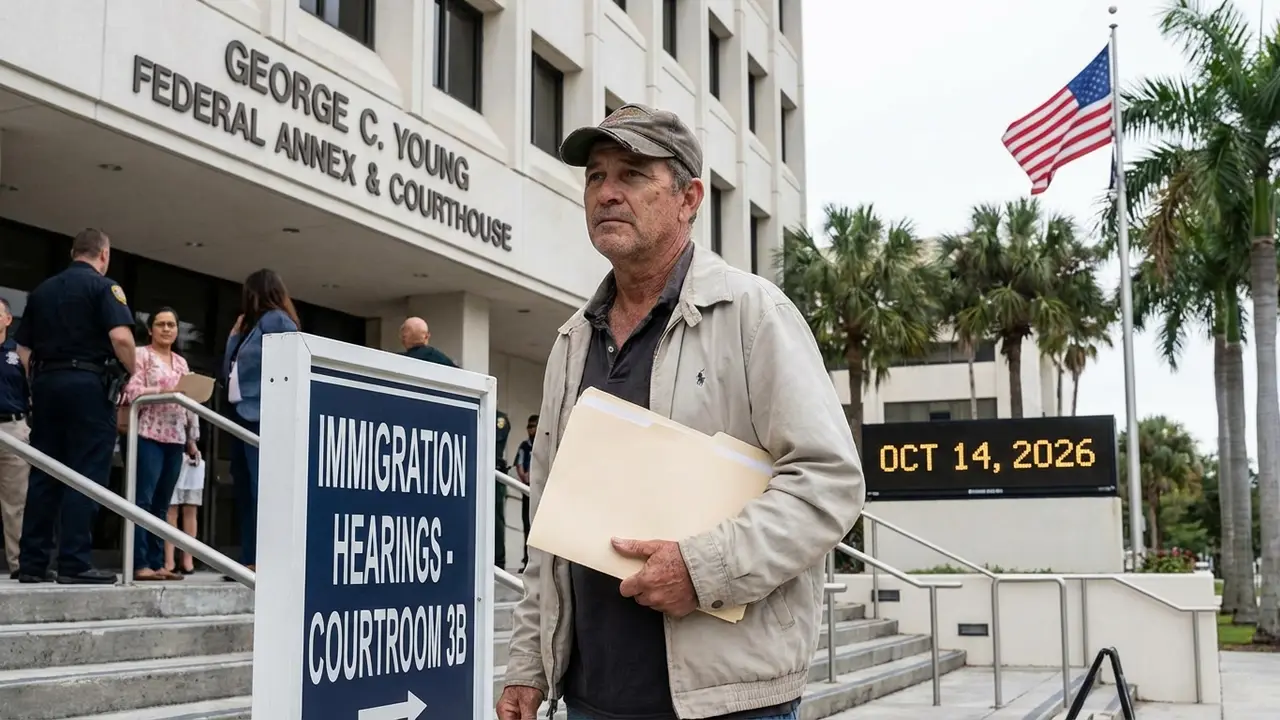
Illustration: Aroma de Cuba (AI)
A Cuban migrant holding an I-220A form shared his experience on social media after appearing before the Immigration Court in Orlando, Florida this Thursday. His account offers valuable insight into the current process and concerns faced by thousands of Cubans in similar situations.
”My Biggest Fear Was Being Detained”
“I just left the Orlando Court. I’m making this video to share information. There are many videos before going to court, but it’s always good to have the latest updates,” the young man explained in his recorded testimony.
The migrant, who attended with legal representation, revealed that both he and another Cuban present received new court dates for late 2026. This delay reflects the current state of the immigration system, with hearings scheduled years in advance due to accumulated backlog.
His main fear was being detained by Immigration and Customs Enforcement (ICE) when attending the court appointment. However, he described the environment as “very calm” with no visible ICE operations inside the courthouse building.
“There was nobody making ICE detentions; there was nothing unusual. That was my biggest worry, that they would literally detain me, but everything else was perfectly fine,” he assured.
The I-220A Form: A Legal Lifeline
The I-220A form serves as a document of parole or supervision granted to certain migrants upon entry into the United States. In recent years, thousands of Cubans have received this status, remaining pending judicial proceedings that will determine their legal stay in the country.
I-220A Characteristics:
- Allows remaining free while immigration case is resolved
- Requires periodic appearances before immigration courts
- Does not guarantee permanent residence, but prevents immediate detention
- Subject to specific conditions like maintaining updated address
System Delays: Why Wait Until 2026?
The overload of the federal immigration system has resulted in hearings scheduled years in advance. This phenomenon leaves many applicants in prolonged legal uncertainty.
Contributing factors to delays:
- Massive volume of pending cases
- Limited judicial staff to process hearings
- Case complexity requiring thorough review
- Immigration policy changes affecting processing priorities
This young Cuban’s testimony joins a growing number of migrant stories aimed at sharing practical information about court appearances, especially amid heightened federal immigration oversight.
What’s Next for Cubans with I-220A?
For now, this young man must wait until late 2026 for his next appearance before an immigration judge, while remaining free under the conditions stipulated in his I-220A form.
His case illustrates the reality of thousands of Cubans navigating the complex U.S. legal system, balancing hope and anxiety while awaiting decisions that will determine their future in the country.
Frequently Asked Questions
What exactly is the I-220A form?
The I-220A is a parole or supervision document that allows certain migrants to remain free in the United States while awaiting resolution of their immigration status before immigration courts.
Why are immigration hearings scheduled so far in the future?
The federal immigration system experiences significant backlog due to massive volumes of pending cases and limited resources, resulting in hearings scheduled years ahead.
Should migrants with I-220A fear being detained at court?
According to this recent testimony, the environment at Orlando Court was calm without visible ICE operations. However, each situation is unique and attending with legal representation is recommended.
What happens if someone cannot afford a lawyer for the hearing?
While the right to legal representation is not guaranteed in immigration cases, non-profit organizations and legal clinics offer free or low-cost services for migrants.
How we got here
Background
The first thing we published on this topic.
Nicaragua Closes the Door: Ends Visa-Free Entry for Cubans
Nicaragua ends visa-free entry for Cuban citizens, closing one of the main migration routes to the United States.
Cuba Records Second Magnitude 5 Earthquake in Three Days Near Santiago
A 5.0 magnitude tremor shook eastern Cuba, two days after a 5.6 quake in Guantánamo that damaged homes
Related articles

Cuba Defends Shootdown of Florida Speedboat: 'We Are Not Aggressive'
Díaz-Canel justifies the action taken by Cuban coast guards following an incident that left four dead. Cuba maintains it acted in defense of its sovereignty.
ICE Eliminates Historic Protections for Cubans
Trump administration suspends humanitarian programs and immigration processes for Cuba, ending six decades of special status for Cuban migrants in the US.
DHS Restricts Asylum in 2026: Cubans Without Work for 'Many Years'
New DHS proposal could leave Cuban asylum seekers without work authorization for 'many years', exacerbating poverty and economic hardship.

Cuban with I-220A Released After ICE Detention: Hope and Uncertainties
The release of a young Cuban after 80 days of detention revives the debate on the I-220A status and the future of thousands under ICE custody.
ICE Arrests Two Cubans with Violent Criminal Records
Aliosky Rosales Michelena and Rafael Cortina Pantoja detained by ICE after violent crime charges, adding to record Cuban deportations.
Cuban Hospital Couple Freed from ICE: Unions Paid Their $20K Bond
A Cuban gay couple at SUNY Upstate in Syracuse NY spent 4 months in ICE detention before their unions raised $20,000 in bail money to free them.