ICE Eliminates Historic Protections for Cubans
Trump administration suspends humanitarian programs and immigration processes for Cuba, ending six decades of special status for Cuban migrants in the US.
5 min read
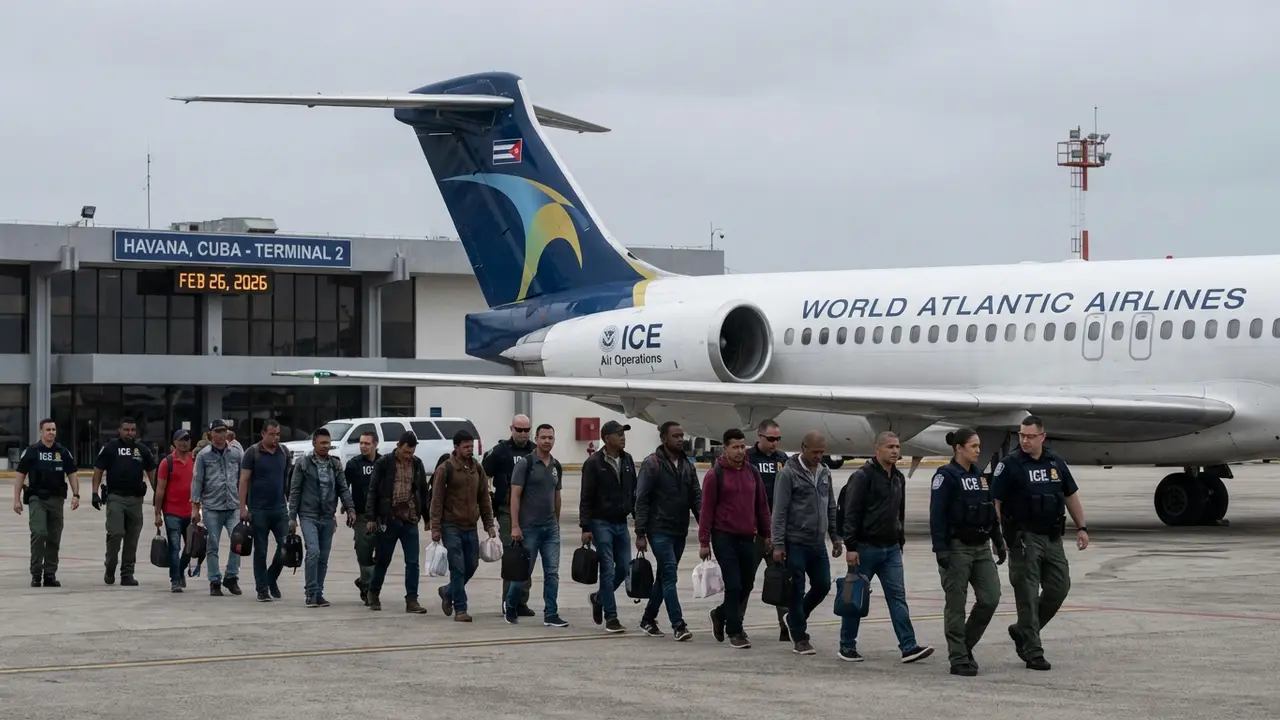
Illustration: Aroma de Cuba (AI)
The Golden Era Comes to an End
After decades of unique migratory privileges, Cubans in the United States face an unprecedented reality: the systematic elimination of protections that distinguished them from other migrants. The Trump administration has suspended humanitarian programs and immigration processes specific to Cuban citizens, marking a historic break in Cuba-US migration relations.
The most dramatic change was evidenced on February 9, when 170 Cubans were deported on the first ICE flight to Cuba in 2026. Among them, individuals convicted of serious crimes including murder, rape, and kidnapping, signaling that the automatic protection that characterized US migration policy toward the island for decades no longer exists.
End of Special Status
Suspension of Humanitarian Programs
According to reports from El País, the new administration has:
- Eliminated protections and humanitarian programs for Cubans
- Suspended immigration processes established over decades
- Implemented a policy of “detention and deportation” previously unthinkable
“The detention and deportation of Cubans—something unimaginable until recently given their historical advantage under the Cuban Adjustment Act—is now a daily reality,” explains the latest legal analysis.
”Maximum Pressure” Strategy
The change is part of a “maximum pressure” strategy that the Trump administration implemented since January 2025, significantly tightening economic sanctions against Cuba and eliminating the migratory escape valves that traditionally relieved tensions.
The New Reality for Cubans
Who Remains Protected?
With the elimination of protections, only a reduced group maintains preferential status:
- Cubans who physically arrived before January 2017 (“wet foot, dry foot” policy)
- Pending Cuban Adjustment Act cases with complete documentation
- Asylum seekers with cases in process before restrictions
I-220A in Jeopardy
Approximately 500,000 Cubans with I-220A forms face total legal uncertainty. A class action case in the 11th Circuit Court could determine their future, but prospects are grim under the new zero-tolerance policy.
Impactful Numbers
Deportations by Numbers
- 170 deported in February 2026 (first flight)
- 116 deported in subsequent flight
- Total: 286 Cubans deported in less than a month
Mass Detentions
ICE reports a 340% increase in Cuban detentions compared to the same period in 2025, evidencing aggressive implementation of the new policy.
Geopolitical Context
Economic Crisis in Cuba
The elimination of protections coincides with Cuba’s worst economic crisis in decades:
- Population reduced to 8 million after massive exodus
- Cuban peso at historic low (500 per dollar)
- Constant blackouts and collapse of basic services
Cuban Regime Response
For the first time in its history, Cuba accepted deportees with criminal records, signaling a change in its traditional migration policy of rejecting such cases.
Frequently Asked Questions
What options do Cubans with deportation orders have?
Cubans with deportation orders can:
- Request case review with specialized attorney
- Apply for immigration waiver if they qualify
- Seek asylum or protection against torture if they demonstrate persecution
- Consider voluntary departure to avoid re-entry prohibition
Is the Cuban Adjustment Act still in effect?
The Cuban Adjustment Act is technically still in effect, but its benefits are severely limited under new policies. Only Cubans meeting very specific requirements can apply.
Can they deport Cubans without criminal records?
Yes. The new policy eliminates automatic protection. Cubans without legal status can be deported regardless of their background, marking a radical change from decades of migration practice.
What should Cubans with I-220A do?
- Consult immediately with immigration attorney
- Document all evidence of arrival and stay
- Monitor the class action case in the 11th Circuit
- Avoid any contact with ICE without legal representation
Legal Analysis
Historic Precedent
The elimination of protections for Cubans establishes an unprecedented precedent in US migration history. Never before had an administration so dramatically reversed migration policies established for over 60 years.
Impact on Future Cases
Legal experts predict this policy could:
- Reduce by 90% successful Cuban asylum applications
- Increase deportations by 400% during 2026
- Create humanitarian crisis in Cuba receiving mass deportees
The Human Factor
Family Separation
New policies are separating families that for decades lived with the tranquility of Cuban special status. Recent testimonies document the trauma of separations where some members have legal protection and others face immediate deportation.
Psychological Impact
Psychologists specializing in migration trauma report a 250% increase in consultations from Cubans with severe anxiety related to deportation fears.
What’s Coming
Potential Negotiations
Reports suggest the Trump administration maintains secret negotiations with Cuban representatives to establish a “migration agreement” that could regularize deportations and create new legal channels.
Legislative Pressure
Congress is evaluating modifications to the Cuban Adjustment Act that could codify current restrictions or, alternatively, restore protections under certain conditions.
Community Recommendations
Immediate Action
- Urgent legal consultation to review immigration status
- Complete documentation of all pending processes
- Family contingency plan in case of deportation
- Contact support organizations for immigration assistance
Legal Preparation
- Maintain all immigration documentation updated
- Avoid contact with authorities without representation
- Establish fund for emergency legal expenses
The elimination of historic protections for Cubans marks the end of an era in Cuba-US migration. In this new reality, legal preparation and community unity will be crucial for navigating the turbulent waters ahead.
Sources:
How we got here
Background
The first thing we published on this topic.
Cuba Records Second Magnitude 5 Earthquake in Three Days Near Santiago
A 5.0 magnitude tremor shook eastern Cuba, two days after a 5.6 quake in Guantánamo that damaged homes
45,000 Cubans Face Deportation Orders in the US
Some 550,000 Cubans vulnerable under Trump's immigration policies. Separated families and a community under pressure.
Related articles

Cuban with I-220A Released After ICE Detention: Hope and Uncertainties
The release of a young Cuban after 80 days of detention revives the debate on the I-220A status and the future of thousands under ICE custody.
Cuban with I-220A: 'I Thought They Would Detain Me' at Court
Exclusive testimony from a young Cuban after his hearing at Orlando Immigration Court: calm process but date pushed back to late 2026

Cuba Defends Shootdown of Florida Speedboat: 'We Are Not Aggressive'
Díaz-Canel justifies the action taken by Cuban coast guards following an incident that left four dead. Cuba maintains it acted in defense of its sovereignty.
DHS Restricts Asylum in 2026: Cubans Without Work for 'Many Years'
New DHS proposal could leave Cuban asylum seekers without work authorization for 'many years', exacerbating poverty and economic hardship.

ICE Arrests Two Cubans with Violent Criminal Records
Aliosky Rosales Michelena and Rafael Cortina Pantoja detained by ICE after violent crime charges, adding to record Cuban deportations.

Cuban Hospital Couple Freed from ICE: Unions Paid Their $20K Bond
A Cuban gay couple at SUNY Upstate in Syracuse NY spent 4 months in ICE detention before their unions raised $20,000 in bail money to free them.