Uruguay hosts record 22,000 Cubans: third-largest destination
Uruguay received a record 26,626 Cuban asylum applications in 2025, becoming the third-largest destination after Brazil and Mexico.
4 min read

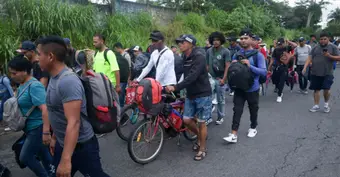
Photo: CNN
In an unprecedented migration phenomenon, Uruguay has become the third-largest global destination for Cuban asylum seekers, with over 22,000 arrivals recorded by the National Migration Agency in 2025, according to a new CNN report.
Official figures from CEDA (Center for Economic Development and Analysis) detail that Uruguay processed 26,626 asylum applications from Cuban citizens during 2025, positioning itself as the third most popular destination after Brazil (44,381 applications) and Mexico (38,598).
Energy crisis drives mass migration
The massive migration to Uruguay coincides with Cuba’s most severe energy crisis in recent history, characterized by blackouts of up to 16 hours daily and critical shortages of food, water, and electricity documented by CNN’s investigation.
“Cubans are facing unsustainable conditions: no food, no water, no electricity, they’re fleeing to other countries for a better life,” reported CNN’s Dario Klein from Montevideo, highlighting the exponential growth of Cuba’s community in Uruguay.
The crisis intensified after Venezuela lost petroleum control and Trump implemented a petroleum blockade that cut 90% of the island’s energy supply.
Cuba: third-largest asylum-seeking nationality globally
CEDA data reveals that Cuba generated approximately 5.3 asylum claims per 1,000 inhabitants in 2025, making Cubans the third-largest asylum-seeking nationality worldwide.
This migration flow to Uruguay represents a diversification of traditional Cuban routes, historically concentrated toward the United States and Spain. The South American country offers more accessible migration policies and relative economic stability.
Top Cuban asylum destinations in 2025:
- Brazil: 44,381 applications
- Mexico: 38,598 applications
- Uruguay: 26,626 applications
- Spain: Data pending
- United States: 300,000+ in legal limbo
Economic and social impact in Uruguay
The massive arrival of Cubans is transforming Uruguay’s demographic landscape. With a total population of approximately 3.5 million inhabitants, the arrival of 22,000-26,000 Cubans in one year represents nearly 0.7% population growth.
Cuban migrants, many of them healthcare professionals, engineers, and educators, are contributing significantly to key sectors of Uruguay’s economy that face skilled labor shortages.
Regional context: massive continental exodus
Uruguay forms part of an unprecedented continental Cuban exodus. According to official data:
- More than 1 million Cubans have migrated since 2021, the largest migration wave since the 1959 Revolution
- 340% increase in dangerous maritime crossings to the United States
- 427 Cubans deported by the United States in 2026 alone, according to recent reports
- Closure of traditional routes like Nicaragua and Mexico
Favorable migration policies
Uruguay maintains a relatively open migration policy under President Luis Lacalle Pou’s government, facilitating both political asylum and temporary residence for citizens in humanitarian crisis.
The South American country has implemented specific programs for labor and social integration, including accelerated recognition of professional degrees and access to basic health and education services for asylum seekers.
FAQ
Why has Uruguay become so attractive to Cuban migrants? Uruguay offers political stability, a relatively solid economy, accessible migration policies, and a faster asylum process than other countries in the region. Additionally, it doesn’t require visas for Cuban citizens in transit.
How many Cubans currently live in Uruguay? In addition to the 22,000-26,000 who arrived in 2025, the total Cuban community in Uruguay is estimated to reach approximately 35,000-40,000 people, including residents from previous years.
Which economic sectors benefit most from Cuban migration? Primarily healthcare (doctors and nurses), education (university professors), engineering, technology, and specialized professional services where Uruguay faces skilled worker deficits.
Is the migratory status of these Cubans in Uruguay legal? Yes, the majority have legal status as asylum seekers or temporary residents under Uruguay’s legal framework and international refugee protection conventions.
Cuba’s energy crisis continues to drive one of the largest migration waves in hemispheric history, diversifying traditional destinations and creating new attraction poles like Uruguay, which positions itself as a regional humanitarian refuge.
How we got here
Background
The first thing we published on this topic.
Nicaragua Closes the Door: Ends Visa-Free Entry for Cubans
Nicaragua ends visa-free entry for Cuban citizens, closing one of the main migration routes to the United States.
45,000 Cubans Face Deportation Orders in the US
Some 550,000 Cubans vulnerable under Trump's immigration policies. Separated families and a community under pressure.
Related articles

US returns 117 Cuban migrants amidst an unstoppable exodus
A new repatriation flight landed in Havana with 117 Cubans, increasing the number of returnees in 2026 as thousands continue to flee the island.

Border Patrol arrests two Cuban criminals in Florida Keys
Marathon agents arrested two Cubans with extensive records: one with deportation order since 2018, another confessed massive drug trafficking.

ICE Deports 117 Cubans: 2026 Total Reaches Historic Levels
The United States deported 117 Cuban migrants on March 19, raising the total deportations in 2026 to 427 people across nine flights from various countries.

US Deports 117 Cubans to Havana: 2026 Total Reaches 427
A deportation flight returned 117 Cuban migrants to Havana on March 19th, bringing the 2026 total to 427 people across nine operations.
Direct Cuban Deportations to Tapachula: New Route That Bypasses Havana
US sends 2-3 weekly flights with deported Cubans directly to Tapachula, Mexico, avoiding Cuba in an unprecedented Trump administration tactic.

USCIS Resumes Key Immigration Processing for Cubans and Venezuelans
The U.S. Citizenship and Immigration Services (USCIS) reactivates suspended processes, benefiting thousands of Cuban and Venezuelan migrants in the U.S.