Supreme Court Limits Legal Resources for Cubans with I-220A
Unanimous ruling restricts judicial tools for I-220A migrants, affecting legal strategies to regularize immigration status.
6 min read
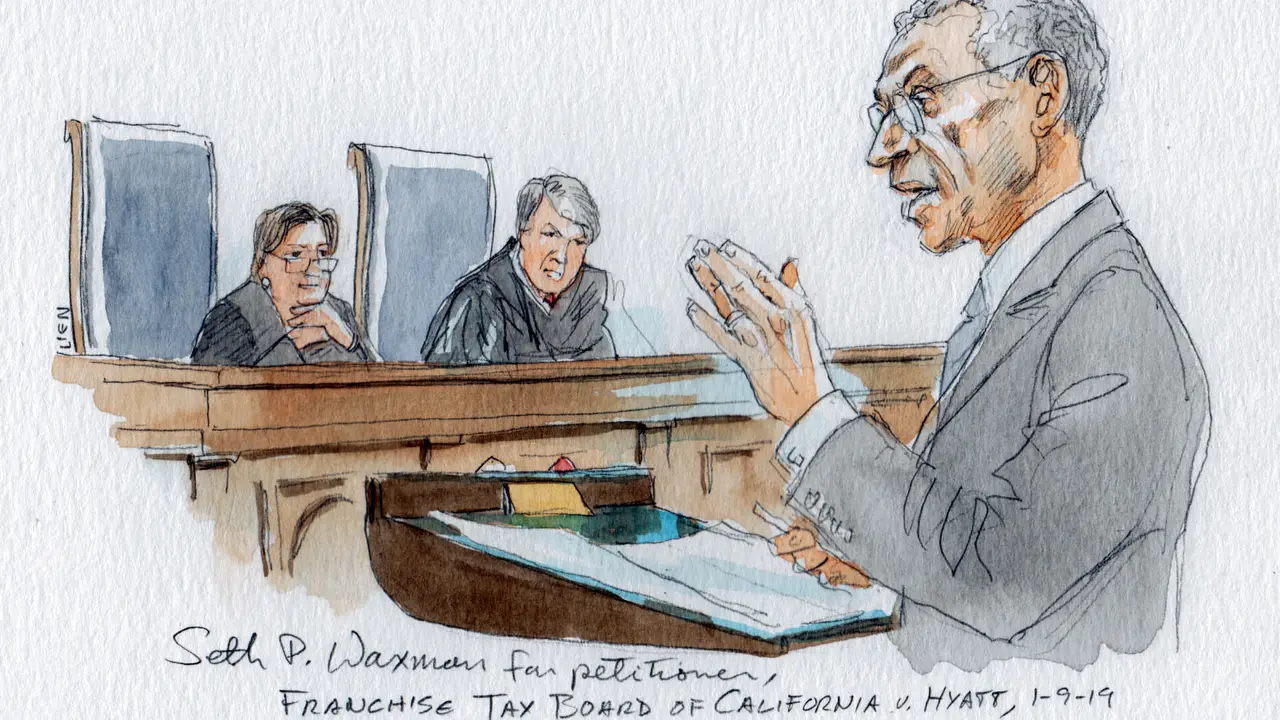
Photo: Wikimedia Commons / Arthur Lien
A unanimous Supreme Court ruling has significantly limited federal courts’ ability to review immigration-related decisions, potentially reducing legal tools available to thousands of Cubans remaining in the country under Form I-220A.
Although the judicial decision doesn’t exclusively refer to Cubans with I-220A, specialized attorneys warn the precedent could indirectly affect hundreds of thousands of open cases in immigration courts, especially those that depended on federal litigation to attempt modifying legal interpretations within the U.S. immigration system.
A Blow to Immigration Legal Strategies
The court’s decision establishes clearer limits on when federal courts can intervene to review decisions made by immigration judges or U.S. immigration system authorities.
In practical terms, this means some immigrants could find greater difficulties presenting legal appeals when receiving negative decisions in their immigration proceedings. The ruling reinforces the criterion that certain administrative determinations of the immigration system must remain within the purview of immigration authorities.
For immigration law experts, this sentence could restrict some of the legal strategies used in recent years to attempt expanding access to immigration benefits through federal court litigation.
The I-220A Form Problem
Form I-220A, officially known as an “order of supervision,” is a document issued by immigration authorities to people who were detained after entering the United States and subsequently released while continuing their immigration proceedings.
Those receiving this document do not obtain regular immigration status, but rather temporary authorization to remain in the country under government supervision while their cases are evaluated by the immigration system.
People under this status must comply with various conditions established by authorities, such as:
- Reporting periodically to immigration officers
- Keeping their address updated
- Appearing before immigration courts when summoned
The Cuban Adjustment Act Obstacle
The main problem is that this document does not equal “parole,” a legal difference that has generated important consequences for thousands of Cuban citizens.
The Cuban Adjustment Act, in effect since 1966, allows Cuban citizens to apply for permanent residence in the United States after remaining at least one year in the country, provided they have been legally admitted or released under parole.
However, those possessing Form I-220A don’t technically meet that legal requirement. By not considering them as admitted persons or parole beneficiaries, these migrants are left outside the traditional mechanism that for decades allowed many Cubans to obtain permanent residence.
Hundreds of Thousands in Immigration Gray Zone
The situation primarily affects Cubans who entered the United States in recent years through the southern border amid a strong increase in migratory flow.
Many were initially detained by immigration authorities and subsequently released under supervision through Form I-220A while their cases progressed through the immigration system.
Various estimates indicate that hundreds of thousands of Cuban citizens could find themselves in this situation, living and working in the United States but without a clear path to access the immigration adjustment provided for in the Cuban Adjustment Act.
For many of these migrants, the possibility of going to federal courts had become one of the main legal strategies to attempt resolving their situation.
“Almost all Cubans who are in court now and whose only viable remedy so far is political asylum,” immigration attorney Alejandro Vázquez Sánchez explained to Martí Noticias.
Legal Battles for I-220A Recognition
In recent years, attorneys and immigrant advocacy organizations have filed multiple lawsuits in federal courts with the objective of getting I-220A recognized as a valid form of admission or as a condition equivalent to parole.
Legal arguments maintain that the U.S. government released these people and they are under official supervision, which —according to some interpretations— should allow them access to certain immigration benefits.
However, several judicial decisions have supported the federal government’s interpretation, which maintains that I-220A does not constitute legal admission to the country nor can it be equated with immigration parole.
The recent Supreme Court ruling could reinforce that interpretation by limiting federal courts’ scope of action to review or reinterpret decisions within the immigration system.
Stricter Restrictions for Appeals
Attorney Alejandro Vázquez Sánchez explained that once an asylum application is rejected, Cuban immigrants only have the possibility of filing an appeal before the Board of Immigration Appeals, and that going to federal court is only possible in very limited or exceptional circumstances.
“Going to federal court will be uphill, very difficult, because the review standard will be so high that there will practically be no opportunity to overturn an immigration court ruling,” the expert noted.
Federal courts will be obligated to evaluate Board of Immigration Appeals (BIA) resolutions under a more demanding parameter, known as the “substantial evidence” criterion, implying a stricter level of review of their determinations.
Hope in Congress
Given the lack of a definitive judicial solution, some analysts consider that the only clear way out could come from a political or legislative decision. The U.S. Congress would have the capacity to modify immigration legislation or create specific mechanisms to resolve the situation of migrants with I-220A.
However, in Washington’s current political climate, any immigration reform faces an uncertain outlook, especially when dealing with sensitive topics related to the border and the immigration system.
For those living under this document, daily life unfolds between court hearings, administrative processes, and the expectation that a legal, judicial, or political change might finally offer a path toward immigration stability.
Meanwhile, cases like Cuban mothers detained by ICE after traveling to Cuba continue exposing the vulnerabilities of those in this legal limbo.
Frequently Asked Questions About I-220A
What exactly is Form I-220A?
It’s an order of supervision issued by U.S. immigration authorities to people who were detained upon entering the country and subsequently released while awaiting their immigration hearings. It doesn’t grant immigration status, only temporary authorization to remain under supervision.
Why is I-220A problematic for Cubans?
Because the Cuban Adjustment Act requires that Cubans have been “admitted” or “released under parole” to qualify for residency after one year. I-220A doesn’t technically meet either of these legal requirements.
How many Cubans are affected by this situation?
Estimates suggest hundreds of thousands of Cubans are in this legal limbo situation, especially those who entered through the southern border in recent years and were subsequently released with I-220A.
What legal options remain now for Cubans with I-220A?
With the Supreme Court ruling restrictions, the main options are applying for political asylum (though with fewer federal appeal possibilities) or waiting for potential Congressional legislative reform that clarifies their legal situation.
For specialized legal advice on I-220A cases and complex immigration situations, consultation with immigration attorneys experienced in Cuban-American law is recommended.
How we got here
Background
The first thing we published on this topic.
Nicaragua Closes the Door: Ends Visa-Free Entry for Cubans
Nicaragua ends visa-free entry for Cuban citizens, closing one of the main migration routes to the United States.
Cuba Records Second Magnitude 5 Earthquake in Three Days Near Santiago
A 5.0 magnitude tremor shook eastern Cuba, two days after a 5.6 quake in Guantánamo that damaged homes
Related articles
Supreme Court Restricts Asylum: New Legal Blow for Cubans with I-220A
Unanimous decision limits asylum appeals in federal courts, affecting thousands of Cubans who depend on this legal recourse.
Post-Communist Cuba: Diaspora Faces Crucial Decisions
Analysis reveals challenges Cubans inside and outside the island will face amid potential end of communist system
DHS Budget Crisis: ICE and CBP Unfunded While TSA Paralyzes
Senate approves partial DHS funding excluding ICE and CBP. 300,000 Cubans in legal limbo face uncertain outlook.

Trump Rejects ICE Budget Cuts: 'It's Unacceptable' Amid Crisis
Trump rejects ICE budget reduction while 300,000 Cubans remain in legal limbo. Federal courts order releases for constitutional violations.

Supreme Court debates 'arrives in' US: asylum future at stake
Justices debate 'metering' policy that allows rejecting asylum seekers at border. Will affect 300,000 Cubans in limbo.
I sold my house to leave: Cubans stranded in Mexico
Thousands of Cubans deported to Mexico live in migration limbo without home, work, or future prospects. A silent humanitarian crisis.