Teatro Sauto: The Architectural Jewel of Matanzas, Cuba
Discover Teatro Sauto, a National Monument and pride of Matanzas since 1863. Diego Rivera said: 'I recognize Matanzas by the Sauto.'
4 min read
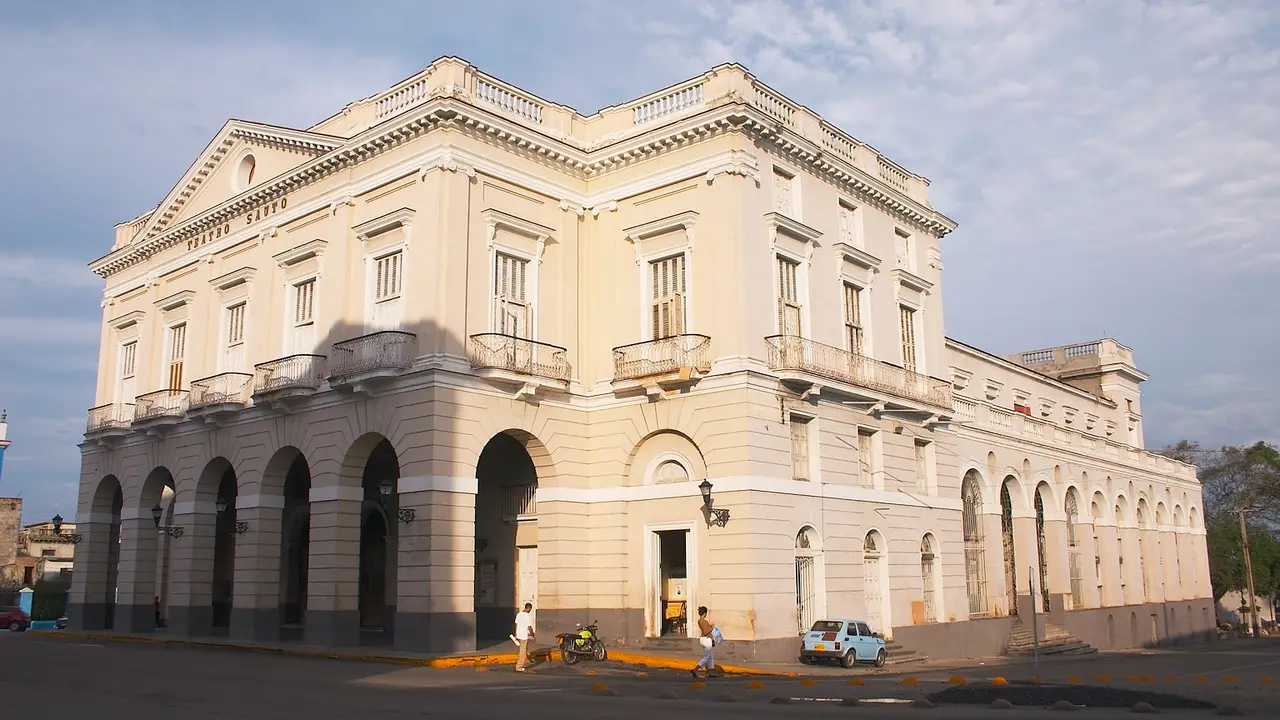
In the Plaza de la Vigía of Matanzas, known as the “Athens of Cuba,” stands a building that embodies 163 years of Cuban cultural history: Teatro Sauto. This neoclassical colossus, inaugurated on April 6, 1863, is not merely a theater — it is the cultural heart of a city that forged the nation’s artistic identity.
A Theater Born of Patronage and Ingenuity
Construction of the Sauto began in 1860 under the direction of Italian architect Daniele Dell’Aglio. Initially named Teatro Esteban after civil governor Pedro Esteban y Arranz, it soon adopted the surname of the man who truly made its splendor possible: Ambrosio de la Concepción Sauto, arts patron who financed much of its construction and ornamentation.
The limestone used came from Don Manuel Santos Pargas’s quarries. During excavation, workers lost a crowbar that, while searching for it, revealed one of Cuba’s most impressive natural treasures: Bellamar Caves. Thus, the birth of the Sauto brought with it the discovery of another Matanzas jewel.
Architecture That Dazzles
Teatro Sauto’s interior is a visual poem in horseshoe form:
- 775 seats distributed across three balcony levels
- Precious wood panels covering nearly the entire interior
- Carrara marble statues of Greek goddesses adorn the lobby
- Paintings of the muses decorate the main hall ceiling
- An original curtain depicting the Concordia Bridge over the Yumurí River
A unique feature: the first-level floor can be mechanically raised to transform the auditorium into an elegant ballroom — 19th-century engineering ingenuity that still functions today.
Stage of Legends
Matanzas’s proximity to Havana and the wealth of its residents made the Sauto an essential stop for great artists visiting Cuba:
| Artist | Year | Performance |
|---|---|---|
| Sarah Bernhardt | 1887 | Camille |
| Enrico Caruso | 1920 | Lyric recital |
| Anna Pavlova | 1945 | Classical ballet |
| Andrés Segovia | Various | Guitar recitals |
| José White | 19th c. | Virtuoso violin |
More recently, in 2022, Spanish cantaora Pilar Boyero declared after performing there: “Matanzas seems like a spectacularly beautiful city to me, and the theater is a jewel. I’ve felt its warmth from minute zero and I’m leaving with the feeling of wanting to return.”
Diego Rivera and the Sauto
The great Mexican muralist Diego Rivera, who visited Cuba multiple times and maintained deep ties with Afro-Cuban culture, left a phrase that became the city’s motto:
“I recognize Matanzas by the Sauto.”
For Rivera, the theater’s magnificence was inseparable from Matanzas identity — an affirmation that resonates 163 years after its inauguration.
Restoration and Rebirth (2010-2018)
The Sauto closed its doors in 2010 for a comprehensive restoration lasting eight years. The work included:
- Restoration of the historic curtain
- Repair of the floor-raising system
- Conservation of marble statues
- Electrical and acoustic system updates
- Treatment of precious woods
In 2018 it reopened, reclaiming its place as a venue for the International Ballet Festival of Havana and Mayo Teatral, plus regular programming five days per week.
Cuba’s Eight Neoclassical Theaters
The Sauto is part of a unique heritage: the 8 19th-century Cuban theaters that survive in operation:
- Teatro Tacón (1838) — Havana
- Teatro Principal (1839) — Sancti Spíritus
- Teatro Milanés (1839) — Pinar del Río
- Teatro Principal (1850) — Camagüey
- Teatro Sauto (1863) — Matanzas ⭐
- Teatro Martí (1884) — Havana
- Teatro La Caridad (1885) — Santa Clara
- Teatro Tomás Terry (1889) — Cienfuegos
Together, they represent one of Latin America’s most important neoclassical theater ensembles.
Visiting Teatro Sauto
The theater is located in Plaza de la Vigía, Matanzas’s historic center, alongside Junco Palace (Provincial Museum) and the Pedro Esquerré Gallery. The city lies just 100 km east of Havana, accessible via the Vía Blanca highway with spectacular views of the Yumurí Valley.
If you visit Matanzas, the Sauto isn’t just an option — it’s an obligatory pilgrimage. As Diego Rivera understood, to know the Sauto is to know Matanzas, and to know Matanzas is to enter the poetic soul of Cuba.
Teatro Sauto was declared a National Monument of Cuba through Resolution #003 of October 10, 1978, with Grade I protection.
Frequently asked questions
Why is Teatro Sauto important to Cuba?
Who has performed at Teatro Sauto?
How many seats does Teatro Sauto have?
What's the connection between Teatro Sauto and Bellamar Caves?
How we got here
Background
The first thing we published on this topic.
Cuban Music Conquers the Latin Grammys
Cuban artists sweep the ceremony with awards in multiple tropical music categories.
Old Havana Restoration Reaches a New Milestone
Rehabilitation work in the historic quarter reveals colonial frescoes from the 18th century.
Related articles

Danzón: Cuba's National Dance Born in Matanzas in 1879
The history of Cuban danzón, from Miguel Failde's Las Alturas de Simpson to its influence on mambo and cha-cha-chá.
Malpaso Dance Company: Cubans Make History with Martha Graham
The Havana-based company becomes the first Cuban troupe to perform Martha Graham's work at New York's Joyce Theatre.
Carnival of Santiago de Cuba: The Caribbean's Greatest Celebration
Discover the history and traditions of Santiago de Cuba's Carnival, a 300+ year celebration blending African and Spanish heritage in vibrant festivities.
Patricio Revé: The Cuban Dancer Who Conquered the Royal Ballet
The Havana-born dancer becomes Principal at the Royal Ballet for the 2026-2027 season, cementing Cuba's legacy in world dance.

Danzón: Cuba's National Dance That Conquered the World
From Matanzas to the Latin Grammys: the history of danzón and how Orquesta Faílde keeps Miguel Faílde's legacy alive.
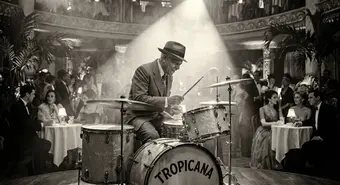
Guillermo Barreto: The Drum Legend Who Revolutionized Cuban Jazz
Discover Guillermo Barreto, the drummer who brought Tropicana's legendary descargas into jazz history.