Guillermo Barreto: The Drum Legend Who Revolutionized Cuban Jazz
Discover Guillermo Barreto, the drummer who brought Tropicana's legendary descargas into jazz history.
3 min read
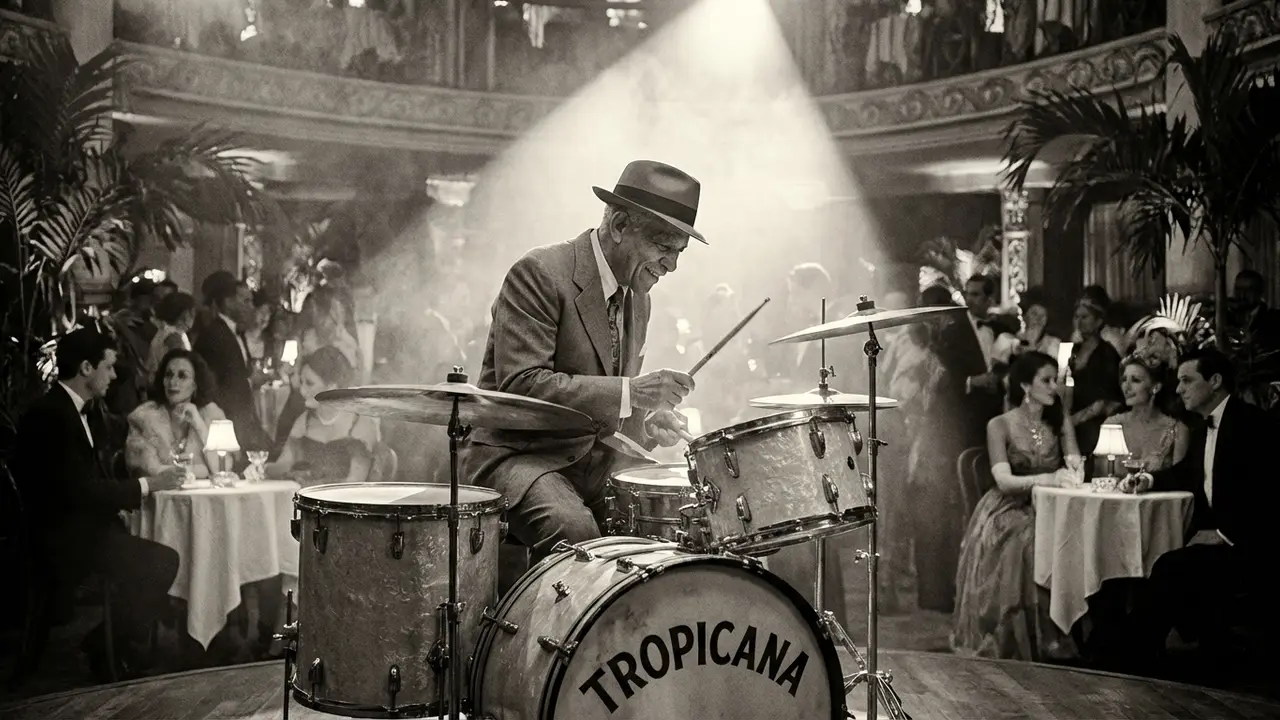
Illustration: Aroma de Cuba (AI)
In Cuban music’s pantheon, certain names shine with their own light: Benny Moré, Bebo Valdés, Cachao. But behind each of them, keeping the pulse that made Havana dance, was Guillermo Barreto —the man who transformed Cuban drums into a jazz instrument without losing an ounce of sabor.
The Parrot of Tropicana
Born August 11, 1929, in Havana, Guillermo grew up in a family where music was the air they breathed. His father, Primo Barreto, was a clarinetist who taught music to all his children. But it was Guillermo who would find his voice in the drums.
Rita Montaner, the legendary Cuban singer, nicknamed him “El Loro” (The Parrot) for his constant chatter and peculiar walk. The name stuck, though history would know him simply as “Barretico” —a diminutive hiding a giant.
From Pailas to Bebop
By the 1940s, young Barreto had already mastered Cuban timbales when American music reached his ears. Inspired by bebop drummers like Max Roach and Roy Haynes, Barreto achieved something few Cuban musicians had: understanding and executing American swing with authenticity.
“Guillermo Barreto was one of the few Cuban drummers who understood the subtleties of playing jazz with an authentic American swing. In addition, he had a very special ear and, above all, an exquisite musical taste.” — Paquito D’Rivera
This fusion would prove revolutionary. Barreto didn’t imitate —he translated. He took American jazz language and made it speak Cuban.
The Tropicana Descargas
In the early 1950s, Barreto began organizing the Sunday descargas at the Tropicana Cabaret, the most legendary jam sessions in Cuban music. There, with his neighbor and friend Bebo Valdés at the piano, the future of Afro-Cuban jazz was being forged.
Barreto didn’t just play —he transcribed American music for his colleagues, explaining jazz concepts to musicians trained in different traditions. He was a bridge between two musical worlds.
In 1957, he participated in Cachao’s historic sessions that produced the “Cuban Jam Sessions in Miniature” albums, considered the official birth of the recorded descarga.
The Quinteto Instrumental de Música Moderna
In 1958, alongside blind pianist Frank Emilio Flynn, Barreto founded the Quinteto Instrumental de Música Moderna. The group would record their first LP in 1959 under the name Grupo Cubano de Música Moderna, establishing a new standard for jazz on the island.
The quintet would evolve in the 1980s into Los Amigos, a supergroup that kept the flame of Cuban jazz alive for decades.
An anecdote illustrates his caliber: when Stan Kenton’s orchestra visited Cuba and his star drummer Buddy Rich fell ill, Barreto substituted for one night. Playing at Buddy Rich’s level was no small feat.
The Legacy: Fiesta del Tambor
Guillermo Barreto died on December 14, 1991, two months after recording “Spirits of Havana” with Canadian flautist Jane Bunnett —his final contribution to a catalog spanning five decades.
But his legacy beats every March in Havana. His nephew Giraldo Piloto (director of the band Klímax and son of Josefina Barreto) founded the Fiesta del Tambor in 2000, a percussion festival featuring the international competition “Guillermo Barreto in Memoriam.”
Percussion in Cuba is a revered art. And Guillermo Barreto, the Parrot who never stopped speaking through his drums, remains its most eloquent prophet.
His wife, singer Merceditas Valdés, muse of Afro-Cuban music, died on June 13, 1996. Together, they were one of the most influential couples in 20th-century Cuban music.
Frequently asked questions
Who was Guillermo Barreto?
What is the Fiesta del Tambor in Havana?
What are Cuban descargas?
Why was Barreto important to Cuban jazz?
How we got here
Background
The first thing we published on this topic.
Cuban Music Conquers the Latin Grammys
Cuban artists sweep the ceremony with awards in multiple tropical music categories.
Son Cubano: The Rhythm That Conquered the World
From the mountains of Oriente to Broadway stages. History, instruments, and legends of the musical genre that defines Cuba.
Related articles

Tropicana: The Paradise Under the Stars That Dazzled the World
The history of Havana's Tropicana cabaret from 1939 to today. Architecture, shows, and its enduring Cuban cultural legacy.
Ana Mendieta at Tate Modern: Major Retrospective of Cuban Pioneer
The UK's largest Ana Mendieta retrospective opens at Tate Modern in July 2026. 150 works by the Cuban-American earth-body art pioneer.
Patricio Revé: The Cuban Dancer Who Conquered the Royal Ballet
The Havana-born dancer becomes Principal at the Royal Ballet for the 2026-2027 season, cementing Cuba's legacy in world dance.
Carnival of Santiago de Cuba: The Caribbean's Greatest Celebration
Discover the history and traditions of Santiago de Cuba's Carnival, a 300+ year celebration blending African and Spanish heritage in vibrant festivities.
Malpaso Dance Company: Cubans Make History with Martha Graham
The Havana-based company becomes the first Cuban troupe to perform Martha Graham's work at New York's Joyce Theatre.
Buena Vista Social Club Wins Grammy: Broadway Celebrates Cuba
The Broadway musical about legendary Cuban musicians won the 2026 Grammy for Best Musical Theater Album.