Benny Moré: The Wildman of Rhythm Who Defined Cuban Music
Life and legacy of Benny Moré, Cuba's greatest singer. From the sugarcane fields of Lajas to conquering Havana and Mexico with his unique voice.
4 min read
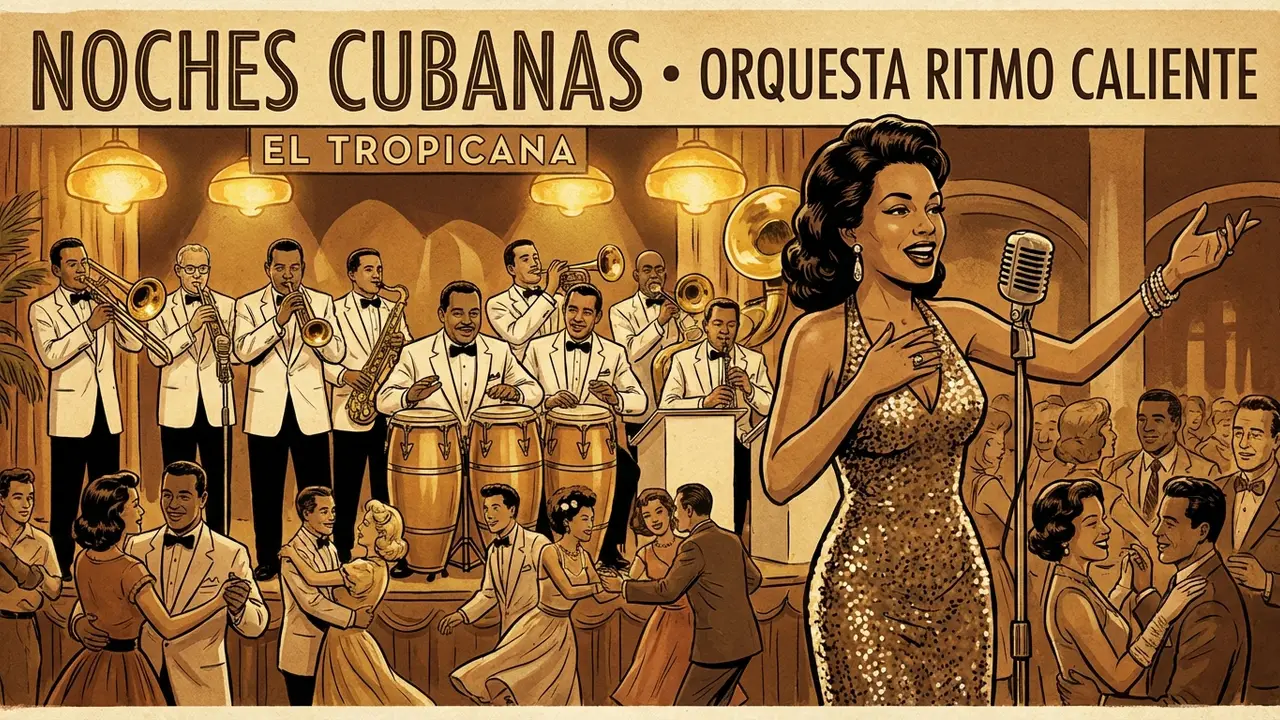
Illustration: Aroma de Cuba (AI)
A son of the sugarcane fields
Bartolomé Maximiliano Moré Gutiérrez came into the world on August 24, 1919, in Santa Isabel de las Lajas, a small town in Cienfuegos province in central Cuba. He was the eldest of 18 siblings in a humble family descended from Congolese slaves brought to work Cuba’s sugarcane plantations.
From childhood, music was his refuge. At six years old, he built his first instrument: a stick with a sardine can serving as the sound box. By nine he was playing a homemade tres guitar, learning the rhythms of yuka and makuta — the Congolese roots that feed Cuban rumba and conga.
From Havana to Mexico: the path of a genius
In 1936, at just 17, Moré left Lajas for Havana. He survived by selling bruised fruit and medicinal herbs on the streets. But his voice saved him: after a humiliating debut on the CMQ radio program The Supreme Court of Art — where he was buzzed off stage with a church bell barely after starting to sing — he returned and won first prize.
The turning point came when Ciro Rodríguez of the legendary Trío Matamoros heard him singing in a bar called El Temple. In 1945, Moré traveled with Conjunto Matamoros to Mexico, where he decided to stay. That’s when he changed his name: Rafael Cueto warned him that in Mexico they call donkeys “bartolo,” so he adopted the stage name Beny Moré.
In Mexico City, he recorded with Pérez Prado for RCA Victor a series of hits that shook all of Latin America: Bonito y Sabroso, Anabacoa, Mucho Corazón, La Múcura. The fusion of Cuban son with mambo they created together was a musical revolution.
The Banda Gigante: a king without a score
In 1952, Moré returned to Cuba and the following year founded the Banda Gigante, an orchestra of over 40 musicians that became one of Cuba’s great big bands of the 1950s. The extraordinary thing: Benny never learned to read music. He conducted his orchestra by ear, humming each part to every musician, with a rhythmic and harmonic instinct that left professional arrangers speechless.
He also worked with Bebo Valdés and Ernesto Duarte, but it was with his own orchestra that he achieved immortality. His performances in Havana’s cabarets and dance halls were events: his stage presence, his tilted hat, his cane, and his dance moves were as memorable as his voice.
Soneo: the art of improvising with soul
What set Benny Moré apart from every other singer was his mastery of soneo — vocal improvisation within son cubano. Every performance was unique. He engaged in famous controversias (vocal duels) with other soneros like Cheo Marquetti and Joseíto Fernández, the creator of Guantanamera.
His tenor voice, fluid and charged with emotion, could shift from the most energetic mambo to the most heartbreaking bolero without losing an ounce of authenticity. He didn’t just sing the genres — he inhabited them.
A legacy that never fades
On February 19, 1963, Benny Moré died in Havana at age 43 from liver cirrhosis. When the Revolution triumphed in 1959, many musicians fled to Miami. Benny chose to stay “con mi gente” — with my people.
Today his legacy is immense:
- Bronze statue on Cienfuegos’ Prado promenade
- Latin Grammy Hall of Fame (2013)
- Latin Songwriters Hall of Fame (2016)
- International Latin Music Hall of Fame (1999)
- His grave in Santa Isabel de las Lajas cemetery is a place of pilgrimage
On every corner of Cuba where a son plays, in every jam session, in every improvisation by a sonero, the spirit of El Bárbaro del Ritmo lives on. Because Benny Moré didn’t just sing Cuban music — he defined it.
Want to learn more about the music Benny Moré helped create? Read our guide to son cubano and discover how Cuban rumba became a UNESCO World Heritage tradition.
Frequently asked questions
Why was Benny Moré called 'El Bárbaro del Ritmo' (The Wildman of Rhythm)?
How many musical genres did Benny Moré master?
Where was Benny Moré born and what is his legacy today?
What was Benny Moré's connection to Pérez Prado?
How we got here
Background
The first thing we published on this topic.
Cuban Music Conquers the Latin Grammys
Cuban artists sweep the ceremony with awards in multiple tropical music categories.
Son Cubano: The Rhythm That Conquered the World
From the mountains of Oriente to Broadway stages. History, instruments, and legends of the musical genre that defines Cuba.
Related articles
Tropicana: The Paradise Under the Stars That Dazzled the World
The history of Havana's Tropicana cabaret from 1939 to today. Architecture, shows, and its enduring Cuban cultural legacy.
Art Deco Architecture in Havana: Hidden Gems from the 1930s
Discover Havana's most stunning Art Deco buildings, from the Bacardí Building to the América Theater — Cuba's overlooked architectural treasures.
Coppelia Ice Cream: Cuba's Cathedral of Ice Cream Turns 60
The history, flavors, and current state of Havana's iconic Coppelia ice cream parlor, Cuba's sweetest institution since 1966.
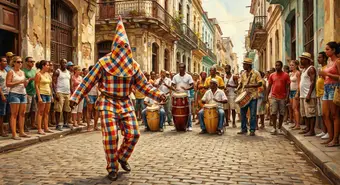
Abakuá: Cuba's Secret Afro-Cuban Society That Defied Slavery
History of the Abakuá secret society in Cuba, from the Ékpè of Calabar to the ñáñigos of Havana. Rituals, íremes, and cultural legacy.
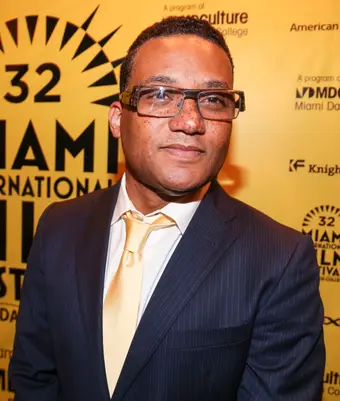
Gonzalo Rubalcaba Wins Fourth Grammy: Tribute to Benny Moré
Cuban pianist conquers 2026 Grammy with homage to Benny Moré and Nat King Cole alongside Yainer Horta and Joey Calveiro.
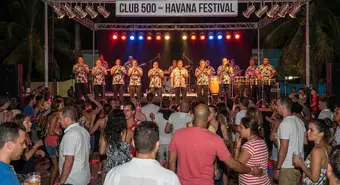
Havana's Salsa Festival Celebrates Orquesta Revé's 70th Anniversary
The 10th Festival de la Salsa honors a decade of music and 70 years of Elito Revé y su Charangón at Havana's Club 500.