Cuban Rumba: UNESCO Intangible Cultural Heritage of Humanity
Discover Cuban rumba, its three styles (yambú, guaguancó, columbia), and why UNESCO declared it Intangible Cultural Heritage in 2016.
4 min read
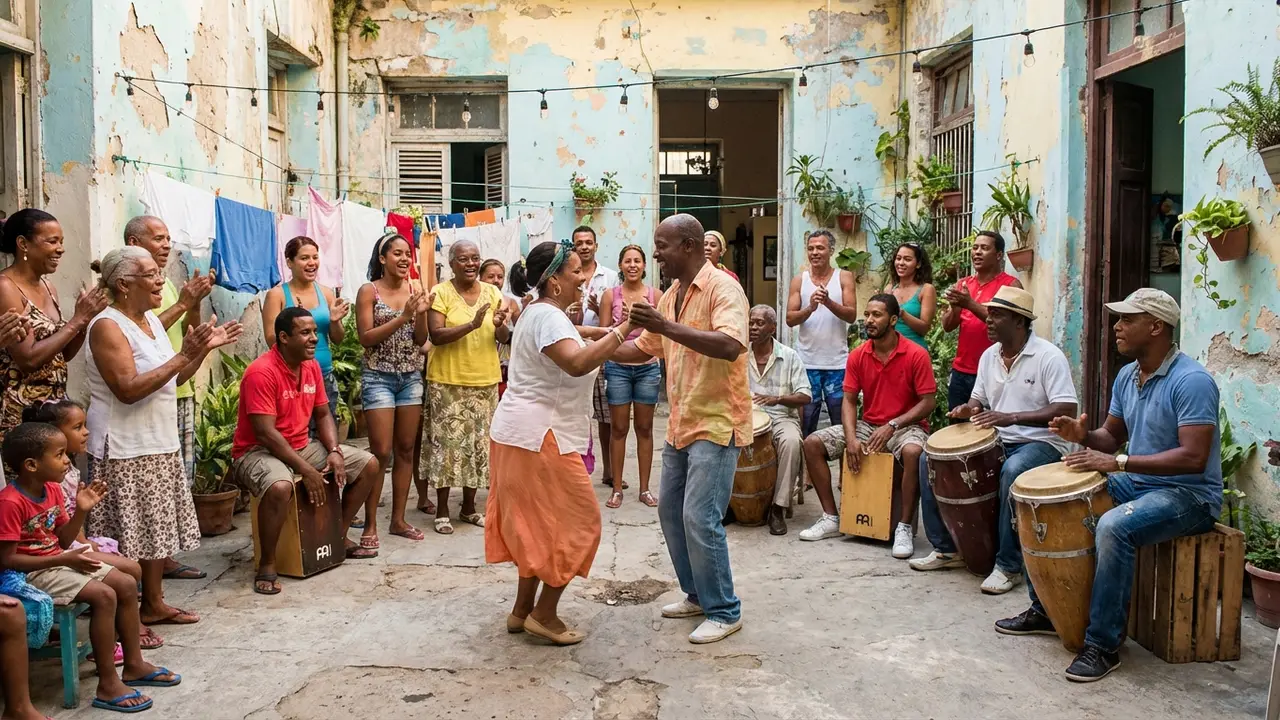
Illustration: Aroma de Cuba (AI)
In the solares of Old Havana, in the courtyards of Matanzas, on any corner where three Cubans gather with a wooden box and the urge to celebrate, rumba is born. It’s not just music. It’s not just dance. It’s the purest expression of the Afro-Cuban soul, the heartbeat of resistance from a people who transformed their pain into celebration.
A Heritage of Humanity
In December 2016, UNESCO inscribed Cuban rumba on the Representative List of the Intangible Cultural Heritage of Humanity. This recognition arrived as an international embrace for a tradition that had been marginalized for centuries, associated with the poorest strata of Cuban society.
But rumba never needed validation. From the sugarcane plantations to the alleyways of Cayo Hueso, it was already a living heritage passed down from grandparents to grandchildren, from neighbor to neighbor.
African Roots, Cuban Heart
Rumba was born from the violent yet fertile encounter between Africa and the Caribbean. The enslaved people brought from the Congo, Calabar, and other African regions carried with them their sacred rhythms, their drums, their way of moving the body as both prayer and protest.
In Cuba, those rhythms blended with elements of Antillean culture and even Spanish flamenco. The result was something entirely new: Cuban rumba, an expression that is simultaneously African and Caribbean, sacred and profane, individual and communal.
The Three Styles of Rumba
Yambú: The Elders’ Rumba
Yambú is the oldest and most leisurely style. It’s known as “the old people’s rumba” because its slow tempo imitates the movements of elderly people. The couple dances with contained elegance, without the provocative contact of other styles.
The original yambú instruments were wooden cajones—codfish or candle boxes transformed into drums out of necessity—accompanied by spoons and whatever objects could mark the rhythm.
Guaguancó: The Sensual Courtship
Guaguancó is perhaps the most internationally recognized style. It’s a couples’ dance representing the courtship between man and woman, featuring the famous “vacunao”: a pelvic thrust from the man that the woman must gracefully dodge.
This game of seduction and resistance is pure metaphor for human relationships, full of humor, mischief, and erotic tension sublimated into art.
Columbia: The Masculine Challenge
Columbia is the most virtuosic and athletic of the rumbas. Traditionally a men-only dance, it was a competition of skill where each dancer tried to outdo the previous one with increasingly acrobatic movements.
Danced in 6/8 time, faster than the other styles, the dancer often incorporates elements of Santería and other Afro-Cuban traditions, imitating the orishas in their movements.
The Sacred Instruments
Rumba is played with three tumbadoras (conga drums): the quinto (highest-pitched, improvises), the tres golpes (medium), and the salidor (bass, keeps time). Before modern tumbadoras existed, everything was done with cajones.
The ensemble is completed by the claves—those two wooden sticks that mark the fundamental rhythmic pattern of all Cuban music—and the catá or guagua, a bamboo tube struck with sticks.
But the most important instrument is the palmas: the hands of everyone present, marking the rhythm, participating in the celebration. In rumba, there are no passive spectators.
The Legendary Groups
The recorded history of rumba began in the 1940s, but the groups that preserved and elevated it are legendary:
- Los Muñequitos de Matanzas — founded in 1952, guardians of the Matanzas tradition
- Clave y Guaguancó — since 1957, the sound of Havana
- Los Papines — innovators who brought rumba to new audiences
- Yoruba Andabo — connecting rumba with its religious roots
- AfroCuba de Matanzas — Afro-Cuban spirituality made music
Rumba Today
Despite the crisis Cuba is facing, rumba stays alive in the solares, in weekend peñas (gatherings), in Callejón de Hamel, and in every family celebration. It’s cultural resistance in its purest form.
Rumba connects directly with other expressions of Cuban music like son and Afro-Cuban jazz, forming part of the rich tapestry of Cuban musical instruments that have conquered the world.
When you hear the quinto improvising over the clave, when you see a couple dancing guaguancó in a Havana courtyard, you’ll be witnessing more than entertainment. You’ll be seeing Cuba’s living history, the indomitable spirit of a people who dance because they have no other way to shout their freedom.
Rumba is Cuba. And Cuba, in its deepest essence, is rumba.
Frequently asked questions
What are the three main styles of Cuban rumba?
When did UNESCO declare rumba a World Heritage?
What instruments are used in Cuban rumba?
Where did Cuban rumba originate?
How we got here
Background
The first thing we published on this topic.
Cuban Music Conquers the Latin Grammys
Cuban artists sweep the ceremony with awards in multiple tropical music categories.
Son Cubano: The Rhythm That Conquered the World
From the mountains of Oriente to Broadway stages. History, instruments, and legends of the musical genre that defines Cuba.
Related articles
Punto Cubano: Cuba's Sung Poetry Declared UNESCO Heritage
Discover punto cubano, the improvised sung poetry of Cuban farmers declared UNESCO Intangible Cultural Heritage in 2017.
The Cuban Tres: The Instrument That Forged the Soul of Son
From Baracoa to world stages: the history of the Cuban tres and Pancho Amat, the master bringing its sound across Europe in 2026.
Osdany Morales Wins Inaugural Poetry in Translation Prize
Cuban writer from Nueva Paz wins prestigious international poetry award with Security Questions collection.
Digna Guerra and the Cuban National Choir: 50 Years of Excellence
Maestra Digna Guerra has led Cuba's National Choir for 50 years. Founded by Che and Camilo, discover its revolutionary origins and legacy.
Cuban Handicrafts: A Complete Guide to Traditions and Artisan Crafts
Cuban handicrafts: Taíno ceramics, embroidered textiles, woodcarving and musical instruments.
Cuban Santería: The Orishas and Syncretism That Define Cuba
Discover Cuban Santería, the Afro-Cuban religion blending Yoruba traditions with Catholicism. Orishas, rituals, and cultural influence.