Cuban Handicrafts: A Complete Guide to Traditions and Artisan Crafts
Cuban handicrafts: Taíno ceramics, embroidered textiles, woodcarving and musical instruments.
5 min read
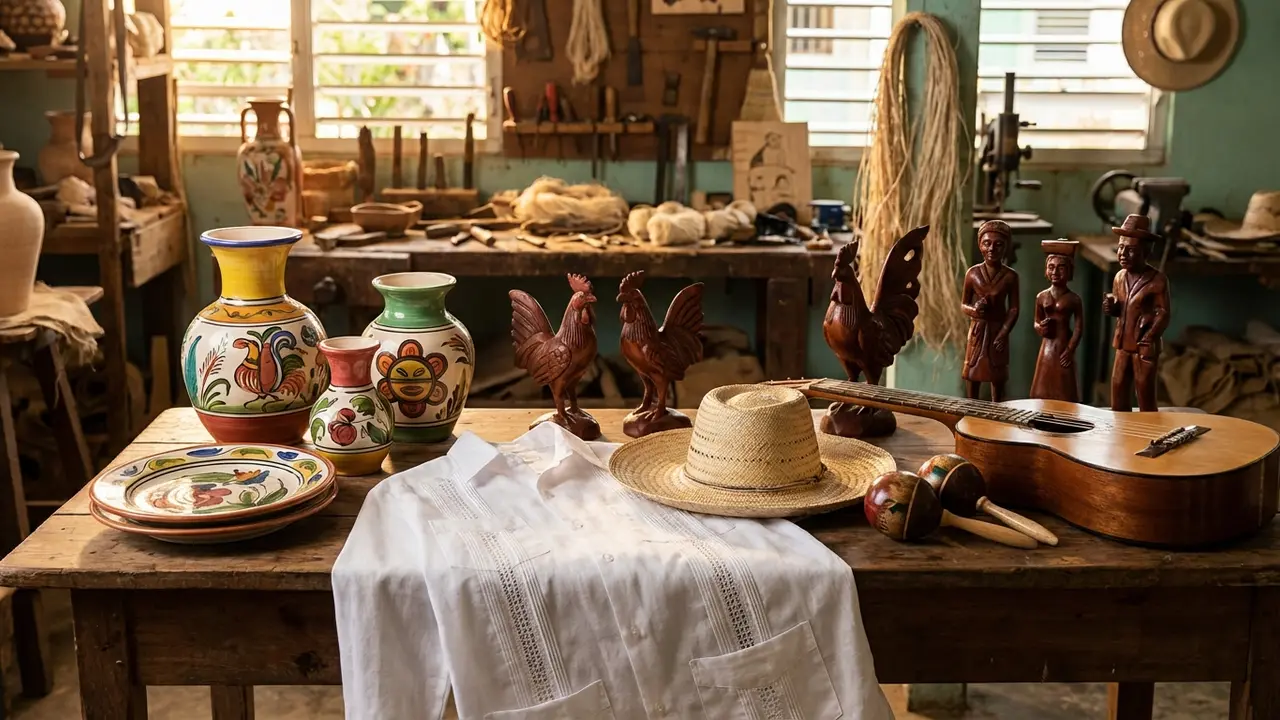
Illustration: Aroma de Cuba (AI)
In every corner of Cuba, from the workshops of Old Havana to small rural communities in Pinar del Río, artisan hands perpetuate traditions spanning centuries. Cuban handicrafts are much more than tourist souvenirs: they are the tangible expression of a mestizo culture that fused Taíno, Spanish, and African heritage into creations unique in the world.
Taíno Heritage: The Original Roots
Before Spanish colonizers arrived, the Taíno peoples had already developed a rich artisan tradition. They worked ceramics, cotton, wood, and plant fibers with mastery. Although the Taíno population was decimated, their legacy endures in contemporary Cuban craftsmanship.
Dujos (carved ceremonial seats), ceramic vessels decorated with geometric motifs, and woven hammocks are direct inheritances from this culture. Today, many Cuban artisans incorporate Taíno symbols like the sun, the frog (symbol of fertility), and the cemí (ancestral spirit) in their creations.
Cuban Ceramics: From Clay to Art
Cuban ceramic tradition has its epicenter in Trinidad and Camagüey, where the craft passes from generation to generation. The famous tinajones of Camagüey — large clay vessels that traditionally stored rainwater — have become the city’s symbol and Cuban Cultural Heritage.
Styles and Techniques
- Utilitarian ceramics: Pots, casseroles, and vessels for daily use
- Decorative ceramics: Pieces painted with floral, Taíno, or colonial motifs
- Contemporary ceramics: Fusion of traditional techniques with modern design
- Engobe technique: Decoration with colored clays before firing
The Trinidad Pottery Workshop, founded in 1892, is one of Cuba’s oldest and continues producing pieces following ancestral methods.
Textiles and Embroidery: The Art of the Needle
The Guayabera: More Than a Shirt
The guayabera, declared “Cuba’s National Garment” in 2010, is the pinnacle of Cuban textile art. Originating in Sancti Spíritus in the 18th century, this shirt is distinguished by its alforzas (vertical pleats), four pockets, and characteristic embroidery.
The finest guayaberas are made in:
- Sancti Spíritus: Historic birthplace of the garment
- Yayabo: Famous for intricate embroidery
- Havana: Workshops maintaining the tradition
A hand-embroidered guayabera can require up to 40 hours of work and hundreds of tiny stitches.
Lace and Embroidery
Bobbin lace, introduced by the Spanish, flourished especially in Trinidad. Trinidadian women created a distinctive style combining European influences with tropical motifs. Tablecloths, napkins, and embroidered blouses are treasures still produced by hand.
Woodcarving: Sculptures of the Tropics
Cuba possesses exceptional precious woods: mahogany, cedar, ebony, and majagua. Artisans transform these materials into:
Traditional Figures
- Saints and virgins: Heritage of Spanish colonial imagery
- Orishas: Representations of santería deities
- Musicians and dancers: Scenes of Cuban life
- Animals: Tocororos, flamingos, crocodiles
Utilitarian Objects
- Decorated canes: Holguín tradition
- Cigar boxes: Some hand-carved with Cuban scenes
- Musical instruments: Claves, güiros, maracas
The Gibara Woodworking Workshop in Holguín is renowned for carvings that capture the essence of the Caribbean.
The Yarey Hat: National Heritage
The yarey hat is perhaps the most emblematic craft of the Cuban countryside. Hand-woven from leaves of the yarey palm (Copernicia yarey), this hat has protected Cuban farmers from the sun for centuries.
The Artisan Process
- Harvesting: Young leaves are cut during the waning moon
- Drying: In the sun for several days until bleached
- Preparation: Scraped and divided into fine strips
- Weaving: Process that can take a full week
- Finishing: Ironed and given final shape
In 2017, the yarey hat was declared Cuban National Cultural Heritage. The finest examples come from Camagüey and Ciego de Ávila.
Musical Instruments: The Sound of Cuba
No craft is more alive than one that produces music. Cuban artisans handcraft instruments that define the island’s sound:
Percussion
- Tumbadoras/Congas: Elongated drums of African origin
- Bongos: Pair of small joined drums
- Maracas: Dried gourds with seeds
- Claves: Two wooden sticks that mark the rhythm
Strings
- Cuban tres: Three-double-string guitar, heart of son music
- Laúd: Spanish-origin instrument adapted to Cuban taste
Luthiers in Santiago de Cuba are especially recognized for percussion instrument quality, while Havana concentrates the best tres builders.
Dolls and Figures: Afro-Cuban Folk Art
Black dolls dressed as santería priestesses are among Cuba’s most popular souvenirs. These figures, dressed in orisha colors (yellow for Oshún, blue for Yemayá, red and white for Changó), represent the religious and cultural fusion that defines Cuba.
Callejón de Hamel in Centro Habana is the epicenter of Afro-Cuban art, with murals, sculptures, and handicrafts celebrating Yoruba traditions.
Where to Buy Cuban Handicrafts
In Cuba
- San José Fair (Havana): Cuba’s largest handicraft market
- Alameda Market (Old Havana): By the port, ideal for ceramics
- Obispo Street (Havana): Galleries and art shops
- Trinidad: Cuba’s most artisan city
- Camagüey Market: Famous for tinajones and ceramics
Online (International Shipping)
- Etsy - Cuban Crafts: Independent artisans
- Cuba Artesanía: Specialized store
- Amazon Handmade: Some Cuban-American artisans
How to Identify Authentic Handicrafts
- Look for imperfections: Handwork is never perfectly uniform
- Ask about the artisan: Legitimate sellers know their pieces’ history
- Avoid prices too low: Artisan quality has its fair cost
- Observe the materials: Noble woods, natural fibers, traditional pigments
- Certify the origin: Some products carry the ACAA seal (Cuban Association of Artist Artisans)
The Future of Cuban Handicrafts
Despite economic challenges, Cuban handicrafts are experiencing a renaissance. A new generation of artisans combines ancestral techniques with contemporary design, creating pieces that honor tradition while speaking a modern language.
Organizations like the Cuban Cultural Assets Fund work to preserve these trades, offering training and commercialization spaces for artisans. Every piece you acquire is not just a beautiful object: it’s a vote of confidence in the survival of traditions that define Cuba’s soul.
Next time you hold a Cuban maraca or admire a Camagüey tinajón, remember you don’t just have an object: you have history, culture, and the loving hours of hands keeping a centuries-old tradition alive.
Frequently asked questions
What are the most typical Cuban handicrafts?
Where can I buy authentic Cuban handicrafts in Havana?
What is a yarey hat and why is it special?
How much do Cuban handicrafts cost and how can I identify authentic pieces?
How we got here
Background
The first thing we published on this topic.
Cuban Music Conquers the Latin Grammys
Cuban artists sweep the ceremony with awards in multiple tropical music categories.
Son Cubano: The Rhythm That Conquered the World
From the mountains of Oriente to Broadway stages. History, instruments, and legends of the musical genre that defines Cuba.
Related articles
Digna Guerra and the Cuban National Choir: 50 Years of Excellence
Maestra Digna Guerra has led Cuba's National Choir for 50 years. Founded by Che and Camilo, discover its revolutionary origins and legacy.

Osdany Morales Wins Inaugural Poetry in Translation Prize
Cuban writer from Nueva Paz wins prestigious international poetry award with Security Questions collection.
The Cuban Tres: The Instrument That Forged the Soul of Son
From Baracoa to world stages: the history of the Cuban tres and Pancho Amat, the master bringing its sound across Europe in 2026.
Cuban Rumba: UNESCO Intangible Cultural Heritage of Humanity
Discover Cuban rumba, its three styles (yambú, guaguancó, columbia), and why UNESCO declared it Intangible Cultural Heritage in 2016.

Aída y Vuelta Conquers Miami: Why Cuba Loves This Spanish Series
The iconic Spanish sitcom's film triumphs in Miami. Paco León: 'Cubans are more Aída than Spaniards.'
Cuban Santería: The Orishas and Syncretism That Define Cuba
Discover Cuban Santería, the Afro-Cuban religion blending Yoruba traditions with Catholicism. Orishas, rituals, and cultural influence.