Son Cubano: The Rhythm That Conquered the World
From the mountains of Oriente to Broadway stages. History, instruments, and legends of the musical genre that defines Cuba.
3 min read
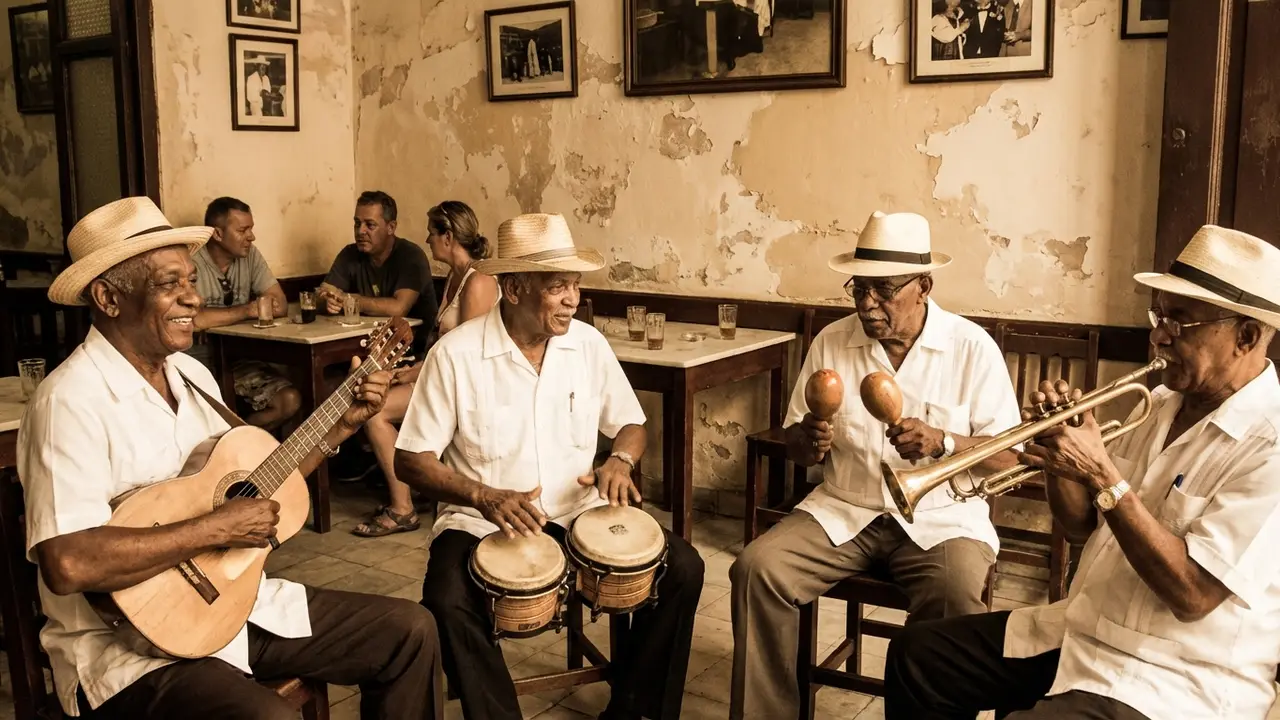
Illustration: Aroma de Cuba (AI)
When the tres guitar sounds, the maracas mark the rhythm, and a weathered voice sings of love and longing, you’re listening to son cubano — the musical heartbeat of a nation.
Origins: From Oriente to the World
Son was born in the mountains of Cuba’s eastern region in the late 19th century, fusing African traditions with the Spanish guitar. Workers from sugarcane fields and ports carried it with them, and by the 1920s it had conquered Havana.
What began as music from humble neighborhoods soon became the sound of all Cuba. The Sexteto Habanero and Trío Matamoros were pioneers in bringing it to recording studios.
Instruments of the Soul
Son is recognized by its unique instrumentation:
- The tres — guitar with three pairs of strings, the melodic heart
- Maracas — the constant pulse
- Bongos — the dialogue of the drums
- Double bass — the deep foundation
- Claves — the rhythmic pattern that ties everything together
- Trumpet — added later, gave it its urban character
From Fathers to Sons: The Legends
Compay Segundo (1907-2003)
Francisco Repilado created the “armónico,” a seven-string guitar. His “Chan Chan” is perhaps the most recognizable Cuban song in the world.
Ibrahim Ferrer (1927-2005)
“The King of Bolero” lived almost forgotten until Buena Vista Social Club rescued him at 70. He won a Grammy without ever having dreamed of stepping onto an international stage.
Omara Portuondo (1930-)
“The Bride of Filin,” still active at 95, represents the elegance and passion of son sung by women.
The Buena Vista Social Club Miracle
In 1996, producer Ry Cooder and musician Juan de Marcos González gathered son veterans who lived almost forgotten. In just seven days they recorded an album that would sell over 8 million copies and win a Grammy.
Wim Wenders’ documentary (1999) brought their faces and stories to the entire world. Suddenly, musicians in their 70s, 80s, and even 90s were playing at Carnegie Hall.
“I never thought at my age I would get to see the world.” — Ibrahim Ferrer
Son Today
The legacy continues. In 2025, the Buena Vista story came to Broadway, presenting the power of this music to new generations.
Son evolved into salsa in New York, timba in Cuba, but its essence remains: that montuno that forces your feet to move, that clave rhythm you carry in your blood if you were born Cuban.
Essential Listening
To get started with son:
- “Chan Chan” — Compay Segundo
- “Dos Gardenias” — Ibrahim Ferrer
- “Veinte Años” — Omara Portuondo
- “El Cuarto de Tula” — Buena Vista Social Club
- “Lágrimas Negras” — Bebo & Cigala (modern version)
You don’t learn son, you carry it inside. And if you don’t carry it, it finds you.
Frequently asked questions
What is son cubano?
What instruments are used in son cubano?
Who were the greats of son cubano?
What's the difference between son cubano and salsa?
How we got here
Background
The first thing we published on this topic.
Cuban Music Conquers the Latin Grammys
Cuban artists sweep the ceremony with awards in multiple tropical music categories.
Jazz Plaza 2026: Havana Pulses with Music Despite It All
The 41st International Jazz Plaza Festival brought together over 1,500 artists from 20 countries. A chronicle of Cuban musical resilience.
Related articles
The Cuban Guayabera: History of the Shirt That Defines Cuba
From the Yayabo River to presidential summits: the guayabera was born peasant and became a symbol of Cuban elegance. Discover its history.
Cuban Musical Instruments: Claves, Bongos, Congas and the Tres
Discover Cuba's traditional instruments: claves, bongos, tumbadoras, maracas and the Cuban tres. History, craftsmanship and where to buy them.
Cuban Musical Instruments: Bongos, Congas, Tres and Claves Guide
Complete guide to Cuban musical instruments: bongos, congas, tres cubano, claves, maracas and timbales. History, sounds and where to buy.
Cuban Dominoes: History, Rules and Cuba's National Game
Discover Cuban double-nine dominoes, the only domino variant exclusive to Cuba. History, rules, slang, and where to buy your set.
Cuban Timba: The Most Explosive Music Born in Havana
Discover Cuban timba, the genre that fused son, funk, and rumba in the 1990s. History, key bands, and rhythms conquering the world.
Fusterlandia: The Cuban Neighborhood Turned Living Mosaic Art
Discover Fusterlandia, the Cuban village transformed into mosaic art by José Fuster. History, naïve art, and the magic of Jaimanitas.