Fusterlandia: The Cuban Neighborhood Turned Living Mosaic Art
Discover Fusterlandia, the Cuban village transformed into mosaic art by José Fuster. History, naïve art, and the magic of Jaimanitas.
4 min read
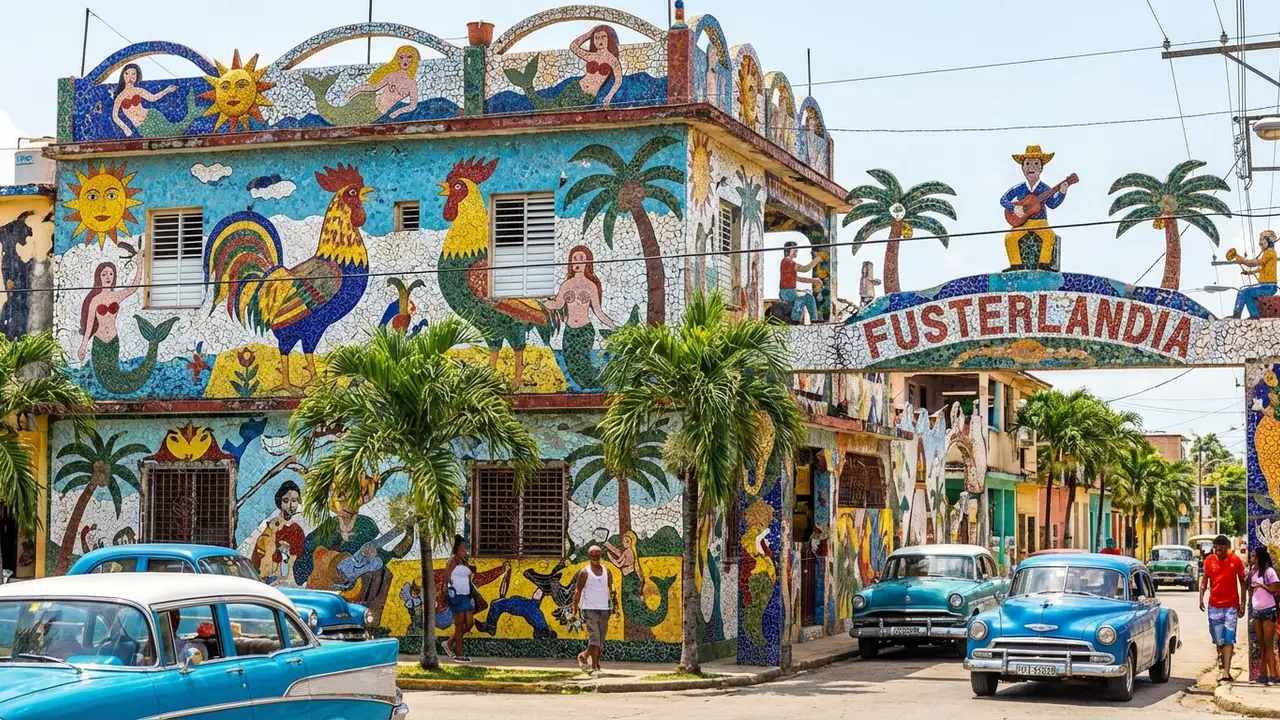
Illustration: Aroma de Cuba (AI)
In the modest fishing village of Jaimanitas, just 20 minutes west of downtown Havana, there’s a place that looks like a technicolor dream. It’s called Fusterlandia, and it’s the living masterpiece of Cuban artist José Fuster.
From a Doorway to an Entire Neighborhood
It all started in 1994, when Fuster decided to decorate the entrance to his house with ceramic mosaics. What began as a personal project became a transformative obsession. From the doorway to the patio, from the patio to the facade, and from his house to the entire neighborhood.
Today, more than 80 houses, bus stops, benches, and public buildings in Jaimanitas are covered in mosaics, sculptures, and ceramic murals in an explosion of color unmatched anywhere in the Caribbean.
“People think of Gaudí because of the technique, but the concept is Brâncuși.” — José Fuster
The Artist Behind the Magic
José Fuster was born in 1946 in Caibarién, in central Cuba. Before Fusterlandia, he was already an acclaimed painter, engraver, and ceramist. But traditional formats felt too small.
In 1976, he visited Târgu Jiu in Romania, where sculptor Constantin Brâncuși had created a monumental complex integrating art and public space. That experience planted a seed that would take nearly two decades to bloom.
At 79, Fuster keeps working. He gets around the neighborhood in an electric cart and finances everything through his painting sales, without government support.
A Cuban Visual Universe
Fuster’s art is naïve: primitive shapes, bright colors, free compositions. But it’s deeply Cuban:
- Royal palms and roosters appear on every corner
- Figures of guajiros (peasants) populate the murals
- Popular sayings and poetic verses weave between the images
- References to the 1959 Revolution and Cuban history emerge among pink elephants and mermaids
The centerpiece is his studio-workshop, which doubles as a museum. Highlights include the “Cuban Table”, a tribute to iconic figures from the country’s history, and the “Rooster Tower”, a four-meter structure covered in multicolored tiles.
Inevitable Comparisons
Fuster is constantly compared to Antoni Gaudí for his use of the trencadís technique (mosaic made from ceramic fragments). He’s also been called the “Cuban Picasso” for his free, expressive style.
But Fuster insists his true inspiration is Brâncuși: not just decorating, but transforming an entire place into a work of art. And where Brâncuși was sober, Fuster is baroque, tropical, overflowing — as Cuban as café con leche.
Community Impact
What’s remarkable about Fusterlandia isn’t just the art — it’s the social transformation. Many homes in Jaimanitas were wooden and deteriorating. Fuster rebuilt them in cement and covered them in mosaics, improving his neighbors’ quality of life.
Jorge González, known as “El Mexicano,” age 79, says he lives “in a work of art.” During the brief diplomatic thaw between the United States and Cuba, celebrities like Madonna and Sean Penn paraded past his door.
The name “Fusterlandia” was coined by an American journalist, and it stuck forever.
Visiting Fusterlandia
Each week, about a thousand tourists visit Jaimanitas to explore this open-air museum. There’s no formal entrance: you walk the streets and discover art around every corner.
How to get there: From central Havana, about 20 minutes by taxi heading west, near Marina Hemingway.
Hours: Fuster’s studio-workshop is open during the day. With luck, you might see the artist at work.
Fusterlandia proves that art doesn’t need museums or galleries to transform lives. Sometimes, all it takes is a stubborn artist and a neighborhood willing to dream in color.
Related Articles
Frequently asked questions
What is Fusterlandia and where is it located?
Who is José Fuster?
Can you visit Fusterlandia?
What inspired Fuster to create Fusterlandia?
How we got here
Background
The first thing we published on this topic.
Cuban Music Conquers the Latin Grammys
Cuban artists sweep the ceremony with awards in multiple tropical music categories.
Old Havana Restoration Reaches a New Milestone
Rehabilitation work in the historic quarter reveals colonial frescoes from the 18th century.
Related articles
Cuban Musical Instruments: Bongos, Congas, Tres and Claves Guide
Complete guide to Cuban musical instruments: bongos, congas, tres cubano, claves, maracas and timbales. History, sounds and where to buy.
Cuban Musical Instruments: Claves, Bongos, Congas and the Tres
Discover Cuba's traditional instruments: claves, bongos, tumbadoras, maracas and the Cuban tres. History, craftsmanship and where to buy them.
The Cuban Guayabera: History of the Shirt That Defines Cuba
From the Yayabo River to presidential summits: the guayabera was born peasant and became a symbol of Cuban elegance. Discover its history.
Leonardo Padura Presents Morir en la Arena at Hay Festival 2026
The master of Cuban noir fiction presents his new novel in Barranquilla, exploring 50 years of Cuba's history.
Punto Cubano: Cuba's Sung Poetry Declared UNESCO Heritage
Discover punto cubano, the improvised sung poetry of Cuban farmers declared UNESCO Intangible Cultural Heritage in 2017.
Carlos Acosta Reinvents The Nutcracker with Cuban Flavor
The legendary Cuban dancer transforms the holiday classic with Nutcracker in Havana, fusing classical ballet with Afro-Cuban rhythms.