Hatuey: the Taíno Chief Who Became Cuba's First National Hero
The story of Hatuey, the Taíno cacique who resisted Spanish conquest and was burned alive in 1512. Cuba's first national hero.
4 min read
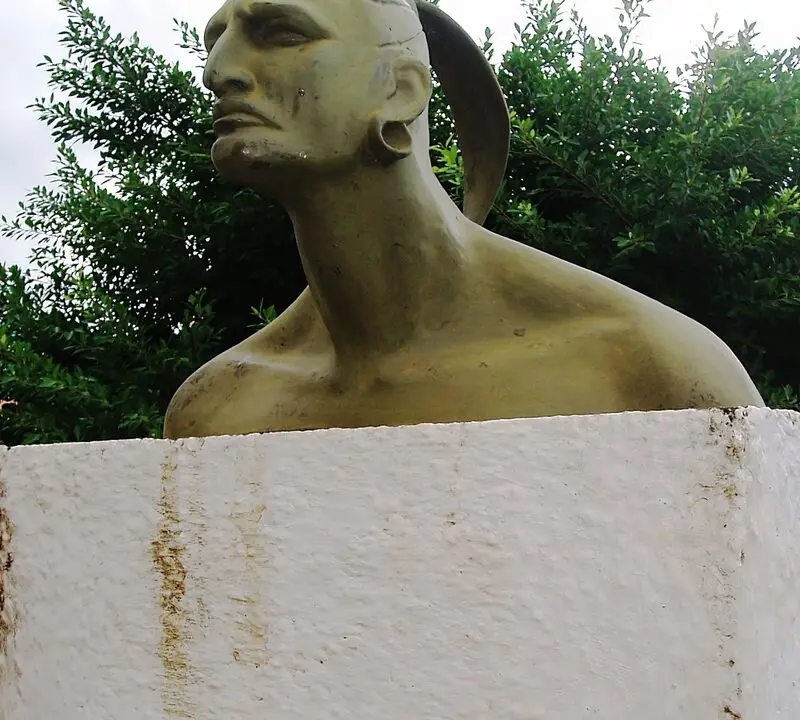
In Cuban history, one name precedes all other heroes: Hatuey, the Taíno cacique who crossed the sea from Hispaniola to warn Cuba’s indigenous peoples about the approaching Spanish conquistadors. His resistance and death at the stake in 1512 made him Cuba’s first national hero — more than three centuries before José Martí.
From Hispaniola to Cuba: A Journey of Resistance
Hatuey was the cacique of Guahabá, in what is now La Gonave Island, Haiti. He had witnessed firsthand the atrocities committed by the Spaniards during the conquest of Hispaniola: the forced labor of the encomienda system, the massacres, and the systematic destruction of his people.
When Diego Velázquez de Cuéllar began organizing his expedition to conquer Cuba in 1511, Hatuey made an extraordinary decision: he gathered four hundred warriors and crossed by canoe to eastern Cuba to alert the island’s Taíno people.
The Gold Speech: A Prophetic Denunciation
The chronicler Bartolomé de las Casas, in his A Short Account of the Destruction of the Indies, recorded Hatuey’s most powerful moment. Before the Cuban chiefs, he held up a basket full of gold and jewels and declared:
“The Spaniards have a God whom they worship and adore. And it is in order to get that God from us that they conquer us and kill us… Here is the God of the Christians.”
With those words, Hatuey delivered what many historians consider the first anti-colonial critique in the Americas. It wasn’t just about warfare — it was an indictment of the entire system of exploitation that accompanied conquest.
Guerrilla Warfare in Eastern Cuba
Although most Cuban chiefs did not respond to his call, Hatuey refused to surrender. With his warriors, he organized guerrilla tactics in the mountains of eastern Cuba, harassing Spanish forces and temporarily confining them. His fighters managed to kill at least eight Spanish soldiers.
However, the military superiority of the Spaniards — their steel weapons, horses, war dogs, and armor — proved overwhelming. Using trained mastiffs to track people and torturing captured natives for information, Velázquez’s forces eventually captured Hatuey.
The Pyre at Yara: “I’d Rather Go to Hell”
On February 2, 1512, Hatuey was tied to a stake and condemned to be burned alive near present-day Yara, in what is now Granma Province. Before the pyre was lit, a Franciscan priest offered to baptize him so his soul could go to heaven.
Hatuey’s response, according to Las Casas, became one of the most famous quotes in Caribbean history:
“Thinking a little, he asked the religious man if Spaniards went to heaven. The religious man answered yes… The chief then said without further thought that he did not want to go there but to hell, so as not to be where they were and where he would not see such cruel people.”
With those words, Hatuey sealed his place in history as a symbol of dignity and resistance against oppression.
A Living Legacy: From Cacique to National Symbol
Hatuey’s sacrifice was not in vain. His figure has transcended the centuries to become a fundamental symbol of Cuban identity:
- Monuments: The most important sculptures are in Baracoa and Yara, where Havana-born artist Rita Longa created a powerful 1953 representation of the cacique bound at the moment of execution.
- Hatuey Beer: Founded in 1927 in Santiago de Cuba, it became one of the country’s most iconic brands, using the cacique’s image as a symbol of Cuban defiance.
- First Pan-American Hero: Some historians consider him the initiator of the first pan-American resistance struggle, carrying his fight from one island to another.
- Independence Inspiration: The region where Hatuey was executed — eastern Cuba — became centuries later the cradle of independence wars, from the Grito de Yara in 1868 to the Sierra Maestra.
Hatuey and the Taíno: A People Who Never Vanished
For a long time, it was believed that the Taíno were completely wiped out during the conquest. However, recent genetic studies have shown that Taíno DNA persists in Cuba’s current population. The Taíno heritage survives not only in genes but in everyday Spanish words: hamaca (hammock), tabaco (tobacco), canoa (canoe), huracán (hurricane), barbacoa (barbecue), and dozens more come from the Taíno language.
Hatuey’s story reminds us that Cuba did not begin with the arrival of the Spaniards. Before the caravels, there was a civilization with its own culture, spirituality, and political system. The cacique of Guahabá was the first to defend it with his life.
Hatuey died more than five hundred years ago, but his cry for freedom still echoes across Cuba. From the monuments of Baracoa to schoolroom walls, his name is synonymous with a simple and powerful truth: dignity is not for sale.
Frequently asked questions
Who was Hatuey and why is he important in Cuban history?
How did Hatuey die?
Where can you see monuments to Hatuey in Cuba?
What is the connection between Hatuey and the Cuban beer brand?
How we got here
Background
The first thing we published on this topic.
Old Havana Restoration Reaches a New Milestone
Rehabilitation work in the historic quarter reveals colonial frescoes from the 18th century.
Governments Issue Travel Warnings for Cuba Amid US Tensions
Canada, Argentina, Spain and other countries warn citizens about Cuba's crisis as Washington's oil blockade and prolonged blackouts affect the island.
Related articles
The USS Maine Explosion: the Sinking That Changed Cuba
On February 15, 1898, the battleship USS Maine exploded in Havana Harbor, triggering the Spanish-American War and reshaping Cuba's future.
Carnival of Santiago de Cuba: The Caribbean's Greatest Celebration
Discover the history and traditions of Santiago de Cuba's Carnival, a 300+ year celebration blending African and Spanish heritage in vibrant festivities.
Trinidad, Cuba: essential guide to Cuba's most beautiful city
Complete guide to Trinidad, Cuba. What to see, where to stay, casas particulares, nearby beaches and tips to explore this UNESCO gem.
The Cuban Bolero: UNESCO Heritage and the Universal Language of Love
From Santiago de Cuba to the world, the bolero was born as a love song and is now a UNESCO Heritage. Its history, voices, and lasting power.
Jardines de la Reina: the Caribbean's best diving is in Cuba
Discover Jardines de la Reina, Cuba's protected archipelago with sharks, pristine reefs, and world-class diving.
The Protest of Baraguá: When Maceo Said No to Surrender
On March 15, 1878, Antonio Maceo rejected the Pact of Zanjón at Baraguá. The story of the bravest act in Cuba's independence wars.