Carlos Acosta Reinvents The Nutcracker with Cuban Flavor
The legendary Cuban dancer transforms the holiday classic with Nutcracker in Havana, fusing classical ballet with Afro-Cuban rhythms.
4 min read
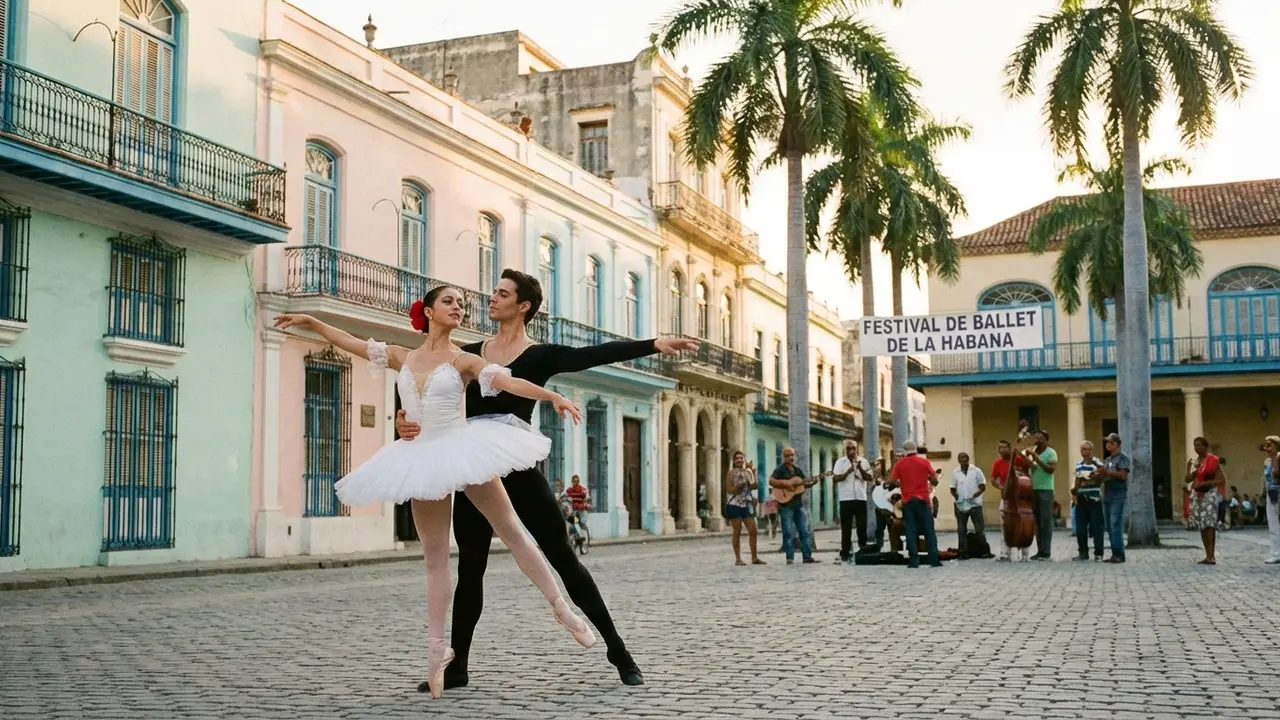
Illustration: Aroma de Cuba (AI)
In the world of classical ballet, few names shine as brightly as Carlos Acosta. The legendary Havana-born dancer, who conquered the most prestigious stages on the planet, is now transforming the most beloved holiday classic with his production Nutcracker in Havana—an explosion of color, rhythm, and Cuban soul that is captivating British audiences.
From Havana’s Poorest Streets to World Stages
Carlos Acosta’s story is the Cuban dream made real. Born on June 2, 1973, in one of Havana’s humblest neighborhoods, he was the eleventh and last child of Pedro Acosta, a truck driver, and Dulce María Quesada. He grew up without toys, sometimes without shoes, and didn’t taste a birthday cake until he was 23.
“My father sent me to ballet school so I would have discipline and a free lunch every day,” Acosta recalls.
What began as a practical solution from a worried father became the birth of a legend. At the Cuban National Ballet School, under the guidance of teachers like Ramona de Sáa, young Carlos discovered an exceptional gift that would lead him to win the prestigious Prix de Lausanne in 1990.
The Nutcracker Cuba Never Had
What makes Nutcracker in Havana so special? The answer lies in Cuba’s own history. From 1969 to 1998, Christmas was officially banned on the island. Carlos Acosta never grew up with the Christmas traditions that Tchaikovsky’s Nutcracker celebrates in its traditional version.
“I wanted to create the Nutcracker I would have loved to see as a child,” Acosta explains. And did he ever succeed.
A Dreamlike Havana
Instead of a snow-covered Victorian mansion, the action unfolds in a humble Cuban house with a thatched palm roof. Clara becomes Lara, a mischievous girl from Havana. The mysterious Drosselmeyer is now Tío Elías, returning from Miami with magical gifts. And the Nutcracker isn’t a European soldier, but a mambí—a Cuban independence soldier.
Nina Dunn’s sets transport audiences through the streets of Havana with cinematic projections that have left audiences “spellbound,” according to British reviews.
Tchaikovsky with a Son Cubano Beat
Composer Pepe Gavilondo Peón has done a masterful job “Cubanizing” Tchaikovsky’s score. The original melodies remain recognizable, but the rhythms transform with touches of Cuban son, Caribbean trumpets, and guitars that make it impossible to keep your feet still.
British critics are fascinated:
“It was magic. There was magic. Acosta is a magician. It had been forecast to snow in Edinburgh, but inside the Festival Theatre, man, it was hot, hot, hot!”
— The QR Review, ⭐⭐⭐⭐⭐
The fusion isn’t just musical. Acosta’s choreography interweaves classical ballet with Afro-Cuban movements, including the traditional chancleta clog dance and conga elements. The more than twenty dancers from Acosta Danza transition fluidly between impeccable pirouettes and rhythmic Afro-Cuban undulations.
A Company with a Mission
Acosta Danza, the company Carlos founded in Havana, represents his commitment to giving back to Cuba what ballet gave him. Young Cuban dancers now have opportunities to perform in the world’s finest theaters.
“I want dance to be for the many, not just the few,” states Acosta, who has also directed the Birmingham Royal Ballet since 2020.
Angelo Alberto’s costumes complement the vision with colorful, exotic, and quirky outfits in all the right places. From the Rat King’s tail to the Arabian dancers’ costumes and the Sugar Plum Fairies, every visual element celebrates Cuba’s aesthetic richness.
The Legacy Continues
At 52, Carlos Acosta has received the CBE (Commander of the Order of the British Empire) for his services to ballet, has been compared to Mikhail Baryshnikov and Rudolf Nureyev, and continues to reinvent himself.
Nutcracker in Havana is more than a show; it’s a love letter to the Cuba that shaped Acosta, proof that ballet can speak with a Cuban accent, and evidence that the most unlikely dreams sometimes come true on the streets of Havana.
Nutcracker in Havana continues its UK tour. For dates and tickets, visit carlosacosta.com/event.
Frequently asked questions
Who is Carlos Acosta?
What is Nutcracker in Havana?
Why did Carlos Acosta create a Cuban version of The Nutcracker?
Where can I see Nutcracker in Havana?
How we got here
Background
The first thing we published on this topic.
Cuban Music Conquers the Latin Grammys
Cuban artists sweep the ceremony with awards in multiple tropical music categories.
Son Cubano: The Rhythm That Conquered the World
From the mountains of Oriente to Broadway stages. History, instruments, and legends of the musical genre that defines Cuba.
Related articles

Tropicana: The Paradise Under the Stars That Dazzled the World
The history of Havana's Tropicana cabaret from 1939 to today. Architecture, shows, and its enduring Cuban cultural legacy.
Jazz Plaza 2026: Havana Beats to Jazz Rhythms Amid Crisis
Jazz Plaza celebrated its 40th edition in Havana (Jan 25-Feb 1) with 286 international artists, proving Cuban music endures despite blackouts.

Leo Brouwer: The Cuban Master Who Reinvented Classical Guitar
Meet Leo Brouwer, the Cuban composer and guitarist who revolutionized classical guitar from Havana to Carnegie Hall.
Callejón de Hamel: Havana's Open-Air Afro-Cuban Art Gallery
Discover Callejón de Hamel, the vibrant epicenter of Afro-Cuban art in Centro Habana with murals, sculptures, and Sunday rumba.

Punto Cubano: Cuba's Sung Poetry Declared UNESCO Heritage
Discover punto cubano, the improvised sung poetry of Cuban farmers declared UNESCO Intangible Cultural Heritage in 2017.
Leonardo Padura Presents Morir en la Arena at Hay Festival 2026
The master of Cuban noir fiction presents his new novel in Barranquilla, exploring 50 years of Cuba's history.