Callejón de Hamel: Havana's Open-Air Afro-Cuban Art Gallery
Discover Callejón de Hamel, the vibrant epicenter of Afro-Cuban art in Centro Habana with murals, sculptures, and Sunday rumba.
4 min read
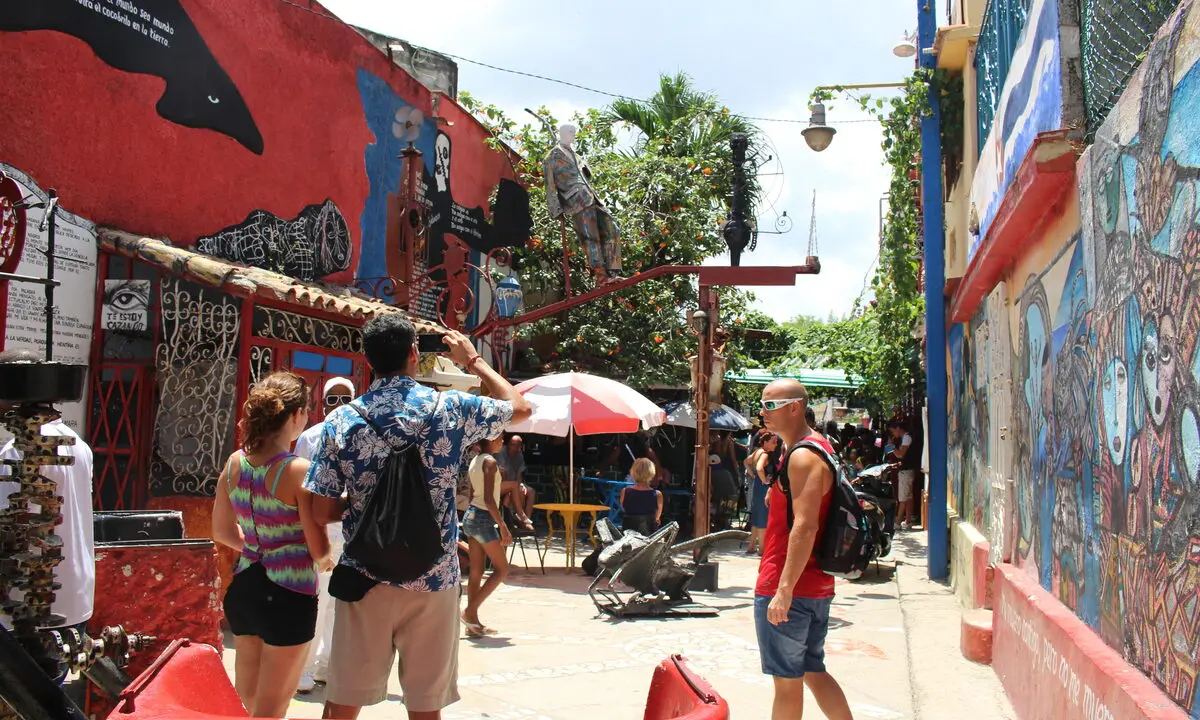
In the heart of Centro Havana, between Aramburu and Hospital streets, there’s an alley that defies urban decay with explosions of color. Callejón de Hamel is far more than a painted street — it’s the living epicenter of Afro-Cuban art in Cuba’s capital, an urban temple where orishas dance across the walls and rumba echoes every Sunday.
Origins: From Foundry to Gallery
The alley takes its name from Fernando Belleau Hamel, a Franco-German American who in the early 20th century bought the land to set up a foundry and raw materials business. He built houses for his workers, many of them Afro-descendants, and so a neighborhood with a strong Black identity was born within Cayo Hueso, one of Havana’s most densely populated barrios.
For decades, the alley languished in urban neglect. Houses crumbled, the street lost its pulse. Until a painter arrived with a vision.
Salvador González Escalona: The Artist Who Changed Everything
On April 21, 1990, Salvador González Escalona — a painter, muralist, and sculptor born in Camagüey in 1948 — began painting a mural at a friend’s house in the alley. What started as a favor became his life’s work.
Salvador describes his style as a fusion of surrealism, cubism, and abstraction, all filtered through the worldview of Cuban Santería. His murals depict Yemayá, Changó, Elegguá, and other orishas in a vibrant palette of blues, reds, and yellows that transform every wall into a visual altar.
“My goal is to bring creative art to the people, revitalizing a street forgotten by time.” — Salvador González Escalona
He didn’t stop at painting. Using recycled materials — abandoned bathtubs, bicycle parts, old motorcycles — he created sculptures that populate the alley like spirits of metal and concrete. Every discarded object is reborn with religious and aesthetic meaning.
A Living Museum of Afro-Cuban Culture
Walking the barely 200 meters of Callejón de Hamel is like diving into the history of the African diaspora in Cuba. The murals aren’t decoration — they’re visual narratives telling the story of slavery, resistance, religious syncretism, and the celebration of Black Cuban identity.
What You’ll Find
- Monumental murals covering entire facades with Yoruba iconography
- Recycled-material sculptures — bathtubs transformed into orisha thrones
- Phrases and poems painted on walls, many by Salvador himself
- Altars and symbols of Santería woven into the urban landscape
- Artisan shops selling beaded necklaces, bracelets, and ritual objects
- Sunday rumba with live groups and spontaneous dancing
Sunday Rumba: Ritual and Celebration
If there’s one perfect moment to visit Callejón de Hamel, it’s Sunday at noon. Every week, rumba groups — performing the Afro-Cuban genre declared Intangible Cultural Heritage by UNESCO — take over the alley with cajones, batá drums, and chants in Lucumí.
The music draws neighbors, tourists, santeros, and curious passersby alike. Dancing erupts naturally. Rumberos improvise, neighborhood kids join in, and for a couple of hours the alley becomes what it has always been: a space of community, resistance, and joy.
More Than Tourism: Neighborhood Identity
It’s easy to see Callejón de Hamel as just another Havana tourist attraction. But for the residents of Cayo Hueso, it means something deeper. In a neighborhood where infrastructure crumbles and living conditions are tough, the alley is a reminder of cultural dignity.
Salvador González didn’t just paint walls. He created community workshops, organized cultural activities for children, and turned art into a tool for social cohesion. The project proved that culture can transform an urban space without massive government investment — just creativity and community.
How to Get There
- Location: Between Aramburu and Hospital streets, Centro Habana
- Access: Free and open daily
- Best time: Sundays from 12:00 to 3:00 PM (live rumba)
- From the Malecón: 5-minute walk south
- Tip: Bring cash if you want to buy crafts or tip the musicians
A Legacy That Endures
More than 35 years after that first mural, Callejón de Hamel remains alive. Salvador González, now 77, continues working and adding new pieces. The project has inspired similar initiatives in other Cuban cities and across the diaspora.
In a Cuba where economic crisis hits hard and many young artists emigrate, Callejón de Hamel stands as testimony that Afro-Cuban art isn’t folklore for tourists — it’s the backbone of the island’s cultural identity.
If you’re passionate about Cuban culture, don’t miss our articles on Cuban Santería, rumba as UNESCO Heritage, and Cuban poster art.
Frequently asked questions
Where is Callejón de Hamel located in Havana?
What days is there rumba at Callejón de Hamel?
Who created Callejón de Hamel?
Is Callejón de Hamel free to visit?
How we got here
Background
The first thing we published on this topic.
Cuban Music Conquers the Latin Grammys
Cuban artists sweep the ceremony with awards in multiple tropical music categories.
Son Cubano: The Rhythm That Conquered the World
From the mountains of Oriente to Broadway stages. History, instruments, and legends of the musical genre that defines Cuba.
Related articles

Leo Brouwer: The Cuban Master Who Reinvented Classical Guitar
Meet Leo Brouwer, the Cuban composer and guitarist who revolutionized classical guitar from Havana to Carnegie Hall.
Carlos Acosta Reinvents The Nutcracker with Cuban Flavor
The legendary Cuban dancer transforms the holiday classic with Nutcracker in Havana, fusing classical ballet with Afro-Cuban rhythms.
Tropicana: The Paradise Under the Stars That Dazzled the World
The history of Havana's Tropicana cabaret from 1939 to today. Architecture, shows, and its enduring Cuban cultural legacy.
Jazz Plaza 2026: Havana Beats to Jazz Rhythms Amid Crisis
Jazz Plaza celebrated its 40th edition in Havana (Jan 25-Feb 1) with 286 international artists, proving Cuban music endures despite blackouts.
Elpidio Valdés: The Animated Hero Who Defined Cuban Childhood
Meet Elpidio Valdés, the mambí colonel created by Juan Padrón who became an icon of Cuban animation and a national symbol.
Cimarrones and Palenques: Slave Resistance in Cuba
The history of Cuban maroons who escaped slavery and built free communities called palenques in the mountains, forging a legacy of resistance.