Cayo Coco & Cayo Guillermo: paradise beach guide for Cuba
Discover Cayo Coco and Cayo Guillermo, two jewels of the Jardines del Rey archipelago with white sand beaches and turquoise waters.
5 min read
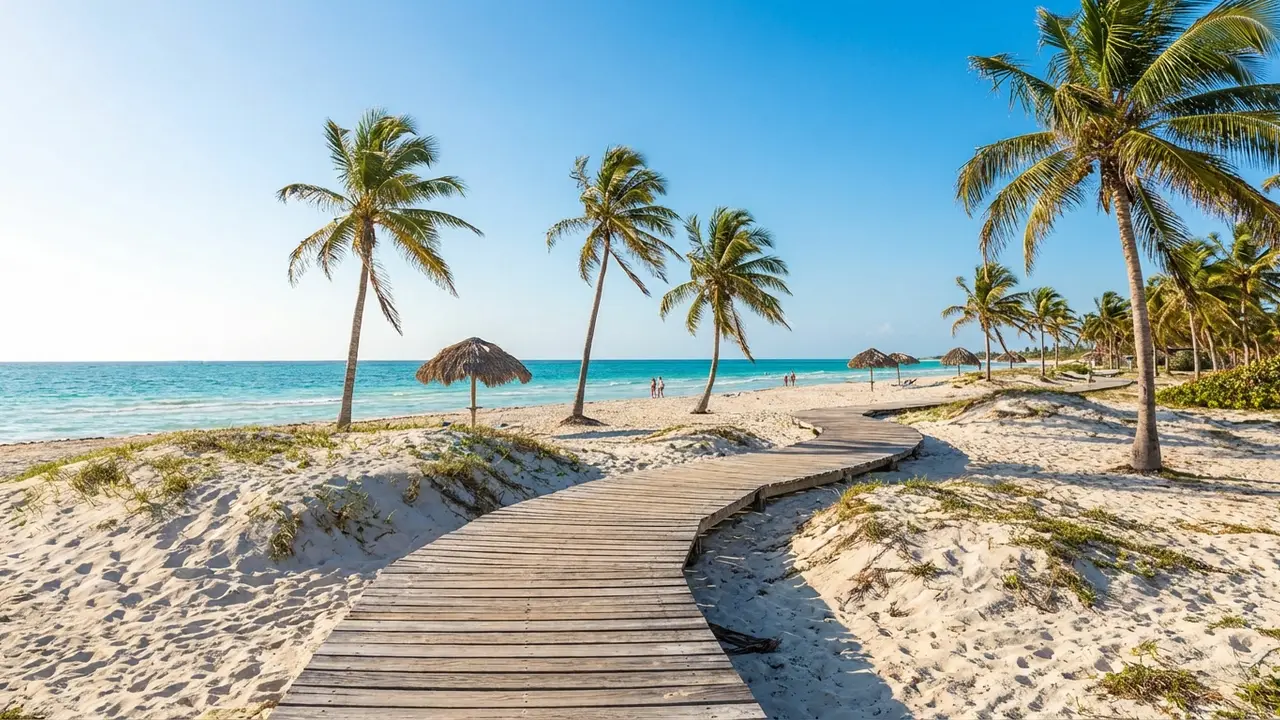
Illustration: Aroma de Cuba (AI)
The Jardines del Rey archipelago
Off Cuba’s northern coast, connected by a stunning 17-kilometer causeway over turquoise shallows, Cayo Coco and Cayo Guillermo form the heart of the Jardines del Rey (Gardens of the King) archipelago. Named in honor of Spanish King Ferdinand VII, this chain of islands hides some of the Caribbean’s most spectacular beach destinations.
Cayo Coco, at 370 km², is Cuba’s fourth-largest key. Its neighbor Cayo Guillermo, much smaller at just 13 km², more than compensates with beaches ranked among the world’s finest. Together they offer a perfect combination of pristine nature, coral reefs, and resort comforts.
Must-visit beaches
Playa Pilar — the crown jewel
Located at the western tip of Cayo Guillermo, Playa Pilar is widely considered Cuba’s most beautiful beach. Its white sand dunes reach up to 15 meters high — the tallest in the insular Caribbean. The waters are so transparent you can see the bottom several meters out.
The beach takes its name from Ernest Hemingway’s yacht Pilar. The novelist frequented these waters during the 1940s, hunting German submarines and fishing for blue marlin. Today the beach preserves that spirit of discovery: it’s less crowded than hotel beaches and maintains a wilder atmosphere.
Pro tip: Arrive early morning to enjoy the beach nearly empty. There’s a ranchón (beach grill) with food and drinks, but bring extra sunscreen and water.
Playa Flamencos — the longest stretch
At over 3 kilometers of white sand, Playa Flamencos on Cayo Coco is the longest and most popular beach on the keys. Its name comes from the pink flamingo colonies inhabiting nearby lagoons. The beach has a gradual entry into the sea, making it ideal for families with children.
Several major all-inclusive hotels line this beach, meaning excellent service infrastructure: loungers, beach bars, water sports, and restaurants.
Playa Las Coloradas
Quieter than Flamencos, Las Coloradas offers a more intimate experience. A natural coral barrier near shore creates calm natural pools perfect for wading. It’s excellent for snorkeling directly from the sand.
Playa Larga (Cayo Coco)
Not to be confused with Playa Larga at the Bay of Pigs. This Cayo Coco version is a pristine stretch combining mangroves, fine sand, and abundant marine life. Less visited, perfect for those seeking solitude.
Beyond the beach
The pedraplén: a road over the sea
Arriving at the keys is an experience in itself. The pedraplén — a 17 km elevated causeway built over shallow seas — connects Cayo Coco with mainland Cuba. During the crossing, waters shift from emerald green to deep blue, and it’s common to spot flamingos, pelicans, and herons from the car.
Snorkeling and diving
The reefs surrounding both keys are part of the world’s second-largest coral barrier reef (after Australia’s Great Barrier Reef). Notable dive sites include:
- La Jaula: shallow reef ideal for beginners, teeming with tropical fish
- Cayo Guillermo underwater caves: for certified divers, featuring black coral formations
- Media Luna: coral wall dropping over 30 meters, home to turtles and rays
Hotel dive centers offer daily excursions. A discovery dive costs approximately $60-80 USD, while certified dives run $40-50 USD per immersion.
Flamingo watching
Cayo Coco hosts one of the Caribbean’s largest pink flamingo colonies. The key’s interior lagoons and the nearby La Redonda lake on the mainland are prime viewing spots. The best time is at sunrise when flamingos feed in the shallow waters.
Day trip to Morón and Laguna de la Leche
Just 40 minutes by road from the causeway, Morón is the gateway town on the mainland. Its most famous landmark is the metal rooster at the town entrance — the city’s symbol. Nearby lies Laguna de la Leche (Milk Lake), Cuba’s largest natural reservoir, where you can fish for bass and experience rural Cuban life.
Accommodation: options for every budget
All-inclusive hotels
Most visitors choose all-inclusive packages. Top picks include:
| Hotel | Rating | Location | Best for |
|---|---|---|---|
| Meliá Cayo Coco | 5★ | Playa Las Coloradas | Adults only |
| Iberostar Playa Pilar | 5★ | Cayo Guillermo | Couples |
| Memories Flamenco | 4★ | Playa Flamencos | Families |
| Sol Cayo Coco | 4★ | Playa Flamencos | Mid-budget |
Budget alternatives
While the keys themselves don’t have private guesthouses, nearby towns like Morón and Ciego de Ávila offer casas particulares at much lower rates ($15-30 USD/night). From there you can reach the keys by taxi or organized excursions.
Practical tips
Currency: Hotels accept euros and US dollars. For off-resort excursions, carry CUP cash.
Internet: Hotel WiFi has improved but remains slow and pricey. Buy ETECSA cards if you need connectivity outside the resort.
Sun protection: UV radiation on the keys is intense. Use SPF 50+ and reapply frequently, especially after swimming.
Recommended excursions: Most hotels offer trips to Trinidad (long but worthwhile), the fish caves, and sunset catamaran cruises.
Best season: November to April is dry season. July-August is hot but hotels offer good deals.
Getting there
- Direct flights: Jardines del Rey International Airport (code CCC) receives international flights from Canada and Europe, plus domestic connections from Havana
- By road: From Havana it’s ~530 km (8 hours) via the National Highway to Ciego de Ávila, then the causeway
- Viazul bus: Service to Morón or Ciego de Ávila, then taxi to the keys (~$25-35 USD)
Cayo Coco and Cayo Guillermo represent the best of Cuba’s beach tourism: crystal-clear waters, powdery sand, and the tranquility of a paradise that, despite the resorts, retains its wild essence. If you’re looking for the Caribbean’s most beautiful beaches without leaving Cuba, you’ll find them here.
Read also: Valle de Viñales: complete guide to Cuba’s natural paradise | Varadero: guide to Cuba’s most famous beach | Ciénaga de Zapata: ecotourism in the Caribbean’s largest wetland
Frequently asked questions
What is the best time to visit Cayo Coco?
How do you get to Cayo Coco from Havana?
Can you visit Cayo Coco without staying at a resort?
Is Playa Pilar really the best beach in Cuba?
How we got here
Background
The first thing we published on this topic.
Old Havana Restoration Reaches a New Milestone
Rehabilitation work in the historic quarter reveals colonial frescoes from the 18th century.
Governments Issue Travel Warnings for Cuba Amid US Tensions
Canada, Argentina, Spain and other countries warn citizens about Cuba's crisis as Washington's oil blockade and prolonged blackouts affect the island.
Related articles
Jardines de la Reina: the Caribbean's best diving is in Cuba
Discover Jardines de la Reina, Cuba's protected archipelago with sharks, pristine reefs, and world-class diving.
Callejón de Hamel: Havana's Open-Air Afro-Cuban Art Gallery
Discover Callejón de Hamel, the vibrant epicenter of Afro-Cuban art in Centro Habana with murals, sculptures, and Sunday rumba.
The Seven First Villas of Cuba: the Origin of a Nation
Between 1511 and 1515, Diego Velázquez founded seven villas that shaped Cuba. Discover the history of Baracoa, Bayamo, Trinidad and more.

Cuban Choteo: How Humor Became Cuba's National Identity
Discover choteo, Cuba's unique form of irreverent humor that shaped national identity, from La Tremenda Corte to Álvarez Guedes.
Cienfuegos: Complete Guide to Cuba's Pearl of the South
Discover Cienfuegos, Cuba's most French city. Guide to top sights, Palacio de Valle, Punta Gorda, and practical travel tips.
Elpidio Valdés: The Animated Hero Who Defined Cuban Childhood
Meet Elpidio Valdés, the mambí colonel created by Juan Padrón who became an icon of Cuban animation and a national symbol.