Cuban Choteo: How Humor Became Cuba's National Identity
Discover choteo, Cuba's unique form of irreverent humor that shaped national identity, from La Tremenda Corte to Álvarez Guedes.
5 min read
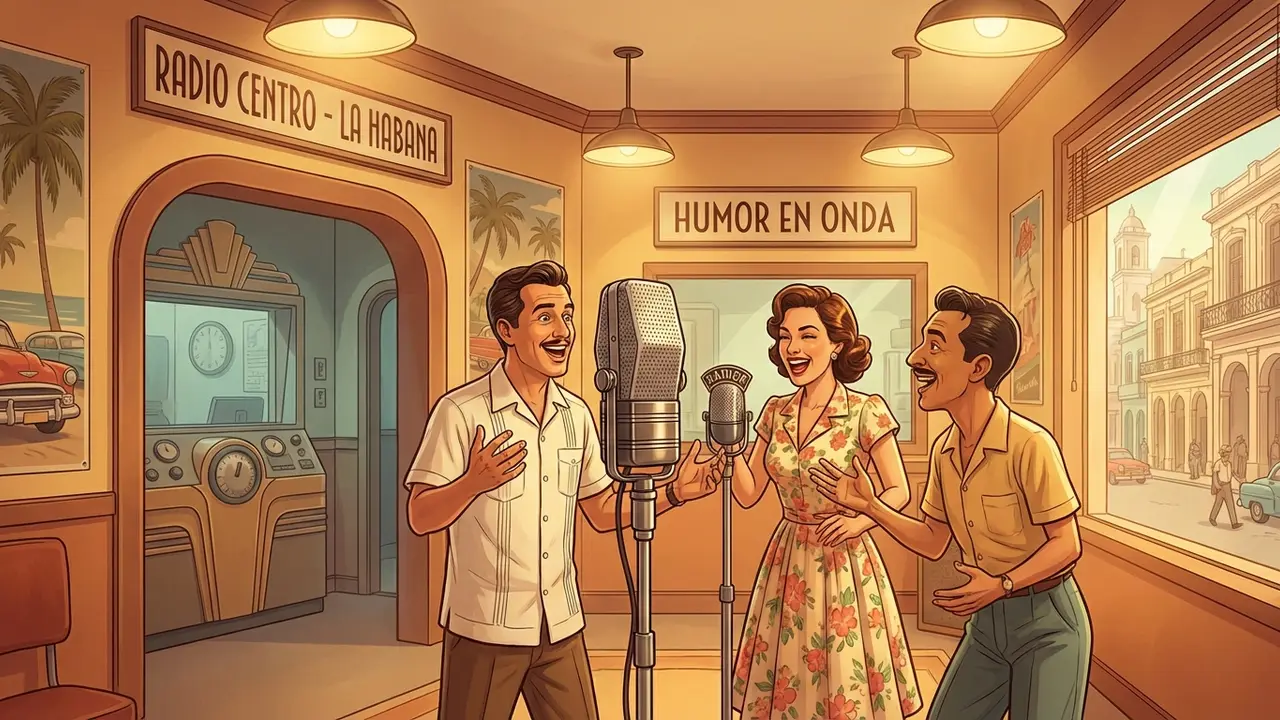
Illustration: Aroma de Cuba (AI)
If there’s one thing that defines Cubans beyond the music, the coffee, and the baseball, it’s their humor. Not just any humor, but one with its own name: choteo. That innate ability to mock everything — authority, misfortune, even themselves — is perhaps the most defining trait of Cuban national identity.
Jorge Mañach and the anatomy of choteo
In 1928, Cuban intellectual Jorge Mañach delivered a lecture that would become a foundational text of Cuban identity: Indagación del choteo (An Inquiry into Choteo). For Mañach, choteo wasn’t simple mockery. It was an existential attitude, a stubborn refusal to take anything seriously, especially authority.
Mañach identified choteo as a “habit of disrespect” born from colonial conditions. The Cuban, subjected for centuries to a power they didn’t choose, developed humor as a survival mechanism. Laughing at the master was the first form of freedom.
What distinguishes choteo from other forms of humor is its leveling function: it doesn’t seek to destroy the other, but to bring everyone down to the same human plane. It’s democratic by nature.
The golden age: Cuban radio
If choteo is the spirit, Cuban radio of the 1940s and 50s was its temple. Havana became the capital of Latin American radio comedy, with the Radiocentro CMQ building as the epicenter of a humor empire.
La Tremenda Corte (1942-1961)
Without question, the most legendary show. La Tremenda Corte (The Tremendous Court) featured a madcap courtroom where José Candelario Tres Patines (Leopoldo Fernández) appeared episode after episode before an exasperated judge (Aníbal de Mar) on the most absurd charges.
The genius of the show, written by Spanish-born naturalized Cuban Cástor Vispo, lay in its linguistic play. Tres Patines was a master of puns, double meanings, and verbal manipulation. Each episode was a masterclass in Cuban Spanish, never once resorting to vulgarity.
What’s extraordinary is its endurance: more than 80 years later, La Tremenda Corte still airs on radio across Latin America and has millions of plays on digital platforms. It is arguably the most successful radio comedy in the history of the Spanish language.
Pototo and Filomeno
Before Tres Patines, the duo of Pototo and Filomeno (Leopoldo Fernández and Aníbal de Mar — the same actors) had already conquered Cuban radio. Created by producer Álvaro de Villa, these characters established the verbal comedy model that would define the Cuban humor tradition.
Alegrías de Sobremesa
Radio Progreso, “The Wave of Joy,” broadcast Alegrías de Sobremesa for decades — another pillar of Cuban radio humor that combined comedy sketches with live music, cementing the idea that in Cuba, humor and music are inseparable.
Álvarez Guedes: from choteo to stand-up
If La Tremenda Corte was the pinnacle of radio comedy, Guillermo Álvarez Guedes (1927-2013) took Cuban choteo to the stages of exile. With over 30 recorded albums, Álvarez Guedes became the most prolific Hispanic comedian of his generation.
His style was pure distilled choteo: everyday stories elevated to the absurd, observations about Cuban life — on the island and beyond — and a philosophy summed up in his favorite phrase: “Tirarlo todo a relajo!” (Make a joke of everything!)
From his show on Miami’s Clásica 92.3 FM, Álvarez Guedes became the voice of a generation that used humor to process the trauma of exile. His monologues about the differences between Cubans and Americans are genre classics.
Humor as resistance: from the Special Period to today
The Special Period of the 1990s proved that choteo was no relic of the past. When Cuba faced its worst economic crisis, Cubans responded with a flood of jokes that swept the island from end to end.
Those jokes — about blackouts, impossible transportation, nonexistent food — fulfilled exactly the function Mañach had described: desacralizing power and making the intolerable bearable. Humor didn’t solve hunger, but it preserved dignity.
In contemporary Cuba, comedians like Ulises Toirac and Carlos Otero keep the tradition alive. In 1998, Toirac starred in a television tribute to La Tremenda Corte on the show ¿Y tú de qué te ríes?, proving that Tres Patines remains the obligatory reference point for Cuban humor.
Choteo in the diaspora
Cuban humor traveled with the emigrants. In Miami, in Madrid, in Mexico City — wherever there are Cubans, there is choteo. It’s perhaps Cuba’s most portable cultural heritage: it needs no instruments, no stage, no official permission.
The tradition continues in podcasts, social media, and live shows. Platforms like YouTube and Spotify have given new life to classic La Tremenda Corte recordings, connecting generations who never knew the original Cuban radio with the genius of Tres Patines.
Why choteo matters
Choteo isn’t just entertainment. It’s a philosophy of life and a mechanism of cultural resistance that has accompanied the Cuban people for over a century. As scholar Gustavo Pérez Firmat wrote, choteo is “the Cuban response to the solemnity of power.”
In a world that often demands seriousness, choteo reminds us that laughter is an act of freedom. And Cubans, like few other peoples, have known how to exercise that freedom even in the most difficult circumstances.
From the airwaves of Radiocentro CMQ to the memes circulating on WhatsApp today, choteo lives on. As long as there’s a Cuban who wants to laugh — that is to say, always — this tradition will never die.
Want to explore more Cuban cultural traditions? Discover Cuban rumba, dominoes as a national tradition, and the Parrandas of Remedios.
Frequently asked questions
What is Cuban choteo?
Who was Tres Patines and why is he famous?
What is La Tremenda Corte?
Who was Álvarez Guedes?
How we got here
Background
The first thing we published on this topic.
Cuban Music Conquers the Latin Grammys
Cuban artists sweep the ceremony with awards in multiple tropical music categories.
Son Cubano: The Rhythm That Conquered the World
From the mountains of Oriente to Broadway stages. History, instruments, and legends of the musical genre that defines Cuba.
Related articles
Elpidio Valdés: The Animated Hero Who Defined Cuban Childhood
Meet Elpidio Valdés, the mambí colonel created by Juan Padrón who became an icon of Cuban animation and a national symbol.
The Grito de Yara: When Céspedes Lit the Flame of a Free Cuba
On October 10, 1868, Carlos Manuel de Céspedes freed his slaves and launched the Ten Years' War from La Demajagua plantation.
Cimarrones and Palenques: Slave Resistance in Cuba
The history of Cuban maroons who escaped slavery and built free communities called palenques in the mountains, forging a legacy of resistance.

Leo Brouwer: The Cuban Master Who Reinvented Classical Guitar
Meet Leo Brouwer, the Cuban composer and guitarist who revolutionized classical guitar from Havana to Carnegie Hall.
The Special Period: the Crisis That Transformed 1990s Cuba
The history of Cuba's Special Period (1991-2000), the devastating economic crisis after the fall of the USSR that changed the island forever.

Cayo Coco & Cayo Guillermo: paradise beach guide for Cuba
Discover Cayo Coco and Cayo Guillermo, two jewels of the Jardines del Rey archipelago with white sand beaches and turquoise waters.