Cuban Dominoes: Much More Than a Game, a National Tradition
Discover the history and traditions of dominoes in Cuba, the national pastime that unites generations in parks, porches, and streets across the island.
4 min read
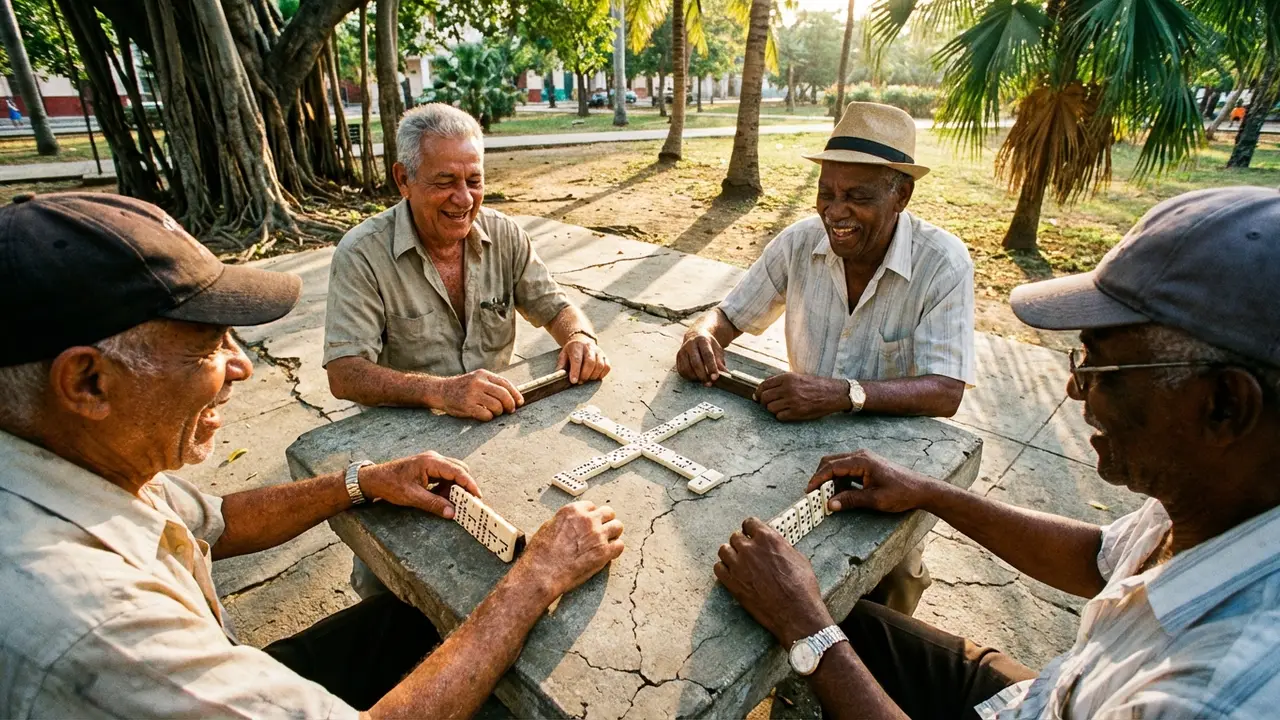
Illustration: Aroma de Cuba (AI)
In Cuba, dominoes isn’t simply a board game. It’s a social institution, a community ritual, and according to many, the true national pastime — even above baseball. They say Cuban babies are born with a domino tile in their hands, and anyone who’s walked through any neighborhood in Havana knows that’s not far from the truth.
Origins: From China to Cuba
The history of dominoes begins with six-sided dice that traveled from India to China, where the double-sided tile was invented. From there it passed to Europe, where it took its modern form, and finally crossed the Atlantic to the Caribbean.
In Cuba, dominoes took deep root. Unlike other countries where it’s casual entertainment, on the island it became part of the social fabric — a space where friendships are forged, neighborhood disputes are settled, and intelligence is measured without needing diplomas.
The Cuban Game: Double Nine
What sets Cuban dominoes apart, especially in Havana, is the use of double nine: a set of 55 tiles where the highest has nine dots on each side. This makes it considerably more complex than the standard double-six domino set with just 28 tiles.
Basic Rules of Partnership Dominoes
- Players: Four, in two partnerships seated across from each other
- Tiles: Each player draws 10 from the shuffled pile
- Tiles out: 15 remain unplayed (the mystery of the game)
- Objective: First team to reach 100 points wins
- Direction: Play moves counter-clockwise
In eastern Cuba, however, the double-six with 28 tiles is preferred — a regional variation that sparks its own passionate debates.
The Language of Dominoes
Like every self-respecting Cuban tradition, dominoes has its own vocabulary:
- Pollo (chicken): Winning while leaving your opponent with zero points (like a round “egg”)
- Pollona (big chicken): Winning by surpassing 100 points in the first round — the supreme victory
- Fresca (fresh): A tile that introduces a new number to the table (good players avoid this)
- Bota gorda (fat dumper): The novice who plays big tiles without strategy — an affectionate but pointed insult
- Darle agua (give it water): Shuffling tiles face-down, as if stirring water
The Park, the Porch, the Sidewalk
You don’t need an exclusive club to play dominoes in Cuba. The tradition lives in public spaces: under a royal poinciana tree in a park, on the porch of a colonial house, on any Havana sidewalk. An improvised table, four rickety chairs, and a set of tiles worn smooth by use — that’s all you need.
The game crosses every line: age, race, religion, gender, and geography. Although traditionally a men’s game, Cuban women have been claiming their place at the table for decades — and winning.
Cuba on the World Stage: The 2003 Championship
International recognition came when the International Domino Federation chose Havana to host its first World Championship in 2003. It was no coincidence: Cuba is synonymous with dominoes in the Caribbean and Latin America.
Little Havana: The Tradition in Exile
In Miami, the Domino Park on Calle Ocho (officially Máximo Gómez Park) is a living monument to Cuban culture in exile. Since the 1970s, Cuban Americans have gathered there daily to play, debate, and keep alive a tradition that crossed the Florida Straits along with them.
The park has become a tourist attraction, but for the regular players it remains what it always was: a piece of Cuba on American soil.
More Than Tiles: Strategy and Communication
Cuban partnership dominoes is a game of wordless communication. Good players read their partner’s moves like coded signals. Knowing what tiles your partner holds based on what they play (and what they don’t) is an art perfected over years of practice.
It is, in many ways, a perfect metaphor for Cuban culture: communal, strategic, loud, passionate, and deeply social.
On every corner of Cuba, the tiles keep falling on the table with that unmistakable sound — tac, tac, tac — the most constant rhythm on the island.
Frequently asked questions
How do you play Cuban dominoes?
What's the difference between Cuban dominoes and standard dominoes?
Where do people play dominoes in Cuba?
When was the first World Domino Championship held in Cuba?
How we got here
Background
The first thing we published on this topic.
Cuban Music Conquers the Latin Grammys
Cuban artists sweep the ceremony with awards in multiple tropical music categories.
Son Cubano: The Rhythm That Conquered the World
From the mountains of Oriente to Broadway stages. History, instruments, and legends of the musical genre that defines Cuba.
Related articles
Cuban Dominoes: History, Rules and Cuba's National Game
Discover Cuban double-nine dominoes, the only domino variant exclusive to Cuba. History, rules, slang, and where to buy your set.
Cuban Dominoes: The Unique Double Nine Game and Street Tradition
Cuban Double Nine dominoes, played with 55 tiles, is unique to Cuba. Learn the rules, famous phrases, and where to buy authentic sets.
Cecilia Valdés: Cuba's National Novel That Challenged an Era
The story of Cecilia Valdés, Cirilo Villaverde's masterpiece on race, love and colonialism in 19th century Cuba, and its legendary zarzuela adaptation.

Cuban Cha-Cha-Chá: The Rhythm That Conquered Dance Floors Worldwide
The history of cha-cha-chá, created by Enrique Jorrín in 1950s Cuba. From Havana to the world with Orquesta América and Aragón.
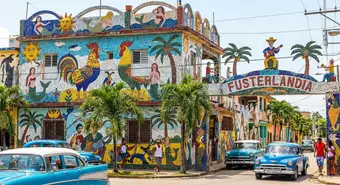
Fusterlandia: The Cuban Neighborhood Turned Living Mosaic Art
Discover Fusterlandia, the Cuban village transformed into mosaic art by José Fuster. History, naïve art, and the magic of Jaimanitas.

Havana Book Fair Postponed: Fuel Crisis Hits Cuban Culture
The 34th Havana International Book Fair, scheduled for Feb 12-22 at La Cabaña fortress, is postponed due to Cuba's deepening fuel crisis.