Cecilia Valdés: Cuba's National Novel That Challenged an Era
The story of Cecilia Valdés, Cirilo Villaverde's masterpiece on race, love and colonialism in 19th century Cuba, and its legendary zarzuela adaptation.
6 min read
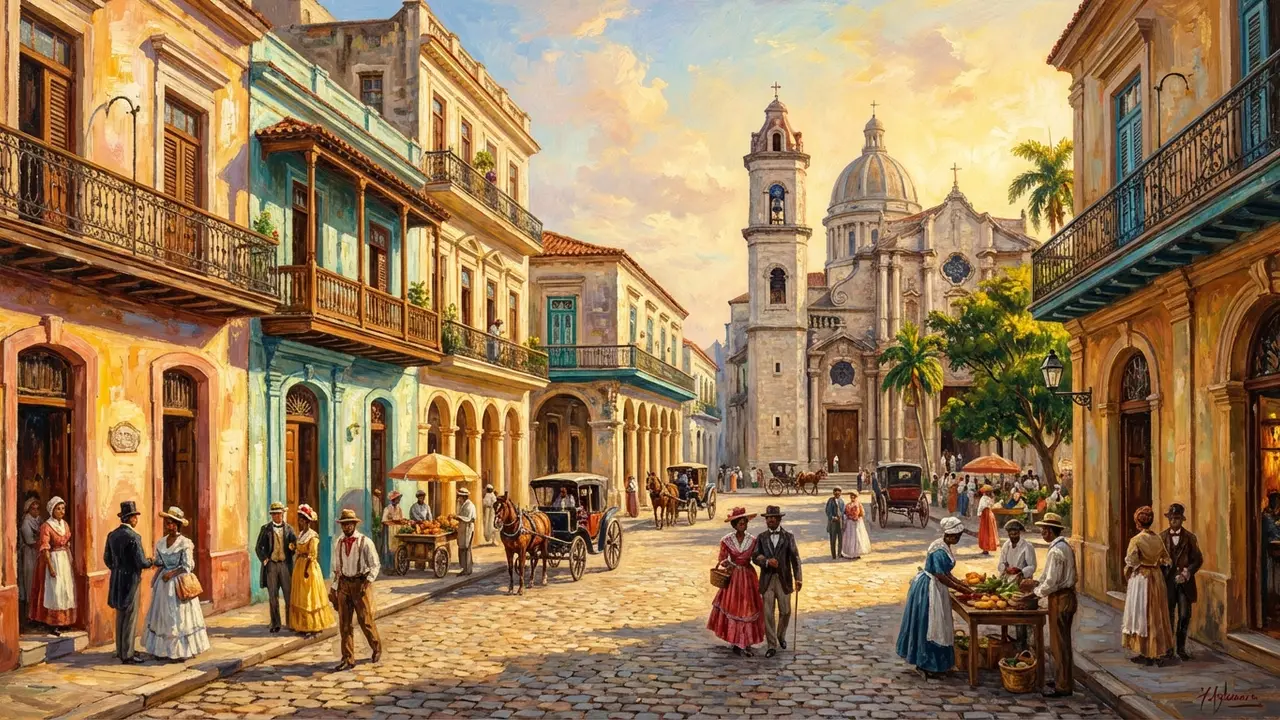
Illustration: Aroma de Cuba (AI)
Some characters transcend the pages of their books to become symbols of an entire nation. Cecilia Valdés is one of them. The mulata from La Loma del Ángel, with her tragic beauty and a fate shaped by the injustices of colonialism, is as much a literary character as she is a mirror of the Cuba that was — and, in many ways, the Cuba that still is.
Cirilo Villaverde: The Novelist Who Defied an Empire
Cirilo Villaverde (1812-1894) was born at the Santiago sugar mill in Pinar del Río province. He grew up surrounded by the horrors of slavery, and those images would mark him forever. He studied law in Havana, but his true calling was literature — and freedom.
Villaverde conspired against Spanish rule as a member of Narciso López’s annexationist movement. He was arrested and sentenced to death in 1848, but managed to escape prison and flee to New York. There, in exile, he would complete his masterpiece.
A fascinating detail: when the wife of poet Miguel Teurbe Tolón sewed the first Cuban flag in 1849, Villaverde was present. The man who would write Cuba’s national novel was also there at the birth of its flag.
1830s Havana: A World of Light and Shadow
The novel transports us to a Havana that was dazzling and terrible in equal measure. It was the richest city in the Caribbean, with stately mansions, elegant promenades, and a vibrant cultural life. But that wealth rested on the backs of hundreds of thousands of African slaves who labored on sugar plantations.
Villaverde paints this world with almost photographic detail:
- The Creole aristocracy: the Gamboa family, with fortunes built on the slave trade
- Free people of color: trapped between two worlds, belonging fully to neither
- The enslaved: divided between those born in Africa and those born in Cuba, between field workers and domestic servants
- The peninsular Spaniards: clinging to colonial power
Cecilia’s Tragedy
Cecilia Valdés is a young mixed-race woman with light skin — light enough to “pass” as white — who lives in the La Loma del Ángel neighborhood of Old Havana. She is the illegitimate daughter of Don Cándido de Gamboa, a powerful landowner and slave trader. But Cecilia doesn’t know this.
Leonardo de Gamboa, Don Cándido’s legitimate son, falls in love with Cecilia. The love is mutual, and from their forbidden union a child is born. But Leonardo, pressured by his family and social conventions, abandons her to marry Isabel Ilincheta, a young white woman from high society.
Meanwhile, José Dolores Pimienta — a talented Black musician hopelessly in love with Cecilia — watches everything unfold in anguish. Cecilia, scorned, pushes him toward revenge. On Leonardo’s wedding day, Pimienta murders him on the cathedral steps.
The outcome is devastating: Pimienta is executed, Cecilia imprisoned. Tragedy devours everyone.
More Than a Love Story
What elevates Cecilia Valdés above melodrama is its social X-ray. Villaverde doesn’t just tell a story of forbidden love — he indicts an entire system.
The novel exposes how colonialism and slavery corrupted every aspect of Cuban life:
- Institutional racism that classified people by the amount of “African blood” in their veins
- Sexual hypocrisy of plantation owners who maintained parallel families with women of color
- The violence of the sugar mills, where slaves died at rates that required constant importation of new captives from Africa
- The complicity of Church and State in maintaining the slave system
As Oxford University Press notes in its scholarly edition, the novel reveals “the moral, political, and sexual depravity caused by slavery and colonialism.”
The Zarzuela: Cecilia Takes the Stage
In 1932, Cuban composer Gonzalo Roig premiered his zarzuela Cecilia Valdés at Havana’s Teatro Martí. With a libretto by Agustín Rodríguez and José Sánchez-Arcilla, the work transformed the novel into an overwhelming musical experience.
The zarzuela fuses Cuban musical genres — son, guaracha, contradanza — with European operatic tradition. The result has been favorably compared to Verdi for its dramatic power and to the Italian lyric tradition for its melodic beauty.
Historic performances:
- 1932: World premiere in Havana
- 1965: Debut at New York’s Metropolitan Opera
- 2003: Production at Toronto Operetta Theatre
- 2020: Premiere at Madrid’s Teatro de la Zarzuela, where Cuba conquered the Spanish audience
Its most famous aria, “Yo soy Cecilia Valdés” (I am Cecilia Valdés), has become one of the most recognizable pieces in Cuban lyric music.
A Living Character in Cuban Culture
Cecilia Valdés transcended literature to become a cultural archetype:
- Film: The 1949 Cuban film directed by Jaime Gallardo was one of the first adaptations, followed by Humberto Solás’s 1982 version
- Theater: Countless stage adaptations in Cuba and abroad
- Visual art: Cuban painters have depicted Cecilia for generations
- Identity: The character symbolizes Cuban mestizaje — that blend of Africa and Europe that defines cubanía
Writer Reinaldo Arenas paid homage with his novel La Loma del Ángel (1987), a parodic and subversive rewriting of Villaverde’s classic.
Relevance in the 21st Century
Cecilia Valdés remains extraordinarily relevant. The questions it raises about race, class, and power have lost none of their urgency:
- Who has the right to love whom?
- How does economic power distort human relationships?
- Can a society built on injustice produce anything other than tragedy?
In a Cuba where racial issues continue to spark intense debate, Cecilia Valdés endures as an uncomfortable but necessary mirror. The novel reminds us that understanding Cuba’s present requires honestly confronting its past.
La Loma del Ángel is still there in Old Havana, with its Church of the Santo Ángel Custodio overlooking the hill. If you walk its streets at dusk, perhaps you can imagine Cecilia — the little bronze virgin, as they called her — walking those same stones nearly two hundred years ago. Her story is the story of Cuba.
Further Reading
Frequently asked questions
What is the novel Cecilia Valdés about?
Who wrote Cecilia Valdés and when?
What is the Cecilia Valdés zarzuela?
Why is Cecilia Valdés important to Cuban culture?
How we got here
Background
The first thing we published on this topic.
Old Havana Restoration Reaches a New Milestone
Rehabilitation work in the historic quarter reveals colonial frescoes from the 18th century.
Governments Issue Travel Warnings for Cuba Amid US Tensions
Canada, Argentina, Spain and other countries warn citizens about Cuba's crisis as Washington's oil blockade and prolonged blackouts affect the island.
Related articles
Cuban Cha-Cha-Chá: The Rhythm That Conquered Dance Floors Worldwide
The history of cha-cha-chá, created by Enrique Jorrín in 1950s Cuba. From Havana to the world with Orquesta América and Aragón.
Fusterlandia: The Cuban Neighborhood Turned Living Mosaic Art
Discover Fusterlandia, the Cuban village transformed into mosaic art by José Fuster. History, naïve art, and the magic of Jaimanitas.
Cuban Dominoes: Much More Than a Game, a National Tradition
Discover the history and traditions of dominoes in Cuba, the national pastime that unites generations in parks, porches, and streets across the island.
Havana Book Fair Postponed: Fuel Crisis Hits Cuban Culture
The 34th Havana International Book Fair, scheduled for Feb 12-22 at La Cabaña fortress, is postponed due to Cuba's deepening fuel crisis.
Leonardo Padura Presents Morir en la Arena at Hay Festival 2026
The master of Cuban noir fiction presents his new novel in Barranquilla, exploring 50 years of Cuba's history.
Punto Cubano: Cuba's Sung Poetry Declared UNESCO Heritage
Discover punto cubano, the improvised sung poetry of Cuban farmers declared UNESCO Intangible Cultural Heritage in 2017.