Nicolás Guillén: Cuba's National Poet and the Afro-Cuban Voice
Discover the life and work of Nicolás Guillén, the poet who fused son music with poetry and gave voice to Afro-Cuban identity.
5 min read
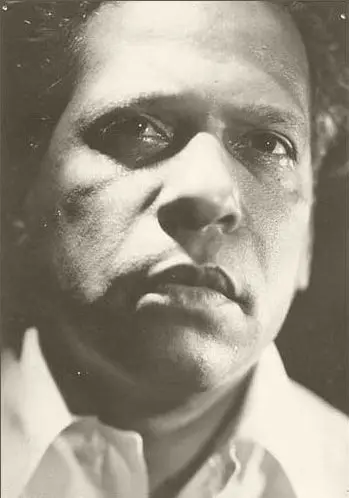
In the pantheon of Latin American literature, few names resonate with the power of Nicolás Guillén (1902-1989). Known as Cuba’s National Poet, Guillén achieved what seemed impossible: capturing in words the rhythm of Cuban son, giving voice to the marginalized, and creating poetry that was both profoundly Cuban and universally human.
From Camagüey to the World
Nicolás Cristóbal Guillén Batista was born on July 10, 1902, in Camagüey, into a family of mixed African and Spanish descent. His father, also named Nicolás, had fought for Cuban independence as a lieutenant and worked as a journalist. It was he who introduced his son to Afro-Cuban music from a very early age.
Life marked the young poet early. His father was assassinated by government forces for protesting electoral fraud—a trauma that would leave a deep imprint on his social and political consciousness. The family fell into economic hardship, and Guillén, like many Afro-Cubans of his era, faced the discriminatory racism that permeated society.
The Encounter That Changed Everything
In February 1930, a fortuitous encounter would transform Cuban literature forever. Langston Hughes, the celebrated African-American poet of the Harlem Renaissance, arrived in Havana searching for a composer for a folk opera.
José Antonio Fernández de Castro, editor of the Diario de la Marina, arranged the meeting between the two poets. The Cubans expected a tall, nearly white man with thin lips. Instead, a 27-year-old of slight build appeared—“a Cuban mulatto,” as Guillén wrote.
Hughes was fascinated by the son music he heard during nightly forays to the Marianao neighborhood. He immediately saw the similarities between son and blues: both born from African musical traditions based on call-and-response structure. Hughes suggested that Guillén make son rhythms the heart of his poetry, just as he had used blues and jazz.
Motivos de Son: A Poetic Revolution
Weeks after meeting Hughes, Guillén wrote feverishly, producing eight poems radically different from anything he had created before. On April 21, 1930, he sent Hughes the result: Motivos de Son.
In the dedication, he wrote: “To the poet Langston Hughes, my dear friend. Affectionately, Nicolás Guillén.”
The work caused sensation and controversy. For the first time, Cuban poetry incorporated the everyday speech of Afro-Cubans, the onomatopoeia of drums (“Sóngoro cosongo,” “Mayombe-bombe”), and the pulsating rhythms of son. It was a “mestizo poetry” that fused Cuba’s African and European heritages.
“Negro bembón,
negro bembón,
why do you get so angry
when they call you negro bembón?”
Black Poetry and Cultural Mestizaje
Guillén became the foremost exponent of poesía negra (black poetry) or poesía negrista, a movement that sought to create a cultural synthesis between African and European elements. Unlike other “negrista” poets of European origin like Alejo Carpentier or Emilio Ballagas, Guillén wrote from lived experience.
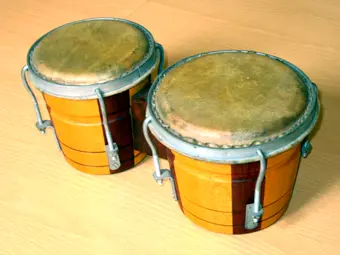
His poem “La canción del bongó” from Sóngoro Cosongo (1931) exemplifies this fusion:
“This is the song of the bongo:
—Here, whoever is finest,
answers, if I call.
Some say: right now,
others say: I’m coming.
But my rough beat,
but my deep voice,
summons the Black and the white,
who dance the same son”
The bongo, an instrument of African origin, becomes a symbol of Cuban identity: an identity that cannot deny its African roots or its Spanish heritage.
From Art to Politics
Guillén’s poetry evolved from the picturesque to the militant. In West Indies Ltd. (1934), he denounced oppression and economic imperialism in the Caribbean. He was imprisoned in 1936 and joined the Communist Party of Cuba the following year.
He traveled to Spain in 1937 for the Congress of Writers and Artists, where he met Ernest Hemingway, Pablo Neruda, and André Malraux. He covered the Spanish Civil War as a reporter.
Fulgencio Batista’s government banned him from Cuba in 1953. He spent five years in exile, returning only after the triumph of the Revolution in 1959. From 1961, he presided over the National Union of Writers and Artists of Cuba (UNEAC) for more than 30 years.
Living Legacy
Nicolás Guillén died on July 16, 1989, in Havana, six days after turning 87. His legacy transcends literature:
- First Cuban National Prize for Literature (1983)
- Stalin Peace Prize (1954)
- International Botev Prize (1976)
- Honorary doctorates from multiple universities
Mexican composer Silvestre Revueltas immortalized his poem “Sensemayá” in a symphonic composition that became his most famous work.
Today, his birthplace in Camagüey is a museum dedicated to his memory. But his greatest monument is his verses, which continue to resonate every time someone hears the son, every time a Caribbean poet writes about identity, every time a Cuban remembers that the island was born from the encounter—sometimes violent, always fertile—of Africa and Europe.
As he wrote in “Ballad of the Two Grandfathers”:
“Federico!
Facundo! The two embrace.
The two sigh. The two
raise their strong heads;
both the same size,
beneath the high stars;
both the same size,
black longing and white longing,
both the same size,
they shout, they dream, they weep, they sing.
They dream, they weep, they sing.
They weep, they sing.
They sing!”
To learn more about the music that inspired Guillén, read our article on Cuban son and Cuban rumba. And if you’re interested in Cuban cinema that adapted his legacy, explore the ICAIC classics.
Frequently asked questions
Why is Nicolás Guillén considered Cuba's National Poet?
What is the relationship between Nicolás Guillén and Langston Hughes?
What is Cuban 'black poetry' or 'poesía negrista'?
What are Nicolás Guillén's most important works?
How we got here
Background
The first thing we published on this topic.
Cuban Music Conquers the Latin Grammys
Cuban artists sweep the ceremony with awards in multiple tropical music categories.
Old Havana Restoration Reaches a New Milestone
Rehabilitation work in the historic quarter reveals colonial frescoes from the 18th century.
Related articles
Nicolás Guillén: The Poet Who Made Cuban Son Sing
Discover the life and work of Nicolás Guillén, Cuba's National Poet who fused African rhythms with poetry to create the Afro-Cuban movement.
Cuban Books: 12 Essential Works of Cuban Literature You Must Read
Discover the must-read Cuban books from José Martí to Leonardo Padura. A guide to essential Cuban literature and where to buy them.
Danzón: Cuba's National Dance Born in Matanzas in 1879
The history of Cuban danzón, from Miguel Failde's Las Alturas de Simpson to its influence on mambo and cha-cha-chá.
Cuban Musical Instruments: Bongos, Congas, Tres and Claves Guide
Complete guide to Cuban musical instruments: bongos, congas, tres cubano, claves, maracas and timbales. History, sounds and where to buy.
Cuban Hip-Hop: From Alamar to the World, Cuba's Rap Revolution
The history of Cuban hip-hop from Alamar to today. How rap became the voice of a generation during Cuba's Special Period crisis.
Tropicana: The Paradise Under the Stars That Dazzled the World
The history of Havana's Tropicana cabaret from 1939 to today. Architecture, shows, and its enduring Cuban cultural legacy.