Cuban Books: 12 Essential Works of Cuban Literature You Must Read
Discover the must-read Cuban books from José Martí to Leonardo Padura. A guide to essential Cuban literature and where to buy them.
5 min read
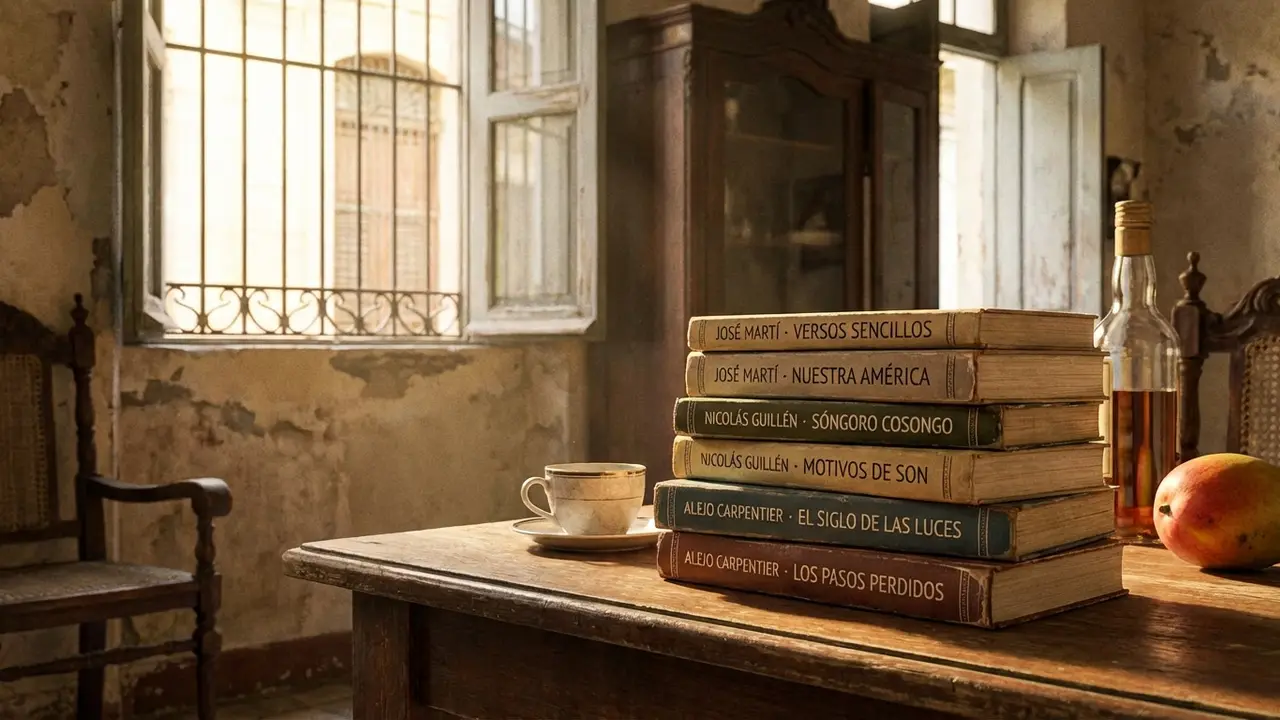
Illustration: Aroma de Cuba (AI)
Cuban Books: 12 Essential Works of Cuban Literature You Must Read
Cuba has produced one of Latin America’s richest literary traditions. From the revolutionary poetry of José Martí to the detective novels of Leonardo Padura, Cuban books offer a universe of voices reflecting the island’s complexity, beauty, and heartbreak.
This guide collects the 12 essential works of Cuban literature — books every Cuba lover should read at least once.
The Foundational Classics
1. Versos Sencillos (Simple Verses) — José Martí (1891)
The most famous poems by Cuba’s independence hero. His verses “I am a sincere man / from where the palm tree grows” became the lyrics to Guantanamera, the most famous Cuban song in the world. Accessible, profound, and eternally relevant.
2. Cecilia Valdés — Cirilo Villaverde (1882)
The great 19th-century Cuban novel. Set in colonial Havana, it tells the story of a mixed-race woman who unknowingly falls in love with her own half-brother — the son of a slave-owning sugar baron. A devastating portrait of colonial society and Cuba’s racial heritage.
3. Motivos de Son — Nicolás Guillén (1930)
Nicolás Guillén revolutionized Spanish-language poetry by fusing the rhythm of Cuban son with verse. These poems inaugurated mulata poetry and gave literary voice to Afro-Cuban identity. To read them is to hear Cuba.
The Cuban Boom
4. Explosion in a Cathedral (El siglo de las luces) — Alejo Carpentier (1962)
Carpentier’s masterpiece takes readers from Havana to the revolutionary Caribbean of the 18th century. His baroque prose, known as lo real maravilloso (the marvelous real), transformed Latin American narrative and predated magical realism.
5. Three Trapped Tigers (Tres tristes tigres) — Guillermo Cabrera Infante (1967)
One night in pre-revolutionary Havana told with dazzling linguistic virtuosity. Word games, parodies, nocturnal monologues. Cabrera Infante won the Cervantes Prize in 1997 — the highest honor in Spanish-language literature.
6. Paradiso — José Lezama Lima (1966)
The most ambitious novel in Cuban literature. Lezama Lima built a poetic universe where Havana becomes myth. Dense, baroque, and censored in its time for its homoerotic scenes. A literary cathedral.
The Exile and Diaspora Generation
7. Before Night Falls (Antes que anochezca) — Reinaldo Arenas (1992)
The posthumous autobiography of Reinaldo Arenas — persecuted for being gay and a writer in revolutionary Cuba. He escaped via the Mariel boatlift in 1980 and wrote this devastating memoir before taking his life in New York. Adapted into a film starring Javier Bardem in 2000.
8. Dreaming in Cuban — Cristina García (1992)
The first major Cuban diaspora novel written in English. Three generations of women between Havana and Brooklyn. Cristina García captures the family fractures caused by revolution with tenderness and nuance.
Contemporary Cuba
9. The Man Who Loved Dogs — Leonardo Padura (2009)
Padura’s magnum opus interweaves the lives of Leon Trotsky, his assassin Ramón Mercader, and a frustrated Cuban writer. A meditation on betrayed utopias and the cost of revolution. Princess of Asturias Award 2015.
10. Yocandra in the Paradise of Nada — Zoé Valdés (1995)
Life in Havana during the Special Period — hunger, scarcity, sex, survival. Zoé Valdés wrote from Paris a raw, sensual portrait of 1990s Cuba that became an international bestseller.
11. The Deep Foods (Las comidas profundas) — Antonio José Ponte (1997)
A brief, luminous essay where Cuban food becomes a metaphor for memory and loss. Ponte writes about dishes no one can cook anymore on an island where everything is scarce. Literature and Cuban cuisine fused in 80 perfect pages.
12. Everyone Leaves (Todos se van) — Wendy Guerra (2006)
Written as a diary, it chronicles a woman’s childhood and youth in 1980s and 90s Cuba. Wendy Guerra captures the suffocation of social control and the search for freedom with an intimate, powerful voice. Published in Spain and translated into 23 languages.
Cuban Publishers Worth Knowing
Letras Cubanas
Founded in 1977, located in the Palacio del Segundo Cabo in Old Havana. Cuba’s main literary publisher, having published Guillén, Padura, Senel Paz, and generations of authors.
Casa de las Américas
Created in 1959, its literary prize is among Latin America’s most prestigious. Broad continental catalog with strong Cuban presence.
Ediciones Unión
Publisher of UNEAC (Union of Cuban Writers and Artists). Specializes in contemporary Cuban poetry, essays, and fiction.
Deslinde (Madrid)
Founded in 2019 by Cuban writers in exile. Publishes diaspora literature with collections like Isla (Cuban letters) and Alas (women authors).
Where to Buy Cuban Books in English
| Store | Specialty | Web |
|---|---|---|
| Amazon | Largest selection of translated Cuban lit | amazon.com |
| Books & Books | Miami bookstore with Cuban section | booksandbooks.com |
| Cubalibros | Digital Cuban literature | cubalibros.com |
| Book Depository | Free worldwide shipping | bookdepository.com |
| Casa de las Américas | Official Cuban publisher | casadelasamericas.org |
Keep Exploring Cuban Culture
If this list captivated you, explore more: the poetry of Nicolás Guillén, the music that inspired these writers — from Cuban son to Cuban musical instruments — and of course, the Cuban coffee that accompanies every good reading session.
Cuban literature is a broken mirror where each shard reflects a different Cuba — and all of them are true.
Frequently asked questions
What are the most important Cuban books?
Where can I buy Cuban books in English?
Which Cuban author won the Princess of Asturias Award?
What is magical realism in Cuban literature?
How we got here
Background
The first thing we published on this topic.
Cuban Music Conquers the Latin Grammys
Cuban artists sweep the ceremony with awards in multiple tropical music categories.
Old Havana Restoration Reaches a New Milestone
Rehabilitation work in the historic quarter reveals colonial frescoes from the 18th century.
Related articles
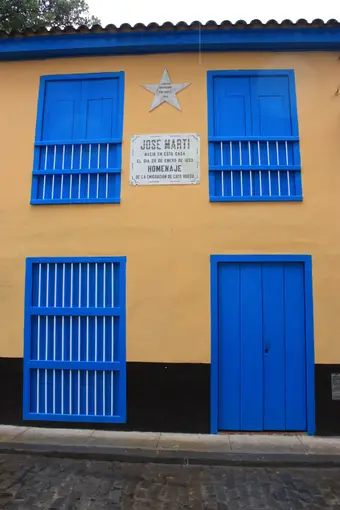
José Martí: Cuba's Apostle Who Built a Nation Through Poetry
Life and legacy of José Martí, Cuban national hero, modernist poet, and independence leader. From prison to the Versos sencillos.

Danzón: Cuba's National Dance Born in Matanzas in 1879
The history of Cuban danzón, from Miguel Failde's Las Alturas de Simpson to its influence on mambo and cha-cha-chá.
Cuban Musical Instruments: Bongos, Congas, Tres and Claves Guide
Complete guide to Cuban musical instruments: bongos, congas, tres cubano, claves, maracas and timbales. History, sounds and where to buy.
Nicolás Guillén: Cuba's National Poet and the Afro-Cuban Voice
Discover the life and work of Nicolás Guillén, the poet who fused son music with poetry and gave voice to Afro-Cuban identity.
Cuban Hip-Hop: From Alamar to the World, Cuba's Rap Revolution
The history of Cuban hip-hop from Alamar to today. How rap became the voice of a generation during Cuba's Special Period crisis.
Tropicana: The Paradise Under the Stars That Dazzled the World
The history of Havana's Tropicana cabaret from 1939 to today. Architecture, shows, and its enduring Cuban cultural legacy.