José Martí: Cuba's Apostle Who Built a Nation Through Poetry
Life and legacy of José Martí, Cuban national hero, modernist poet, and independence leader. From prison to the Versos sencillos.
5 min read
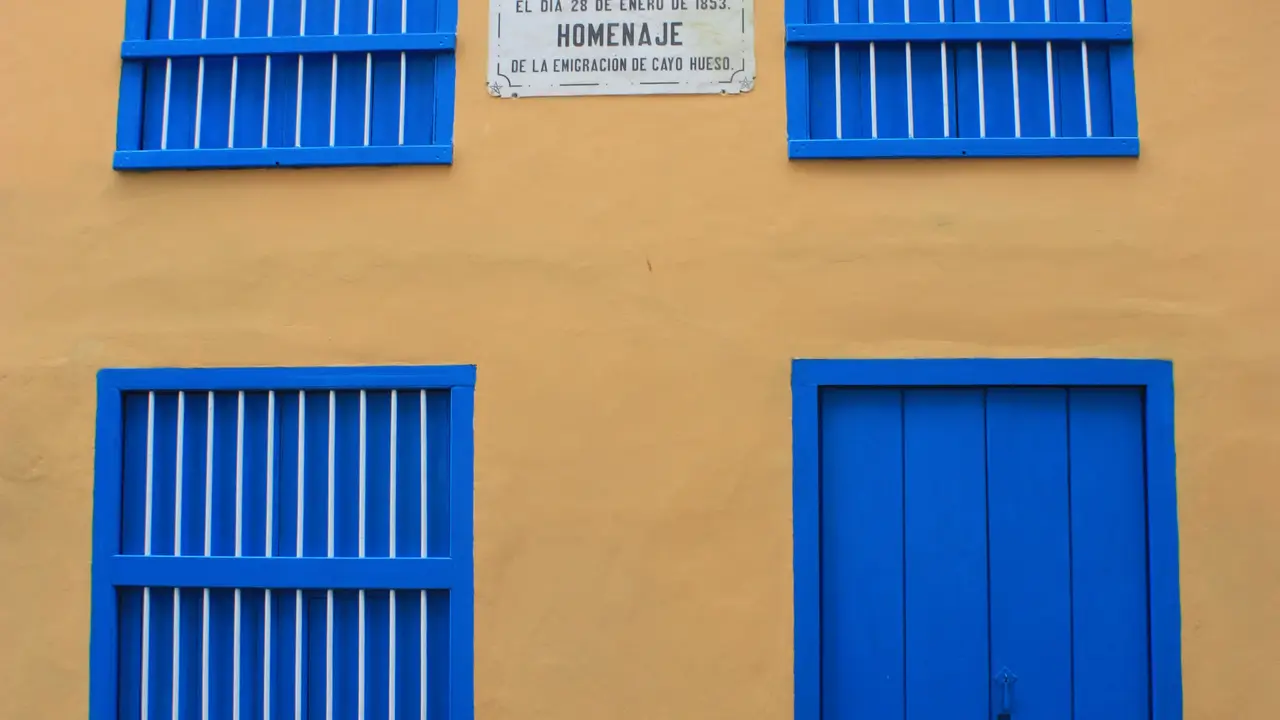
A Boy from Havana Who Changed a Continent
At 314 Paula Street in Old Havana, on January 28, 1853, a child was born who would change Cuba’s destiny and reshape Latin American letters. José Julián Martí Pérez came into the world in a humble family of Spanish immigrants — his father Mariano was Valencian, his mother Leonor was Canarian — with no one suspecting that this thin boy would become the soul of a nation.
At twelve, the poet Rafael María de Mendive discovered young Martí’s talent and became his mentor. It was Mendive who ignited in him the flame of literature and, unwittingly, of rebellion. When the Ten Years’ War erupted in 1868, Martí was barely fifteen — and already writing independence manifestos.
Prison, Exile, and the Forging of Character
At seventeen, Martí was sentenced to six years of hard labor in the San Lázaro quarries. Political imprisonment scarred his body — the chains left wounds he would carry for life — but tempered his spirit. In El presidio político en Cuba (Political Prison in Cuba, 1871), his first major text, he denounced the horrors of the Spanish colonial system with astonishing maturity.
Deported to Spain, he studied Law and Philosophy at the University of Zaragoza. Spain gave him education, friendships, and a mastery of Spanish that few could match, but it never made him forget his mission: a free Cuba.
“I have lived in the monster, and I know its entrails; — and my sling is the sling of David.” — José Martí, letter to Manuel Mercado (1895)
The Pilgrim of the Americas
Between 1875 and 1881, Martí lived a pilgrimage through Mexico, Guatemala, and Venezuela. In each country he left his mark as a journalist, professor, and orator. In Guatemala he fell in love with María García Granados — the celebrated “Girl from Guatemala” of his Versos sencillos — whose early death marked him profoundly:
“I want, in the shade of a wing, / to tell this story in bloom: / the girl from Guatemala, / the one who died of love.”
In 1881 he settled permanently in New York City, where he would live for the next fourteen years. From there he built, word by word, the project of an independent Cuba.
The Poet Who Invented Modernism
Before Rubén Darío published Azul… (1888), Martí had already revolutionized poetry in Spanish. With Ismaelillo (1882) — a collection dedicated to his son — he broke the molds of late Romanticism with fresh imagery, new rhythms, and a musicality no one had achieved before.
His three great poetic works define a trajectory:
- Ismaelillo (1882): Paternal tenderness as a vehicle for aesthetic renewal
- Versos libres (1878-1882, published 1913): Raw, existential poetry he called “bristling hendecasyllables”
- Versos sencillos (1891): The summit. Poems that sound like Cuban son, like peasant décimas, like a Caribbean breeze
Miguel de Unamuno said Martí wrote in Spanish as no one ever had. Nobel laureate Juan Ramón Jiménez considered him the greatest prose writer of the language.
”Our America”: Living Thought
In January 1891, Martí published his most influential essay in the Revista Ilustrada de Nueva York: Nuestra América (Our America). In just a few pages he traced a vision of the continent that remains relevant 135 years later:
- Rejection of cultural colonialism: “Graft the world onto our republics; but the trunk must be our own”
- Warning about U.S. imperialism, decades before it fully materialized
- Defense of indigenous peoples and mestizo cultures
- Education as a tool of liberation
This text is studied today in universities worldwide as a cornerstone of Latin Americanist and postcolonial thought.
The Revolutionary Party and the Necessary War
On April 10, 1892, Martí founded the Cuban Revolutionary Party (PRC) in New York. It was no ordinary party: it was a war machine funded by Cuban cigar workers in Tampa and Key West, who donated part of their wages to the cause.
Martí achieved what no one else had: uniting the veteran generals of the Ten Years’ War — Máximo Gómez and Antonio Maceo — with the new generation of revolutionaries. He founded the newspaper Patria as the movement’s organ and delivered speeches that electrified crowds.
On March 25, 1895, he signed the Montecristi Manifesto alongside Gómez, the formal declaration of war against Spain. A month later he landed in Cuba at Playitas de Cajobabo, Guantánamo.
Dos Ríos: May 19, 1895
Just thirty-seven days after setting foot on Cuban soil, José Martí fell in combat at Dos Ríos, near Palma Soriano, Santiago de Cuba. He was 42. He rode toward the Spanish lines dressed in black, mounted on a white horse — an image Cuba would never forget.
His death was a strategic tragedy: Cuba lost the only leader capable of building the republic he had dreamed of. But his intellectual legacy survived and became the moral DNA of the nation.
The Infinite Legacy
José Martí is everywhere in Cuba:
- José Martí International Airport in Havana
- The monumental José Martí Memorial at the Plaza de la Revolución, the tallest tower in Havana
- A bust of Martí in every Cuban school, where children recite his verses each morning
- The José Martí National Library
- A statue in New York’s Central Park
But his greatest legacy is not bronze or marble. It’s textual. The 28 volumes of his complete works contain chronicles, essays, poetry, letters, speeches, and translations that continue to astonish with their clarity and beauty.
And of course, there’s the song. Every time someone, anywhere in the world, sings “Yo soy un hombre sincero / de donde crece la palma”, Martí’s Versos sencillos — transformed into Guantanamera — continue fulfilling their mission: carrying Cuba to the heart of the world.
“All the glory of the world fits in a kernel of corn.” — José Martí
Frequently asked questions
Why is José Martí considered Cuba's national hero?
What are José Martí's most important literary works?
What is the connection between José Martí and the song 'Guantanamera'?
Where can you visit José Martí's birthplace in Havana?
How we got here
Background
The first thing we published on this topic.
Cuban Music Conquers the Latin Grammys
Cuban artists sweep the ceremony with awards in multiple tropical music categories.
Old Havana Restoration Reaches a New Milestone
Rehabilitation work in the historic quarter reveals colonial frescoes from the 18th century.
Related articles
Cuban Books: 12 Essential Works of Cuban Literature You Must Read
Discover the must-read Cuban books from José Martí to Leonardo Padura. A guide to essential Cuban literature and where to buy them.
Cuban Santería: The Religion of the Orishas and Its Power
Discover Cuban Santería, its orishas, rituals, the 2026 Letra del Año prophecy, and how this Afro-Cuban religion thrives today.
Bad Bunny at Super Bowl LX: Cuba Present on the World's Biggest Stage
Bad Bunny included the Cuban flag in Super Bowl LX, moving Cubans amid crisis. Analysis of the most Latino halftime show in history.
La Cosa: The Secret Language That Reveals Cuba's Soul
When a Cuban asks '¿Cómo está la cosa?', they say everything while saying nothing. Discover the coded language that defines Cuban resilience.
Félix González-Torres: Sweet Revenge Arrives in Madrid May 2026
The Reina Sofía Museum presents a major retrospective of the Cuban artist who turned candy and lightbulbs into visual poetry.
Carlos Acosta Reinvents The Nutcracker with Cuban Flavor
The legendary Cuban dancer transforms the holiday classic with Nutcracker in Havana, fusing classical ballet with Afro-Cuban rhythms.