La Cosa: The Secret Language That Reveals Cuba's Soul
When a Cuban asks '¿Cómo está la cosa?', they say everything while saying nothing. Discover the coded language that defines Cuban resilience.
4 min read
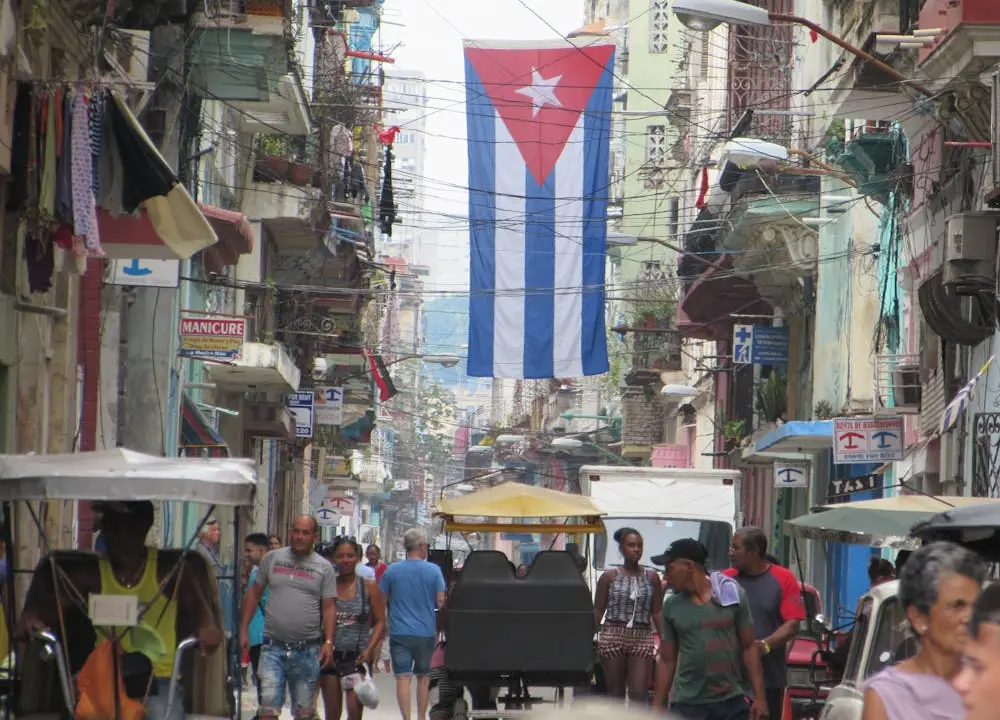
On any corner in Havana, in any bread line, in any room where Cubans gather, you’ll hear the same question: “¿Cómo está la cosa?” (How’s the thing?)
It’s not an innocent question. And the answer is never literal.
The Art of Saying Everything While Saying Nothing
“La cosa” is perhaps the most versatile word in the Cuban vocabulary. It’s a noun, a verb, and a feeling. It’s the economy when you don’t want to talk about the economy. It’s politics when talking about politics could cost you dearly. It’s scarcity, waiting, frustration, hope—all wrapped in two syllables that say everything and nothing at the same time.
A recent NPR report from Havana captured this linguistic reality. Correspondent Eyder Peralta found that simply asking “¿Cómo está la cosa?” opens floodgates.
“My love, la cosa is very bad,” responded a Cuban woman named Marisleysis. Her friend tried to quiet her—she was speaking in front of a microphone. But Marisleysis dismissed her. Because that’s the thing about “la cosa”: it can mean anything.
The Limits of Expression
The genesis of this coded language has deep historical roots. Fidel Castro defined the limits of expression with a phrase that became unwritten law: “Within the Revolution, everything; against the Revolution, nothing.”
Cubans who crossed that line have ended up in prison. So, like bishops deciphering an encyclical, Cubans learned to navigate. Language became a territory of subtle resistance, where double meaning is survival.
Silvio Sings What Everyone Whispers
The power of “la cosa” was crystallized in 2024 when Silvio Rodríguez, Cuba’s most influential troubadour and founding figure of the Nueva Trova movement, released a song titled precisely “Viene la Cosa” (The Thing is Coming).
“La cosa is coming,” Silvio sings. “It’s going to be bad.”
The lyrics speak of an unstoppable change that “comes with eyes wide open” and that “lies will never stop it.” What is “la cosa” that’s coming? It could be a popular rebellion, a communist renewal, or a foreign intervention. That ambiguity gives Silvio plausible deniability—and Cubans, an anthem.
The Grammar of Survival
In the streets of Havana, “la cosa” conjugates according to trust:
- Among strangers: “La cosa está difícil” (It’s difficult) — neutral, safe
- Among acquaintances: “La cosa está imposible” (It’s impossible) — more honest
- Among close friends: “La cosa está para irse” (It’s time to leave) — the raw truth
Nino and Gabriela, interviewed by NPR in downtown Havana, explained it this way: “The meaning changes depending on the trust you have with the other person. Sometimes, only the two of you know what you’re talking about.”
Mario and the Daily Quota
Mario works as a receptionist in a government building. He earns about $4 a month—his entire paycheck buys less than a carton of eggs.
“I don’t lie,” he says, “because I’ll defend my country with my life.”
But then, like every Cuban, he turns cryptic.
His 41-year-old son tells him: “Dad, you have to stop believing because this will never get any better.”
And how do you respond? the journalist asks.
“Things will get better,” Mario says, “but it’s hard. La cosa is tough,” he whispers.
More Than Words
“La cosa” is more than slang—it’s a cultural operating system. It’s the way eleven million people process a reality they cannot change but cannot ignore either. It’s dark humor, it’s catharsis, it’s instant solidarity among strangers.
When a Cuban in Miami asks another “¿Cómo está la cosa allá?” (How’s the thing over there?), both know he’s not asking about the weather. When a mother in Santiago writes to her son in Madrid that “la cosa sigue igual” (the thing is still the same), he understands nothing has improved.
It’s the language of the diaspora, the code of those who stayed, the invisible bridge between the 11 million on the island and the 2 million outside.
The Thing That’s Coming
Silvio sings that “la cosa” is coming with eyes wide open. Nobody knows exactly what form it will take—reform, collapse, continuity, or something that doesn’t yet have a name.
But one thing is certain: when it arrives, Cubans will have a word to describe it.
And that word will be, of course, la cosa.
Do you know other Cuban expressions that say everything while saying nothing? Tell us in the comments or explore more about Cuban culture on Aroma de Cuba.
Frequently asked questions
What does 'la cosa' mean in Cuba?
Why do Cubans use coded language?
Who wrote the song 'Viene la cosa'?
How is 'la cosa' used in conversation?
How we got here
Background
The first thing we published on this topic.
Cuban Music Conquers the Latin Grammys
Cuban artists sweep the ceremony with awards in multiple tropical music categories.
Son Cubano: The Rhythm That Conquered the World
From the mountains of Oriente to Broadway stages. History, instruments, and legends of the musical genre that defines Cuba.
Related articles
The Cuban Guayabera: History of the Shirt That Defines Cuba
From the Yayabo River to presidential summits: the guayabera was born peasant and became a symbol of Cuban elegance. Discover its history.

Félix González-Torres: Sweet Revenge Arrives in Madrid May 2026
The Reina Sofía Museum presents a major retrospective of the Cuban artist who turned candy and lightbulbs into visual poetry.
Carlos Acosta Reinvents The Nutcracker with Cuban Flavor
The legendary Cuban dancer transforms the holiday classic with Nutcracker in Havana, fusing classical ballet with Afro-Cuban rhythms.
Punto Cubano: Cuba's Sung Poetry Declared UNESCO Heritage
Discover punto cubano, the improvised sung poetry of Cuban farmers declared UNESCO Intangible Cultural Heritage in 2017.
Leonardo Padura Presents Morir en la Arena at Hay Festival 2026
The master of Cuban noir fiction presents his new novel in Barranquilla, exploring 50 years of Cuba's history.
José Martí: Cuba's Apostle Who Built a Nation Through Poetry
Life and legacy of José Martí, Cuban national hero, modernist poet, and independence leader. From prison to the Versos sencillos.