Cuban Timba: The Most Explosive Music Born in Havana
Discover Cuban timba, the genre that fused son, funk, and rumba in the 1990s. History, key bands, and rhythms conquering the world.
5 min read
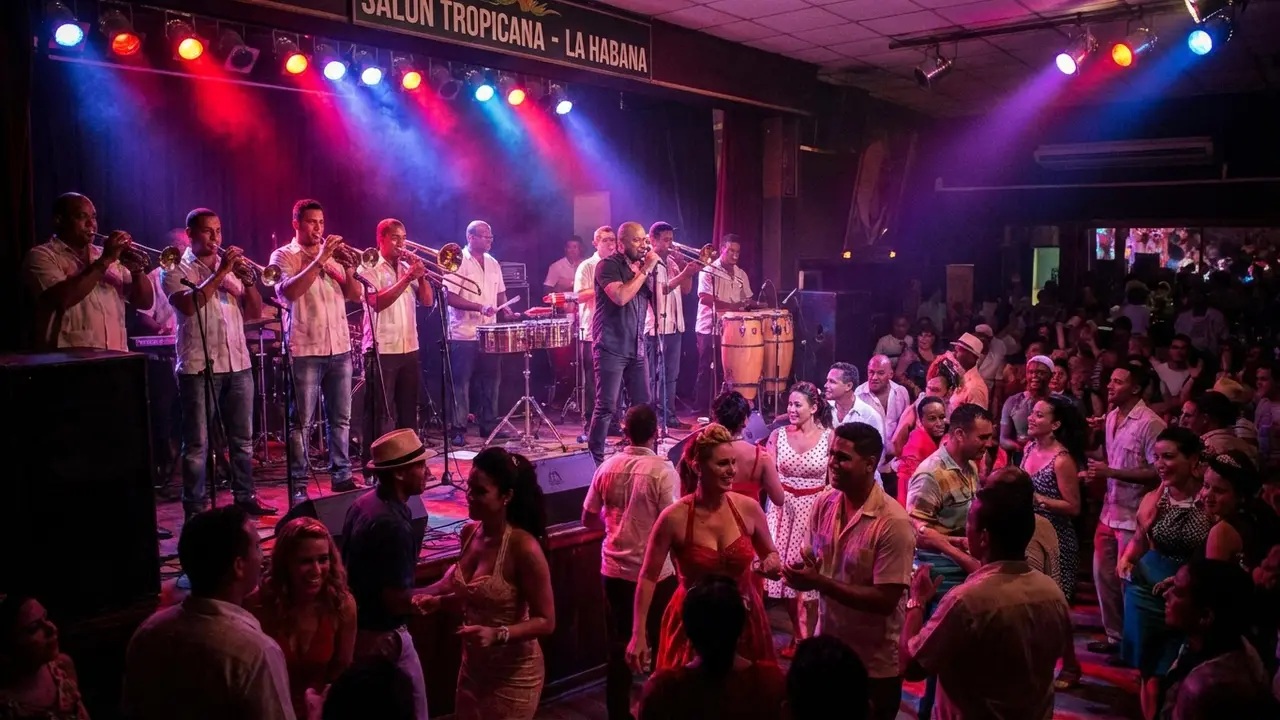
Illustration: Aroma de Cuba (AI)
The genre that shook Havana’s nights
During the darkest years of Cuba’s Special Period, when the island lost its oil, its food supply, and nearly its hope, something extraordinary emerged from Havana’s neighborhoods: timba. A musical genre so explosive, so loaded with raw energy, that it turned every Havana night into a celebration of survival.
Timba is not simply “Cuban salsa.” It’s a different beast entirely: more aggressive, rhythmically complex, and street-smart. It fuses Cuban son with American funk, hip-hop, Afro-Cuban rumba, and jazz, creating a sound unlike anything else on the planet.
Origins: from songo to timba
Juan Formell and Los Van Van: the grandfathers of the sound
It all started in 1969 when bassist and composer Juan Formell founded Los Van Van. Formell was a visionary who feared nothing: he put electric violins, synthesizers, and rock drums into a Cuban charanga. The result was songo, a revolutionary rhythm that paved the way for what came next.
Los Van Van were the first to declare: “Cuban music can absorb anything from the outside and still remain Cuban.” That philosophy is timba’s DNA.
NG La Banda: the explosion
In 1988, flautist José Luis Cortés, known as “El Tosco” (The Rough One), founded NG La Banda (New Generation). With musicians from Irakere and Los Van Van, El Tosco created something unprecedented: an orchestra that played with jazz precision, funk power, and Cuban street flavor.
The album En la calle (1990) changed history. Tracks like “La expresiva” — featuring a young Issac Delgado on vocals — introduced the elements that would define timba:
- “Gears”: abrupt section changes where the band shifts from one rhythmic pattern to a completely different one
- Song-specific piano tumbaos (not generic formulas)
- The bass drum, absent in traditional salsa
- Street-level lyrics about real Cuban life, not sugar-coated romance
The golden era: the 1990s
Havana as the world’s dance capital
Between 1992 and 1997, Havana experienced an unprecedented musical fever. While the economy collapsed, dance halls exploded. The Casa de la Música, Salón Rosado de la Tropical, and the Palacio de la Salsa at Hotel Riviera became temples of timba.
Each band generated a collective mania Cubans called “la fiebre” (the fever):
- La Charanga Habanera led by David Calzado: provocative, scandalous, with choreography that caused more than one official uproar
- Manolín “El Médico de la Salsa”: clever lyrics full of double meanings and camouflaged social commentary
- Paulito FG y su Élite: romance mixed with brutal descargas (jam sessions)
- Issac Delgado: timba’s most elegant voice, capable of singing bolero and then destroying a stage with pure timba
More than music: a social phenomenon
Timba was the soundtrack of a Cuba in crisis that refused to stop dancing. The lyrics spoke of jineterismo (hustling/prostitution), the daily struggle for food, the dollar as obsession, and relationships between Cubans and tourists. It was journalism set to music, social chronicle with clave.
The Cuban government had a tense relationship with timba. In 1997, La Charanga Habanera was suspended for six months after a concert deemed “vulgar.” But banning timba was like banning breathing — people needed it.
Anatomy of timba
What makes timba different?
| Element | Salsa | Timba |
|---|---|---|
| Bass drum | Not used | Essential |
| Section changes | Gradual | Abrupt (“gears”) |
| Piano | Standard montuno | Unique tumbaos per song |
| Bass | Fixed pattern | Improvised, protagonist |
| Lyrics | Romantic/danceable | Street-smart, social, humorous |
| Influences | Jazz, son | Funk, hip-hop, rumba, santería |
The bass: king of timba
If in salsa the piano carries the rhythmic melody, in timba the electric bass is the protagonist. Bassists like Juan Formell, Feliciano Arango (Los Van Van), and Alain Pérez revolutionized what could be done with four strings in Latin music. Their bass lines are so complex that jazz and funk bassists worldwide study Cuban timba.
Timba today
New generation
Timba didn’t die with the Special Period. Bands like Havana D’Primera led by Alexander Abreu, Elito Revé y su Charangón, and Maykel Blanco y su Salsa Mayor keep the flame alive. Cimafunk, while more funk-oriented, drinks directly from the timbera tradition.
Global influence
Timba has influenced musicians worldwide. In Europe, especially in cities like Barcelona, Stockholm, and London, entire communities are dedicated to casino dancing and timba. Festivals like the Timba Festival in various European cities attract thousands of dancers every year.
Five essential tracks to understand timba
- “La expresiva” – NG La Banda (1990): timba’s Big Bang
- “Soy todo” – Los Van Van (1997): Juan Formell at his most creative
- “Haila” – La Charanga Habanera (1996): provocation and genius
- “Qué manera de quererte” – Issac Delgado (1995): timbera elegance
- “Pasaporte” – Havana D’Primera (2012): 21st-century timba
Timba is proof that Cuban creativity knows no limits. Born in adversity, forged in Havana’s nights, this genre remains one of Cuba’s most original and powerful contributions to world music. As long as there’s a pair of congas, an electric bass, and an audience ready to sweat, timba will live on.
Interested in Cuban music? Read about Cuban son, rumba, and punto cubano.
Frequently asked questions
What is the difference between timba and salsa?
Who invented Cuban timba?
What are the most famous timba bands?
Where can you dance timba in Havana?
How we got here
Background
The first thing we published on this topic.
Cuban Music Conquers the Latin Grammys
Cuban artists sweep the ceremony with awards in multiple tropical music categories.
Son Cubano: The Rhythm That Conquered the World
From the mountains of Oriente to Broadway stages. History, instruments, and legends of the musical genre that defines Cuba.
Related articles
EGREM and Cuban Music Labels: Guide to Cuba's Musical Catalog
Discover EGREM, Areíto and Cuban record labels. History, iconic artists, recording studios and where to buy Cuban music on vinyl and digital.
Cuban Sugar: History, Harvest, and the Legacy of White Gold
Discover the history of Cuban sugar, from colonial mills to AZCUBA's current crisis. Complete guide to Cuba's most iconic product and its global impact.
Cuban Dominoes: History, Rules and Cuba's National Game
Discover Cuban double-nine dominoes, the only domino variant exclusive to Cuba. History, rules, slang, and where to buy your set.
Cuban Musical Instruments: Bongos, Congas, Tres and Claves Guide
Complete guide to Cuban musical instruments: bongos, congas, tres cubano, claves, maracas and timbales. History, sounds and where to buy.
Fusterlandia: The Cuban Neighborhood Turned Living Mosaic Art
Discover Fusterlandia, the Cuban village transformed into mosaic art by José Fuster. History, naïve art, and the magic of Jaimanitas.
Cuban Musical Instruments: Claves, Bongos, Congas and the Tres
Discover Cuba's traditional instruments: claves, bongos, tumbadoras, maracas and the Cuban tres. History, craftsmanship and where to buy them.