Cuban Musical Instruments: Bongos, Congas, Tres and Claves Guide
Complete guide to Cuban musical instruments: bongos, congas, tres cubano, claves, maracas and timbales. History, sounds and where to buy.
6 min read
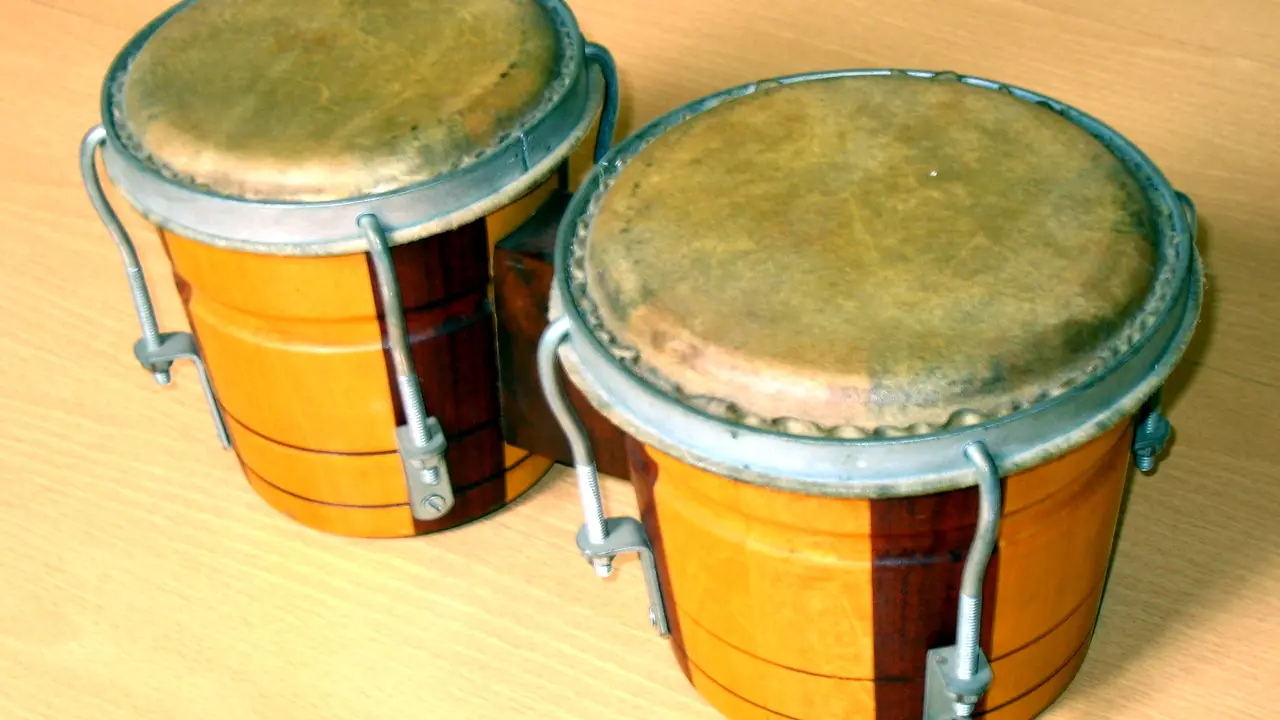
Cuba doesn’t just export music — it exports sound itself. The instruments born or transformed on the island are now universal heritage: from the streets of Santiago de Cuba to the jazz stages of New York, bongos, congas, and claves set the rhythm for the world.
The Roots: Africa, Spain, and the Taínos
Cuban music is a fusion of three traditions. African slaves brought the sacred drums of Yoruba worship — the batá drums, tumbadoras, and rhythmic rituals that would become rumba. Spain contributed the guitar, the lute, and melodic forms. And the Taínos, Cuba’s indigenous people, left behind maracas and the güiro, made from dried gourds and calabashes.
From that collision came a sound ecosystem unlike anything else on earth.
The Bongos: The Heartbeat of Son
The bongo is perhaps Cuba’s most iconic instrument. It consists of a pair of small drums joined by a wooden bridge: the macho (smaller, higher-pitched) and the hembra (larger, deeper).
Born in eastern Cuba in the late 19th century as a fundamental part of son cubano, the bongosero plays seated with the drums between the knees, alternating between steady patterns called martillo and improvised passages.
Key features
- Material: hardwood shells (oak or cedar) with natural hide heads
- Tuning: metal rod tension or key-tuned
- Size: macho ~6 inches, hembra ~8 inches diameter
- Top brands: LP (Latin Percussion), Meinl, Toca
- Price range: from $60 (student) to $400+ (professional)
“Without bongos, there is no son” — Cuban saying
Congas (Tumbadoras): The Voice of Rumba
Congas or tumbadoras are tall, narrow drums of African origin that became the backbone of Cuban rumba. Played standing or seated, they produce an extraordinary range of tones depending on hand technique.
The three classic sizes
| Name | Diameter | Role |
|---|---|---|
| Quinto | ~11 in | Improvisation, solos |
| Tres golpes (conga) | ~12 in | Base rhythm |
| Tumba (salidor) | ~12.5 in | Bass, time-keeping |
Congas went from Havana’s tenement courtyards to international stages thanks to legendary percussionists like Chano Pozo, who brought them to jazz alongside Dizzy Gillespie in 1947, and Mongo Santamaría, creator of the classic Afro Blue.
Where to buy congas
- LP Music: the industry standard
- Meinl Percussion: excellent German craftsmanship
- Amazon: wide variety from $80 for beginners
- In Cuba: artisans in Santiago and Matanzas craft traditional congas
The Tres Cubano: The Soul of Son
The tres cubano is a plucked string instrument with three pairs of strings (six strings total, grouped in three courses). It’s the quintessential melodic-rhythmic instrument of son and changüí.
Born in eastern Cuba in the 19th century — likely as a Creole adaptation of the Spanish guitar — its bright, repetitive sound (the montuno) is the DNA of Cuban son and, by extension, salsa.
Tres cubano vs. guitar
| Feature | Tres cubano | Guitar |
|---|---|---|
| Strings | 3 pairs (6 total) | 6 individual |
| Tuning | G-C-E (octaves) | E-A-D-G-B-E |
| Role | Rhythmic montuno + melody | Harmony + melody |
| Primary genre | Son, changüí | Universal |
Legendary treseros like Arsenio Rodríguez and Pancho Amat elevated the instrument to virtuoso levels. Today, the tres can be found at Lark in the Morning and specialized Latin instrument shops.
Claves: The Secret Code
Claves are, paradoxically, the simplest and most important instrument in Cuban music. Two cylindrical hardwood sticks (ebony, granadillo, or lignum vitae) about 8 inches long that, when struck together, produce a sharp, cutting sound that pierces through any ensemble.
But claves aren’t just an instrument — they’re a rhythmic concept. The clave pattern (3-2 or 2-3) is the structure upon which all Cuban music is built:
Son Clave (3-2):   X . X . X . . . X . . X . . . .
Rumba Clave (3-2): X . . X . X . . X . . X . . . .
Everything — piano, bass, congas, horns — is organized in relation to the clave. If a musician is “out of clave,” something is fundamentally wrong.
- Price: from $5-15 (one of the most accessible instruments in the world)
- Where to buy: any music store, Amazon, LP Music
Maracas: Taíno Heritage
Maracas are one of the few instruments with pre-Columbian roots that survived intact to the present day. The Taínos made them from the dried fruit of the calabash tree, filling them with seeds or small stones.
In modern Cuban music, maracas are essential in son, cha-cha-chá, and guaracha. The maraquero maintains a constant pattern that complements the clave rhythm.
Types of maracas
- Traditional: natural dried gourd with seeds
- Professional: fiberglass or plastic with calibrated fill
- Cuban artisanal: hand-decorated, popular as souvenirs
- Brands: LP, Meinl, NINO (for children)
The Güiro: Cuba’s Scraper
The güiro is a percussion instrument played by scraping a wooden or metal stick across the ridged surface of an elongated gourd (or its modern fiberglass or metal version).
Present in son, danzón, and cha-cha-chá, the güiro adds that raspy, constant texture that gives Cuban music its forward motion. Its metal version, the güira, is more common in Dominican music (merengue), while Cuba favors the traditional gourd güiro.
Timbales: Danzón Heritage
Timbales (or pailas criollas) are a pair of shallow metal drums mounted on a stand, accompanied by cowbells and a hand-held bell (campana).
They arrived in Cuba as a Creole adaptation of European orchestral timpani, becoming smaller and more portable for danzón ensembles and charangas in the 19th century. Tito Puente, though Puerto Rican, brought Cuban-style timbales to worldwide fame.
Where to Buy Authentic Cuban Instruments
Online
| Store | Specialty | Link |
|---|---|---|
| LP Music | Professional Latin percussion | lpmusic.com |
| Meinl | High-end percussion | meinlpercussion.com |
| Lark in the Morning | Tres cubano, rare instruments | larkinthemorning.com |
| Amazon | All types, beginner-friendly | amazon.com |
In Cuba
The finest handcrafted instruments can be found in:
- Santiago de Cuba: birthplace of son, home to tres and bongo makers
- Old Havana: luthier workshops on Calle Obispo
- Matanzas: rumba capital, artisan conga and batá makers
A Sonic Legacy That Never Stops
From Havana’s tenement courtyards to Carnegie Hall, Cuban instruments have conquered the world. Bongos live in jazz, congas in rock, claves in hip-hop. Cuba didn’t invent music, but it gave it a rhythm the entire planet recognizes.
Every time someone plays a bongo, scrapes a güiro, or strikes a pair of claves, they’re connecting with centuries of history — African, Spanish, Taíno — filtered through the inexhaustible creativity of an island that thinks in music.
Do you play any Cuban instrument? What’s your favorite? Cuban percussion is a gateway to an infinite rhythmic universe.
Frequently asked questions
What are the most important Cuban musical instruments?
What is a tres cubano and how is it different from a guitar?
Where can I buy authentic Cuban percussion instruments?
What are claves and why are they so important in Cuban music?
How we got here
Background
The first thing we published on this topic.
Cuban Music Conquers the Latin Grammys
Cuban artists sweep the ceremony with awards in multiple tropical music categories.
Son Cubano: The Rhythm That Conquered the World
From the mountains of Oriente to Broadway stages. History, instruments, and legends of the musical genre that defines Cuba.
Related articles
Cuban Sugar: History, Harvest, and the Legacy of White Gold
Discover the history of Cuban sugar, from colonial mills to AZCUBA's current crisis. Complete guide to Cuba's most iconic product and its global impact.
EGREM and Cuban Music Labels: Guide to Cuba's Musical Catalog
Discover EGREM, Areíto and Cuban record labels. History, iconic artists, recording studios and where to buy Cuban music on vinyl and digital.
Cuban Musical Instruments: Claves, Bongos, Congas and the Tres
Discover Cuba's traditional instruments: claves, bongos, tumbadoras, maracas and the Cuban tres. History, craftsmanship and where to buy them.
The Cuban Guayabera: History of the Shirt That Defines Cuba
From the Yayabo River to presidential summits: the guayabera was born peasant and became a symbol of Cuban elegance. Discover its history.
Fusterlandia: The Cuban Neighborhood Turned Living Mosaic Art
Discover Fusterlandia, the Cuban village transformed into mosaic art by José Fuster. History, naïve art, and the magic of Jaimanitas.
Danzón: Cuba's National Dance Born in Matanzas in 1879
The history of Cuban danzón, from Miguel Failde's Las Alturas de Simpson to its influence on mambo and cha-cha-chá.