Cuban Musical Instruments: Claves, Bongos, Congas and the Tres
Discover Cuba's traditional instruments: claves, bongos, tumbadoras, maracas and the Cuban tres. History, craftsmanship and where to buy them.
5 min read
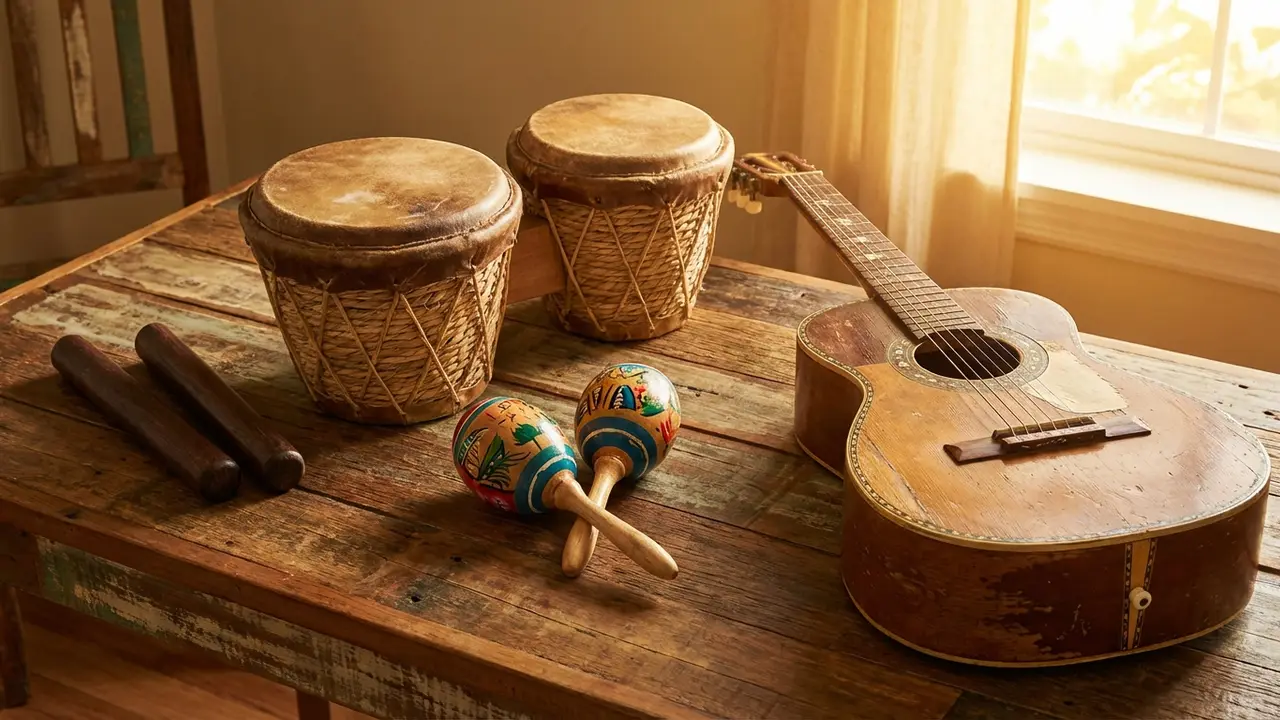
Illustration: Aroma de Cuba (AI)
Cuban music wouldn’t be what it is without its instruments. From the streets of Santiago to the ballrooms of Havana, son, rumba, and bolero are born from the meeting of African woods, goatskin drumheads, and Spanish strings. These are the instruments that make Cuba’s heart beat.
Claves: The Pulse of Cuba
Everything starts with the claves. Two simple sticks of hardwood—usually lignum vitae or granadillo—that when struck together produce the most important rhythmic pattern in Afro-Caribbean music: the Cuban clave.
The Clave Pattern
There are two main patterns:
- Son clave (3-2 or 2-3): The foundation of son montuno and salsa
- Rumba clave: More syncopated, essential for rumba guaguancó
Without the claves, there is no Cuban music. Everything—from the bass to the trumpets—organizes around this sacred pulse.
Artisanal Craftsmanship
The best clave makers work with Cuban hardwoods cured for years. The Instrument Workshop on Calle Obispo in Old Havana has maintained this tradition since 1920.
Bongos: The Drums of Son
Bongos are the percussive soul of Cuban son. They consist of two drums of different sizes—the macho (smaller) and the hembra (larger)—joined by a piece of wood.
Technique and Sound
The bongosero plays seated, with the drums between the knees, using a combination of:
- Open fingers for bass tones
- Palms for high tones
- Martillo (thumb stroke) for accents
During mambos and montunos, the bongosero traditionally switches to the cencerro (cowbell), creating the rhythmic pattern that drives the dancers.
Recommended Brands
- LP (Latin Percussion) — Industry standard
- Meinl Percussion — Excellent German quality
- Handmade Cuban bongos — Those from Santiago de Cuba are legendary
Tumbadoras (Congas): The Power of Rumba
Tumbadoras, known internationally as congas, are tall drums of Bantu origin that arrived in Cuba with enslaved Africans. They’re essential for rumba and Cuban popular music.
The Three Voices
A complete set includes three drums:
- Quinto (smallest, highest pitch) — Improvises and dialogues
- Tres-dos or conga (medium) — Maintains the pattern
- Tumba or salidor (largest, lowest pitch) — The foundation
Connection to Santería
Tumbadoras are deeply connected to the Yoruba religion in Cuba. Each orisha has their own drum rhythms. The batá drums—sacred cousins of the congas—are used exclusively in religious ceremonies.
Maracas: The Whisper of the Caribbean
Maracas are the most accessible instrument in Cuban percussion. Traditionally made from güiras (dried gourds) filled with seeds, today they’re also made from wood, leather, and fiberglass.
Professional Technique
A good maraquero doesn’t just shake: they use circular movements, sharp hits, and dynamic variations that add texture to the ensemble. In traditional son, maracas maintain a constant pattern that anchors the rhythm.
Where to Find Them
In Cuba, artisanal maracas are sold at markets like San José in Havana. The best ones are hand-painted with traditional motifs.
The Cuban Tres: The Guitar That Defines Son
The Cuban tres is perhaps the island’s most distinctive instrument. Similar to a small guitar but with three pairs of double strings, it produces a bright, percussive sound that is unmistakable.
History of the Tres
It was born in eastern Cuba in the late 19th century, an evolution of the Spanish guitar adapted by Cuban peasants. The tres is the heart of son—the genre that gave birth to salsa.
Masters of the Tres
Great treseros like Arsenio Rodríguez, Compay Segundo, and Pancho Amat defined the instrument’s sound. Their guajeos (repetitive melodic patterns) are the essence of son.
Buying a Tres
- Tres Cubano (Havana) — Traditional luthiers
- Guitarras Alhambra — Spanish manufacturer with tres models
- In Miami, stores like Latin Music Center offer Cuban instruments
Other Essential Instruments
Güiro
An elongated gourd with ridges that is scraped with a stick. Essential in son and cha-cha-chá.
Timbales
Introduced by Tito Puente, they’re used in modern Cuban music and salsa.
Chequeré (Shekere)
A gourd wrapped in a net of beads. Used in Afro-Cuban music and ceremonies.
Artisanal Craftsmanship in Cuba
The tradition of handmaking instruments remains alive in Cuba. In Santiago de Cuba, entire families dedicate themselves to building bongos and tumbadoras using techniques passed down through generations.
Traditional Materials
- Wood: Cedar, mahogany, majagua
- Drumheads: Goat or cowhide cured in the sun
- Hardware: Hand-forged iron
Notable Workshops
- Casa de la Trova (Santiago) — Instruments and live music
- Obispo 360 (Havana) — Artisanal instrument shop
Where to Buy Cuban Instruments Outside the Island
For those in the diaspora or wanting authentic instruments:
United States
- Drum World — Large selection of Latin percussion
- Latin Music Center — Miami, specialized in Cuban music
- Guitar Center — Accessible options
Europe
- Thomann — Europe’s largest distributor
- Specialized stores in Barcelona and Madrid
Conclusion: The Sound of an Island
Cuban musical instruments are more than objects: they’re vehicles of history, resistance, and joy. From the peasant playing tres under a palm grove to the conguero making the crowd sweat at a timba concert, these instruments connect Cuba to the world.
If you want to immerse yourself in Cuban music, start with the claves. Feel the rhythm. After that, everything else will follow.
Related:
- Cuban Craftsmanship: Enduring Traditions
- History of Cuban Son
Frequently asked questions
What are the typical instruments in Cuban music?
Where can I buy authentic Cuban instruments?
What's the difference between bongos and congas?
What is the Cuban tres and how does it sound?
How we got here
Background
The first thing we published on this topic.
Cuban Music Conquers the Latin Grammys
Cuban artists sweep the ceremony with awards in multiple tropical music categories.
Son Cubano: The Rhythm That Conquered the World
From the mountains of Oriente to Broadway stages. History, instruments, and legends of the musical genre that defines Cuba.
Related articles
The Cuban Guayabera: History of the Shirt That Defines Cuba
From the Yayabo River to presidential summits: the guayabera was born peasant and became a symbol of Cuban elegance. Discover its history.
Cuban Musical Instruments: Bongos, Congas, Tres and Claves Guide
Complete guide to Cuban musical instruments: bongos, congas, tres cubano, claves, maracas and timbales. History, sounds and where to buy.
Cuban Sugar: History, Harvest, and the Legacy of White Gold
Discover the history of Cuban sugar, from colonial mills to AZCUBA's current crisis. Complete guide to Cuba's most iconic product and its global impact.
EGREM and Cuban Music Labels: Guide to Cuba's Musical Catalog
Discover EGREM, Areíto and Cuban record labels. History, iconic artists, recording studios and where to buy Cuban music on vinyl and digital.
Fusterlandia: The Cuban Neighborhood Turned Living Mosaic Art
Discover Fusterlandia, the Cuban village transformed into mosaic art by José Fuster. History, naïve art, and the magic of Jaimanitas.
OKAN: The Cuban Duo Conquering Canada with Jazz and Santería
Elizabeth Rodríguez and Magdelys Savigne have won two JUNO Awards fusing Afro-Cuban rhythms with jazz. Now they bring batá drums to the world stage.