Bad Bunny Names Cuba at Super Bowl: We Are All Americans
The Puerto Rican superstar mentioned Cuba alongside every nation in the Americas during his Super Bowl LX halftime show, moving Cubans worldwide.
4 min read
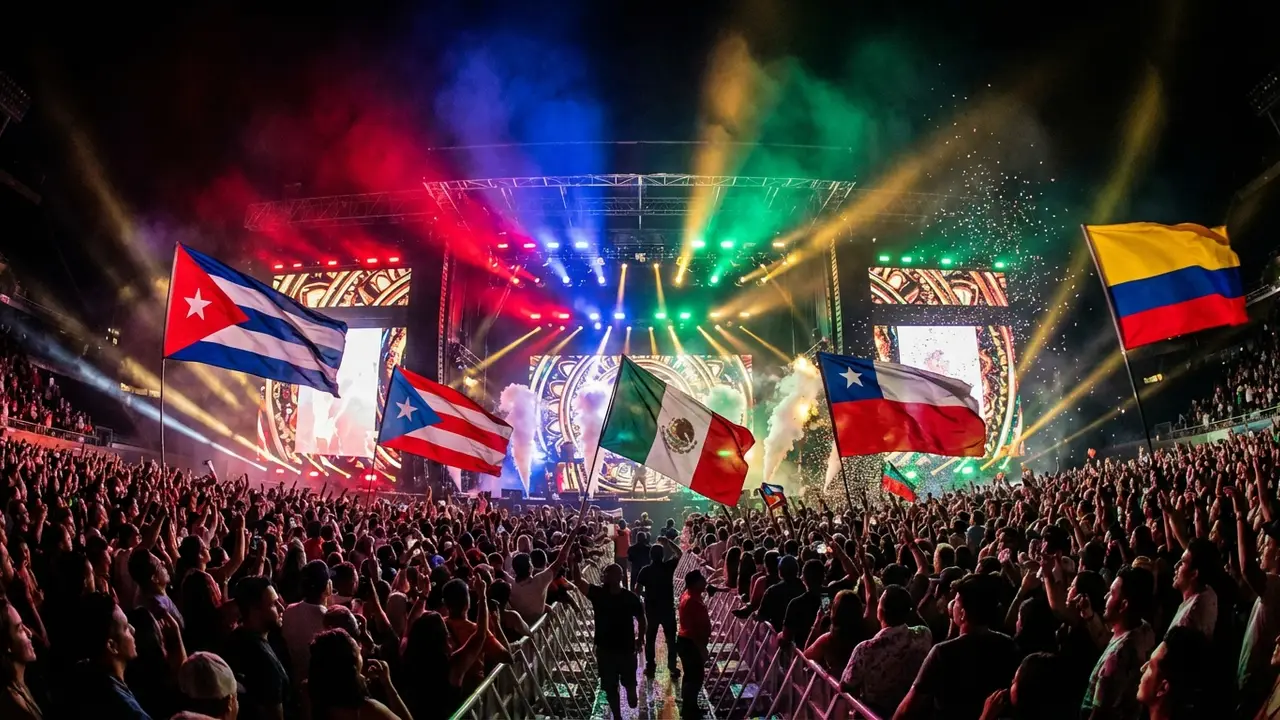
Illustration: Aroma de Cuba (AI)
Last Sunday, February 8th, over 120 million people witnessed something many Cubans will never forget: Bad Bunny, the most-streamed artist on the planet, shouting Cuba’s name on the world’s biggest entertainment stage.
”We’re Still Here”
At the climax of his 13-minute Super Bowl LX performance, Puerto Rican artist Benito Antonio Martínez Ocasio—his real name—did something unexpected. After exclaiming “God Bless America!”, he began naming every country on the American continent one by one: Chile, Argentina, Colombia, Mexico, the United States, Canada… and Cuba.
A parade of national flags crossed the field at Levi’s Stadium in Santa Clara, California. At the end, Bad Bunny shouted “¡Seguimos aquí!” (We’re still here!) and spiked a football inscribed with “Together, We Are America.”
For millions of Latinos, the message was clear: America isn’t just the United States. America is all of us.
The Cuban Reaction
On social media, Cubans from around the world expressed their emotion. Claudia Ruiz, a Cuban-American from California, described it this way: “Bad Bunny symbolizes hope for the Latino community in a deeply divided time. He represents unity in a rich, cultural, family-centered, and joyful way.”
The moment was especially significant given Cuba’s current situation. While the island faces its worst economic crisis in decades, with constant blackouts and fuel shortages, hearing the country’s name at the world’s most-watched sporting event carried enormous emotional weight.
“It was a small yet significant reminder that Cuba remains present in America’s cultural imagination,” one social media user wrote.
An All-Spanish Show
What made this performance historic wasn’t just the message. It was the first time a Super Bowl halftime show was performed almost entirely in Spanish, before over 120 million American viewers.
Bad Bunny brought Puerto Rico center stage with cultural references: sugar cane fields represented by dancers, colorful casitas, piragua vendors, domino games, and block parties. Guests like Ricky Martin, Lady Gaga, Cardi B, and Pedro Pascal joined the celebration.
Lady Gaga appeared performing a salsa version of “Die With A Smile,” wearing a light blue dress adorned with a flor de maga, Puerto Rico’s national flower.
Political Context
The performance didn’t exist in a vacuum. Days earlier, at the 2026 Grammys, Bad Bunny made history by winning Album of the Year for “DeBÍ TiRAR MáS FOToS”—the first Spanish-language album to do so—and used his speech to defend immigrants: “We’re not savages, we’re not animals, we’re not aliens. We are humans, and we are Americans.”
President Trump called the show “the worst performance ever” and “a slap in the face to our country.” His supporters questioned why the spectacle was in a “foreign” language.
But for the 65 million Latinos in the United States—and millions more across Latin America—the message resonated differently.
Why It Matters
The Puerto Rican flag that Bad Bunny carried featured a light blue shade, traditionally associated with the island’s independence movement. Puerto Rico has been a U.S. territory since 1917, but its residents cannot vote in presidential elections.
Amid mass immigrant deportations and anti-Latino rhetoric, a Puerto Rican artist took America’s biggest stage and declared: we are all Americans. From Canada to Chile. From Puerto Rico to Cuba.
As Mariana Limón, a Mexican from Monterrey, put it: “I could never have dreamed of a Super Bowl show entirely in Spanish. I think it was well deserved for all Latino immigrants to see this.”
More Than Music
Bad Bunny didn’t speak directly about politics. He didn’t have to. The simple act of celebrating Latino identity without apology, of naming every American nation, of shouting “we’re still here” in Spanish before millions, was his statement.
For Cuba, a country absent from so many international stages, hearing its name alongside the other nations of America was a reminder: the island remains part of the continent, its music, its culture, its shared identity.
Small but present. Like the zunzún.
Frequently asked questions
What did Bad Bunny say about Cuba at the Super Bowl?
Why was the performance significant for Cubans?
What was the central message of Bad Bunny's show?
How we got here
Background
The first thing we published on this topic.
Cuban Music Conquers the Latin Grammys
Cuban artists sweep the ceremony with awards in multiple tropical music categories.
Son Cubano: The Rhythm That Conquered the World
From the mountains of Oriente to Broadway stages. History, instruments, and legends of the musical genre that defines Cuba.
Related articles
Bad Bunny at Super Bowl LX: Cuba Present on the World's Biggest Stage
Bad Bunny included the Cuban flag in Super Bowl LX, moving Cubans amid crisis. Analysis of the most Latino halftime show in history.
Aída y Vuelta Conquers Miami: Why Cuba Loves This Spanish Series
The iconic Spanish sitcom's film triumphs in Miami. Paco León: 'Cubans are more Aída than Spaniards.'
Alden Knight, Legend of Cuban Theater, Dies at 89
Cuba mourns Alden Knight, an icon of theater, film, and television with over six decades of artistic career.
Willy Chirino: 50 Years of the Miami Sound Creator
Celebrating half a century of Cuban-American singer Willy Chirino, father of the Miami Sound and voice of the Cuban diaspora.
Cuban Musical Instruments: Claves, Bongos, Congas and the Tres
Discover Cuba's traditional instruments: claves, bongos, tumbadoras, maracas and the Cuban tres. History, craftsmanship and where to buy them.
Cuban Dominoes: The Unique Double Nine Game and Street Tradition
Cuban Double Nine dominoes, played with 55 tiles, is unique to Cuba. Learn the rules, famous phrases, and where to buy authentic sets.