Cuban Shrimp Enchilado: A Creole Heritage from the Caribbean
Recipe and history of Cuban enchilado de camarones, a Creole stew of Haitian origin with tomato sauce, wine, and spices.
3 min read
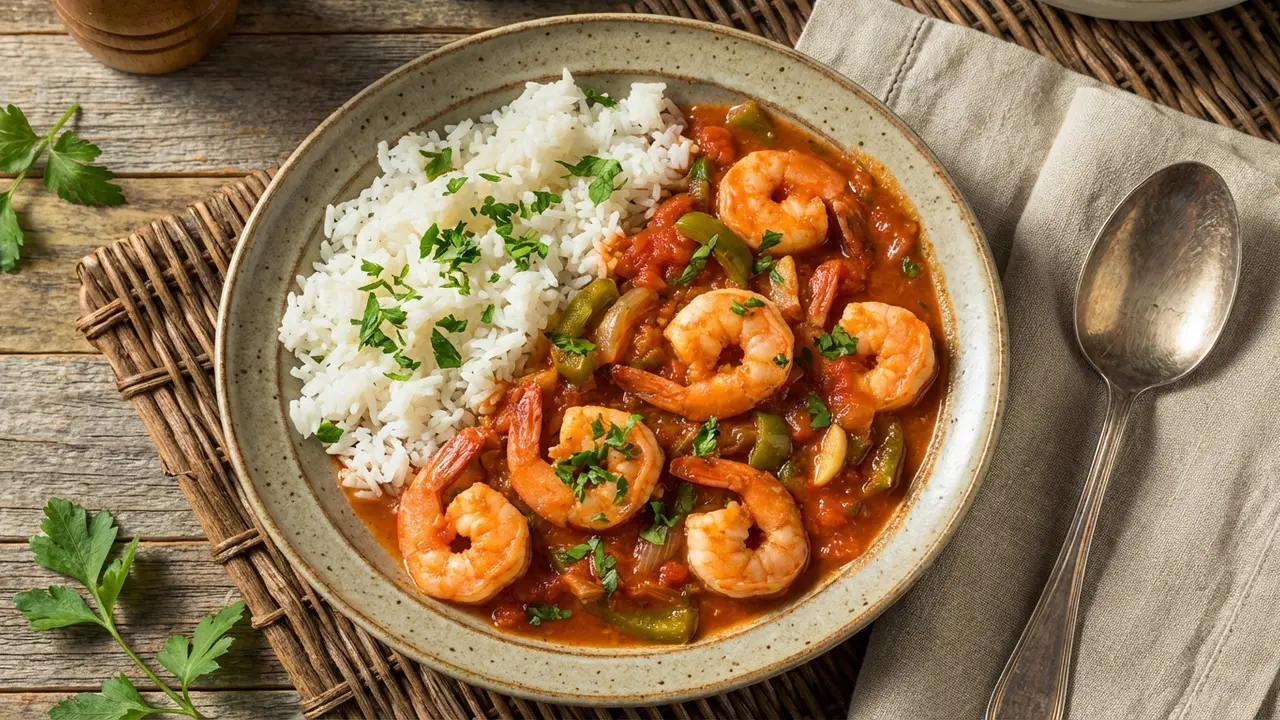
Illustration: Aroma de Cuba (AI)
Enchilado de camarones is one of the most elegant and flavorful dishes in Cuban cuisine. Despite its name, it contains no chili — in the Caribbean, enchilado refers to a red stew of tomato, dry wine, and spices where seafood takes center stage.
A Heritage That Crossed the Sea
The story of enchilado begins in Haiti. During the Haitian Revolution (1791-1804), thousands of enslaved people and French colonists fled to Cuba, bringing culinary traditions that would merge with the island’s Creole cooking. Many settled in eastern Cuba — Santiago de Cuba, Guantánamo — where enchilado put down deep roots.
Over time, the recipe absorbed ingredients and techniques from the Spanish, African, and Taíno cultures present in Cuba, becoming a mestizo dish that reflects the island’s very identity.
The Classic Recipe from Nitza Villapol
The best-known version appears in Cocina al Minuto by Nitza Villapol, the grand dame of Cuban cooking. Her 1956 recipe remains the reference for generations of Cuban cooks.
Ingredients (serves 4)
- 1 pound large shrimp, peeled and cleaned
- Juice of 2 sour oranges (or a mix of orange and lime juice)
- 4 tablespoons olive oil
- 1 large onion, finely chopped
- 1 green bell pepper, diced
- 4 garlic cloves, crushed
- 1 can crushed tomatoes (14 oz)
- ½ cup dry white wine
- 1 bay leaf
- ½ teaspoon cumin
- Salt and pepper to taste
- Fresh parsley, chopped
Instructions
-
Marinate the shrimp in sour orange juice with salt and pepper for 15-20 minutes. This marinade is the secret that sets Cuban enchilado apart.
-
Prepare the sofrito: Heat olive oil in a large saucepan over medium heat. Sauté the onion and bell pepper until translucent (5-7 minutes). Add the crushed garlic and cook one more minute.
-
The sauce: Add the crushed tomatoes, dry wine, bay leaf, and cumin. Let it reduce over medium-low heat for 15-20 minutes until you have a thick, fragrant sauce.
-
The shrimp: Drain the shrimp from the marinade and add them to the sauce. Cook for exactly 3-4 minutes — no more, no less. Shrimp overcook very quickly.
-
Serve over white rice, sprinkled with fresh parsley. Pair with tostones or yuca con mojo.
The Secret Is in the Sour Orange
What separates a Cuban enchilado from any other shrimp stew in the world is sour orange (Citrus × aurantium). This bitter citrus fruit, a legacy of Spanish colonizers, is the soul of the Cuban Creole marinade. Without it, enchilado loses its distinctive character.
In Miami and other cities with Cuban communities, sour orange is easily found at Latin markets. Outside the Caribbean, a mix of ¾ sweet orange juice with ¼ lime juice is the most accepted substitute.
Enchilado Variations
Enchilado isn’t exclusive to shrimp. Across Cuba, it’s prepared with:
- Lobster: The most luxurious version, especially popular along the coasts of Pinar del Río and Isla de la Juventud.
- Crab: Common in Cienfuegos and Trinidad.
- Fish: A more economical but equally delicious option.
Each region has its own touch. In eastern Cuba, enchilado tends to be spicier; in Havana, milder with more wine.
A Dish for Special Occasions
In today’s Cuba, shrimp are a luxury. Enchilado is reserved for birthdays, New Year’s celebrations, and important visits. It’s a dish that says “I want to honor you” — a gesture of hospitality that transcends the culinary.
Served with fluffy white rice, a cold mojito, and good company, enchilado de camarones is Cuba at its finest: mestizo, generous, and bursting with flavor.
Frequently asked questions
Why is Cuban enchilado called that if it doesn't contain chili?
What is the origin of enchilado de camarones?
Can enchilado be made with other seafood?
What is sour orange and why is it important in this recipe?
How we got here
Background
The first thing we published on this topic.
Cuban Coffee Harvest Promises to Be the Best in Decades
The mountains of the Sierra Maestra produce an exceptional harvest thanks to new agricultural techniques.
Ropa Vieja: The Soul of Cuban Cuisine on a Plate
Discover the history, secrets, and traditional recipe of ropa vieja, Cuba's national dish that has conquered palates around the world.
Related articles
Potaje de Frijoles Colorados: Cuba's Most Comforting Red Bean Stew
Learn how to make authentic Cuban potaje de frijoles colorados, a hearty red bean stew with pumpkin, pork, and Creole spices.
Caldosa Cubana: The Community Soup That Feeds the Block
History, traditional recipe, and secrets of Cuban caldosa, the hearty stew that unites neighbors at every celebration on the island.
Arroz Imperial: Cuba's Showstopping Layered Rice Casserole
Discover arroz imperial, the Cuban layered rice casserole with chicken, mayo, and melted cheese. History, step-by-step recipe, and tips.
The Daiquiri: Story of the Cocktail Born in Cuba's Iron Mines
Discover the history of the Daiquiri, the Cuban cocktail Hemingway loved. From Santiago's mines to El Floridita in Havana.
Cuban Casabe: The Ancient Taíno Cassava Bread, UNESCO Heritage
Complete guide to Cuban casabe, the cassava flatbread inherited from the Taínos. History, preparation, UNESCO 2024 recognition, and where to buy.
Coquitos Acaramelados: Cuba's Most Beloved Coconut Sweet
Discover the history, traditional recipe, and varieties of Cuban caramelized coconut balls — the treat that defined childhood on the island.