Yuca con Mojo: The Side Dish That Defines the Cuban Table
Authentic Cuban yuca with mojo criollo recipe. Learn the secrets of garlic, citrus, and olive oil that make this dish a classic.
4 min read
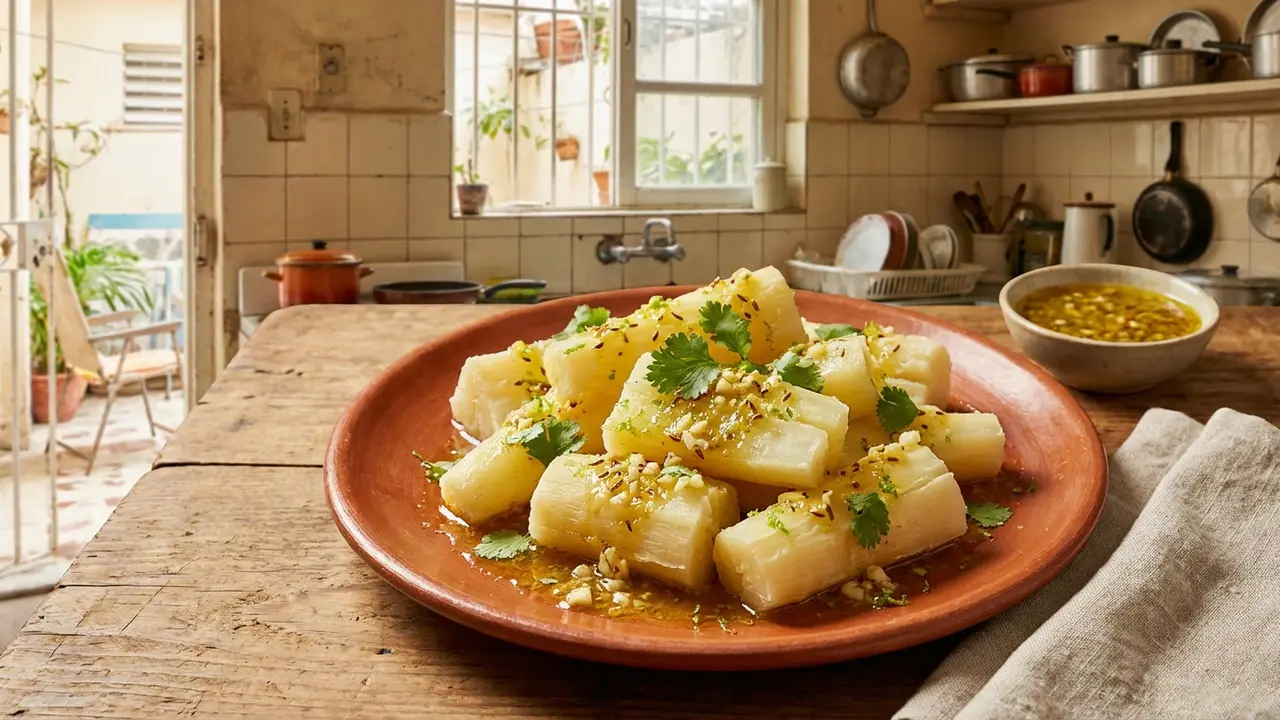
Illustration: Aroma de Cuba (AI)
At every Cuban table, from Havana to Miami, there’s one dish that never fails to appear when serving roast pork or any family celebration: yuca con mojo. This humble root, bathed in a sauce of garlic, citrus, and olive oil, represents the very essence of Cuban cuisine — simple ingredients transformed into something extraordinary.
Yuca: Ancestral Root of the Caribbean
Yuca (Manihot esculenta), also known as cassava or manioc, arrived in Cuba long before the Spanish. The Taíno, the island’s indigenous people, cultivated it as a staple food and called it “casabe.” From it, they made bread that could be preserved for months — the Caribbean’s first “fast food.”
Today, cassava remains fundamental to tropical agriculture, feeding more than 800 million people worldwide. But nowhere prepares it quite like Cuba.
Mojo: The Liquid Soul of Cuban Cooking
Mojo criollo is more than a sauce — it’s the culinary DNA of Cuba. Its basic ingredients reveal the island’s history:
- Garlic: Spanish heritage, cultivated in Cuba since the 16th century
- Sour orange: A unique Caribbean citrus, the secret ingredient
- Olive oil: Mediterranean tradition that took root in the tropics
- Cumin: A spice that arrived with Arab traders via Spain
The combination creates something that exists in no other cuisine: a perfect balance of acid, heat, and aroma.
Traditional Recipe: Yuca con Mojo Criollo
Ingredients
For the yuca:
- 2 lbs fresh yuca (or frozen)
- Water to cover
- 1 tablespoon salt
- 1 bay leaf
For the mojo:
- 10 large garlic cloves, crushed
- ½ cup extra virgin olive oil
- ¼ cup sour orange juice (or half lime, half orange juice)
- 1 teaspoon ground cumin
- Salt to taste
- Red onion slices (optional, for garnish)
Preparing the Yuca
-
Peel the yuca removing the thick bark and the pinkish layer underneath. If using frozen yuca, this step is already done.
-
Cut into pieces about 3 inches long. Remove the woody central fiber from each piece.
-
Boil in salted water with bay leaf. The water should completely cover the yuca.
-
Cook for 25-30 minutes until tender but not falling apart. A fork should pierce it easily.
-
Drain well and place on a serving dish.
Preparing the Mojo
-
Heat the oil over medium-low heat in a small pan. It should not smoke.
-
Add the crushed garlic and cook for 1-2 minutes, stirring constantly. It should turn lightly golden and fragrant — never dark.
-
Remove from heat immediately and add the cumin. The residual heat will activate it.
-
Add the sour orange juice carefully (it will splatter). The mixture will sizzle.
-
Season with salt and pour over the hot yuca.
-
Garnish with red onion slices if desired.
Grandmother’s Secrets
The Garlic Trick
Veteran Cuban cooks crush garlic with coarse salt in a mortar. This creates a paste that distributes flavor evenly and prevents raw or burnt pieces.
Sour Orange
If you can’t find sour orange (Citrus × aurantium), the classic substitution is mixing sweet orange juice with lime juice in equal parts. Some add a pinch of grapefruit zest.
The Mojo Moment
The mojo must be poured over the yuca immediately after making it, while both are hot. Yuca absorbs flavors like a sponge — waiting means losing the magic.
Cuban Pairings
Yuca con mojo is the perfect side dish for:
- Roast pork: The Christmas Eve classic
- Ropa vieja: The shredded beef absorbs the extra mojo
- Roast chicken: Simple and perfect
- Moros y cristianos: The holy trinity of the Cuban table
Regional Variations
In Oriente (Santiago de Cuba), mojo tends to be spicier, with ají cachucha peppers or even a touch of habanero.
In Havana, the style is milder, letting garlic be the absolute protagonist.
In Miami and Tampa, the Cuban community has maintained the traditional recipe but often uses frozen yuca from brands like Goya for convenience.
More Than Food: Living Tradition
Yuca con mojo appears at every important Cuban celebration. It’s the dish grandmothers teach their granddaughters, the one served at weddings and baptisms, the one that makes exiles cry with nostalgia when they smell it in a Calle Ocho restaurant.
It’s not just food. It’s memory, it’s identity, it’s Cuba on a plate.
Do you have your own family mojo recipe? Cuban cuisine lives in the variations each family adds to the classics.
Frequently asked questions
What is the difference between mojo criollo and garlic mojo?
How do I know when the yuca is ready to serve?
Can I make yuca con mojo with frozen cassava?
Why doesn't my mojo turn golden like in restaurants?
How we got here
Background
The first thing we published on this topic.
Cuban Coffee Harvest Promises to Be the Best in Decades
The mountains of the Sierra Maestra produce an exceptional harvest thanks to new agricultural techniques.
Ropa Vieja: The Soul of Cuban Cuisine on a Plate
Discover the history, secrets, and traditional recipe of ropa vieja, Cuba's national dish that has conquered palates around the world.
Related articles
Cuban Picadillo: The Ultimate Comfort Food Recipe from Havana
Master authentic Cuban picadillo with olives and raisins. Learn the history, ingredients, and secrets of this beloved Caribbean dish.
Moros y Cristianos: Cuban Black Beans and Rice Recipe
Authentic moros y cristianos recipe from Cuba. Learn the history, technique and secrets of this iconic dish symbolizing cultural fusion.
Plátanos Maduros: The Sweet Fried Plantains on Every Cuban Table
Master Cuban fried sweet plantains with this traditional recipe. Learn the secrets to perfect caramelization and golden texture.
Cuban Fufú de Plátano: African Heritage in Every Bite
Cuban fufú de plátano traces its roots to West Africa. Learn the history, traditional recipe with pork cracklings, and mojo criollo.
Cuban Guarapo: The Island's Most Refreshing Natural Drink
Discover guarapo, Cuba's beloved fresh sugarcane juice. Learn its history, how it's made with a trapiche, and where to find it.
Casquitos de Guayaba: Cuba's Sweetest Guava Shell Dessert
Traditional Cuban guava shells in syrup with cream cheese. Learn the authentic recipe, history, and secrets of this beloved Caribbean dessert.