Marabu Charcoal: Cuba's Black Gold Conquering the World
Discover Cuban marabu charcoal, from invasive plant to gourmet product exported to Europe and the US. History, production, and where to buy it.
3 min read
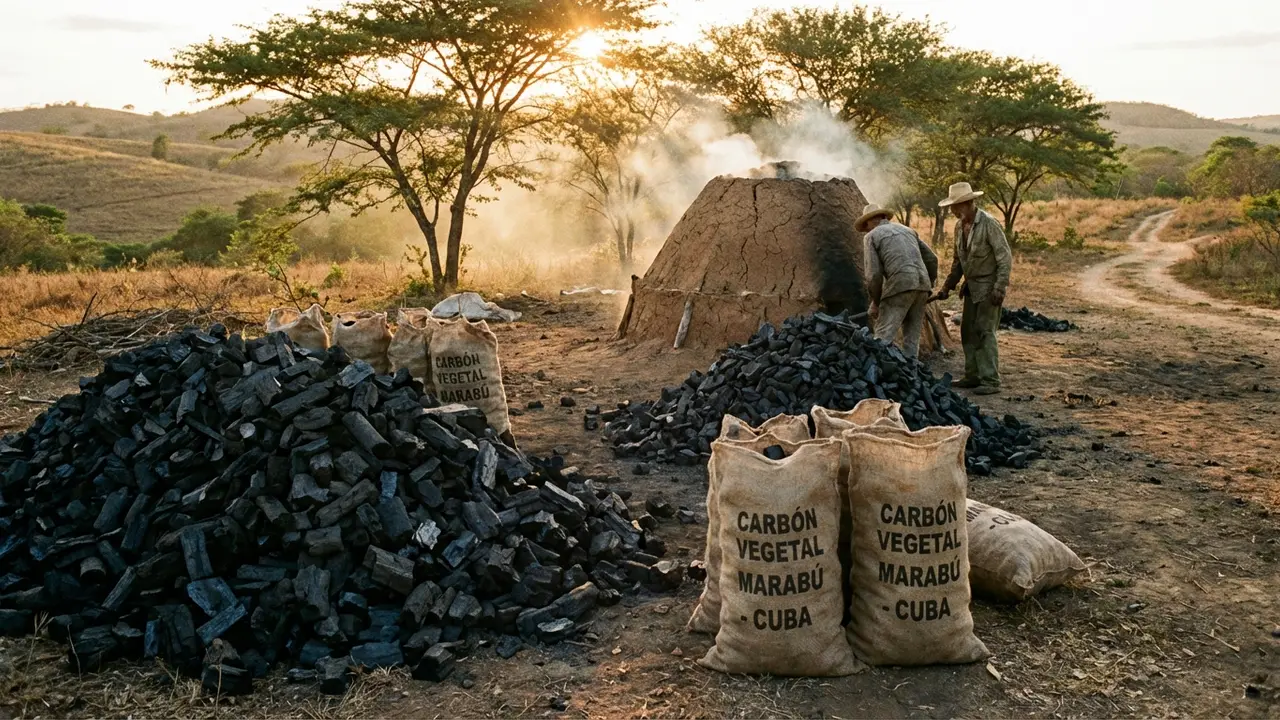
Illustration: Aroma de Cuba (AI)
In the Cuban countryside grows a plant that for decades was considered a curse for farmers. Today, that same plant has become one of Cuba’s most valuable export products: marabu charcoal.
From Invasive Plant to Black Gold
Marabu (Dichrostachys cinerea) arrived in the Caribbean in the 19th century, likely from Africa. What seemed like a harmless shrub became an agricultural nightmare: it grows fast, is nearly impossible to eradicate, and has invaded more than 1.5 million hectares of Cuban land.
But necessity is the mother of invention. Cuban guajiros discovered that this dense, resistant wood produced exceptional charcoal when slowly carbonized in artisanal kilns.
What Makes Marabu Charcoal Special?
The characteristics that have made it a favorite among professional chefs and grillers:
- High caloric power: Reaches higher temperatures than other vegetable charcoals
- Long-lasting: Burns for 4-5 hours maintaining constant heat
- Low smoke: Clean combustion, ideal for professional kitchens
- Neutral flavor: Doesn’t alter the natural taste of meats and fish
- Subtle aroma: Adds a delicate smoky touch without overpowering
Traditional Cuban Production
The production process is completely artisanal and sustainable:
- Selective harvesting: Farmer cooperatives cut marabu from agricultural fields
- Drying: Wood dries in the sun for weeks
- Carbonization: Burned in traditional earth kilns for 3-7 days
- Grading: Charcoal is sorted by size and quality
- Packaging: Bagged for export using Spanish technology
The main production centers are in Bayamo, Ciego de Ávila, and Pinar del Río.
Cuba Exports to the World
Cuban marabu charcoal is exported primarily to:
- 🇩🇪 Germany: Main European market
- 🇬🇧 United Kingdom: High restaurant demand
- 🇪🇸 Spain: Growing premium BBQ market
- 🇺🇸 United States: Since 2017, first Cuban product after the embargo
Cuba exports between 40,000 and 80,000 tons annually, generating millions of dollars while recovering agricultural land.
A Historic Milestone
In January 2017, marabu charcoal became the first Cuban product exported to the United States since the embargo was imposed in 1960. Coabana Trading achieved this historic agreement with state-owned CubaExport.
Marabú Restaurant in Miami
Marabu charcoal has even inspired high-end Cuban cuisine. At Brickell City Centre in Miami, chef Alberto Cabrera’s restaurant Marabú uses Josper ovens fueled by this charcoal to create dishes like:
- Churrasco with charred cherry tomatoes
- 20-ounce cowboy steak with sautéed onions
- Local tuna with grilled pineapple
It’s the perfect fusion of Cuban tradition and gastronomic innovation.
Where to Buy Marabu Charcoal
In Europe
- Tienda Biomasa - Spain
- Brave Charcoal - International distribution
- Carbonero - Greece (exports throughout Europe)
What to Look For
- Certified Cuban origin
- Large pieces (“canelino” or “restaurant grade”)
- Low dust content
- 10-15 kg bags for home use
Double Environmental Benefit
Marabu charcoal represents a circular economy model:
- Cleans agricultural land invaded by the plant
- Prevents deforestation of native trees
- Generates income for farmer cooperatives
- Produces clean energy compared to other fuels
It’s a demonstration of how Cuba transforms an environmental problem into an economic opportunity.
Marabu charcoal is the story of an island that turns adversities into strengths. From agricultural plague to gourmet product, Cuba’s black gold heats grills from Berlin to Miami, carrying with it the ingenuity and resilience of the Cuban countryside.
Frequently asked questions
Why is Cuban marabu charcoal so highly valued?
Is marabu charcoal eco-friendly?
Where can I buy Cuban marabu charcoal?
How much does marabu charcoal cost?
How we got here
Background
The first thing we published on this topic.
Habanos: Complete Guide to the Most Prestigious Cuban Cigars
Cohiba, Montecristo, Romeo y Julieta — discover the legendary Cuban cigar brands, how to choose them, and where to buy them.
Cuban Rum: Complete Guide to Brands, History, and How to Enjoy It
Discover the world of Cuban rum: from Havana Club to Santiago de Cuba. History, legendary brands, aging types, and secrets to tasting it like an expert.
Related articles
Cuban Marabú Charcoal: From Invasive Plague to Premium Export
Discover how Cuba turns marabú, an invasive plant, into premium artisanal charcoal exported to Europe. History, production, and market.

Cuban Yarey Hat: Traditional Palm Leaf Artisan Craftsmanship
Discover the sombrero de yarey, an iconic Cuban craft hand-woven from palm leaves. History, techniques, and where to buy.
Cuban Tostones: The Art of Twice-Fried Green Plantains
Learn to make perfect tostones, the crispy side dish that defines the Cuban table. History, technique, and secrets.
Cuban Mojito: History, Recipe and Secrets of the Iconic Cocktail
Discover the history of the mojito, Cuba's most famous cocktail. Authentic recipe, origins, and where to try it.
Cuban Sodas: Tropicola, Iron Beer and Bottled Nostalgia
Discover the traditional Cuban soft drinks that shaped generations. History, flavors, and where to find them today.
Cuban Daiquiri: History of the Cocktail That Conquered the World
Discover the origins of the daiquiri in Santiago de Cuba, its perfection at Havana's El Floridita, and the original recipe of Cuba's most famous cocktail.