Yuca con Mojo: Authentic Cuban Cassava Recipe Guide
Learn to make authentic Cuban yuca con mojo. Complete recipe with the secrets of mojo criollo: garlic, lime, olive oil, and cumin.
4 min read
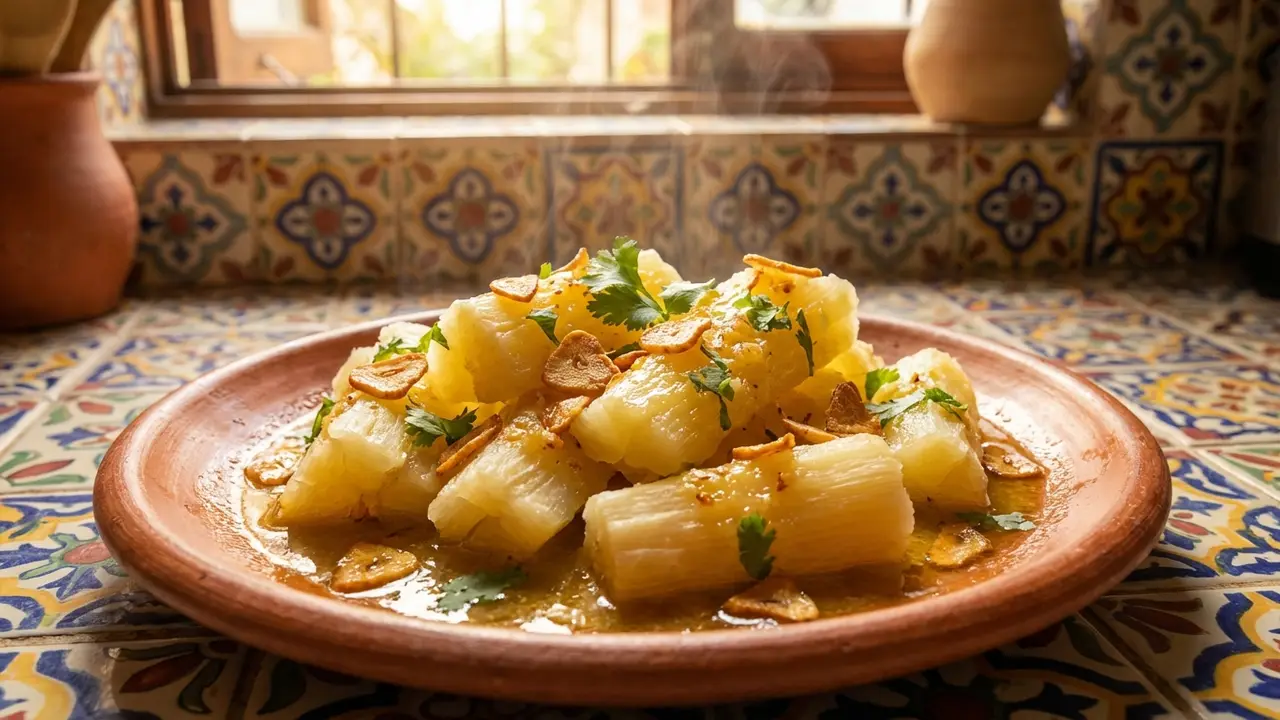
Illustration: Aroma de Cuba (AI)
Yuca con mojo is far more than a simple side dish—it’s the soul of the Cuban table. This humble root vegetable, bathed in aromatic mojo sauce made with garlic, olive oil, and citrus, has nourished generations of Cubans and remains the star of family celebrations.
The History of Yuca in Cuba
Yuca arrived in Cuba long before the Spanish conquistadors. The Taíno people, the island’s original inhabitants, cultivated it as their staple food and called it casabe. They made bread, fermented drinks, and various dishes from yuca that sustained their communities.
When Spanish colonizers arrived, they brought garlic, olive oil, and citrus fruits. From this fusion, mojo criollo was born—that magical sauce that transforms simple boiled yuca into an irresistible delicacy.
Ingredients for Yuca con Mojo
For the Yuca
- 2 lbs fresh yuca (cassava)
- Water to cover
- 1 tablespoon salt
- Juice of 1 lime (optional, prevents browning)
For the Mojo Criollo
- 10-12 large garlic cloves
- 1/2 cup extra virgin olive oil
- Juice of 2 limes (or 3 sour oranges if available)
- 1 teaspoon ground cumin
- Salt to taste
- Freshly ground black pepper
Step-by-Step Preparation
Step 1: Prepare the Yuca
Peel the yuca, removing both the brown outer bark and the pinkish inner layer. Cut into 3-inch pieces and remove the fibrous center core (the “string” running through the middle).
Step 2: Boil the Yuca
Place the pieces in a large pot with cold water to cover completely. Add salt and lime juice. Bring to a boil and cook over medium heat for 25-35 minutes.
The yuca is ready when you can easily pierce it with a fork but it still holds its shape. Don’t overcook or it will fall apart!
Step 3: Make the Mojo
While the yuca cooks, prepare the mojo. This is the secret to the entire dish:
- Crush the garlic with coarse salt in a mortar until it forms a paste. If you don’t have a mortar, mince it very finely.
- Heat the olive oil in a small pan over medium-low heat. It should not smoke.
- Add the garlic and cook for only 30-45 seconds, stirring constantly. The garlic should turn lightly golden but never burn.
- Remove from heat immediately and add the lime juice (careful, it will splatter!), cumin, salt, and pepper.
Step 4: Serve
Drain the yuca and arrange on a serving platter. Pour the hot mojo over the top, making sure all pieces are well coated.
For an extra touch, reserve some crispy fried garlic to sprinkle on top as garnish.
Secrets to Perfect Mojo
Mojo is simple but demands precision. Here are the secrets that make all the difference:
- Always fresh garlic: Garlic powder won’t work. You need fresh, firm garlic without green sprouts.
- Quality olive oil: It’s the flavor vehicle. A good extra virgin olive oil makes all the difference.
- Correct temperature: The oil should be hot but not smoking. If the garlic burns, the mojo will taste bitter.
- Sour orange: If you can find sour orange (Citrus × aurantium), use it instead of lime. It’s the authentic flavor of Cuban mojo.
Variations on the Dish
Yuca con Mojo and Chicharrones
In many Cuban homes, yuca con mojo is crowned with crispy pork cracklings. The combination of soft yuca, aromatic mojo, and rich pork fat is heavenly.
Fried Yuca with Mojo
Another popular option is frying the yuca after boiling. Cut into sticks, fry until golden, then drench with mojo. Similar to tostones but made with yuca.
Nutritional Value
Yuca is an excellent source of:
- Complex carbohydrates for sustained energy
- Dietary fiber for digestion
- Vitamin C (especially if not overcooked)
- Potassium for muscle function
It’s naturally gluten-free, making it ideal for people with celiac disease.
Perfect Pairings
Yuca con mojo perfectly accompanies:
- Lechón asado: The classic Cuban Christmas roast pork
- Masas de puerco: Marinated and fried pork chunks
- Cuban-style roast chicken: With traditional Cuban spices
- Ropa vieja: Cuba’s most famous shredded beef stew
To drink, a mojito or cold beer perfectly complements the garlic and citrus flavors of the mojo. And for something non-alcoholic, Cuban coffee after the meal is an obligatory tradition.
Conclusion
Yuca con mojo is the essence of Cuban cooking: humble ingredients transformed into something extraordinary through technique and tradition. Making it at home connects you with generations of Cuban cooks who have passed this recipe from hand to hand.
The key? Respect the timing, use fresh ingredients, and don’t fear the garlic. As they say in Cuba: “He who has no garlic has no flavor.”
Did you try making it? Tell us how it turned out in the comments!
Frequently asked questions
How long do you boil yuca?
Can you make mojo sauce ahead of time?
What's the difference between yuca and cassava?
What dishes pair well with yuca con mojo?
How we got here
Background
The first thing we published on this topic.
Cuban Coffee Harvest Promises to Be the Best in Decades
The mountains of the Sierra Maestra produce an exceptional harvest thanks to new agricultural techniques.
Ropa Vieja: The Soul of Cuban Cuisine on a Plate
Discover the history, secrets, and traditional recipe of ropa vieja, Cuba's national dish that has conquered palates around the world.
Related articles
Cuban Tropical Fruits: Mamey, Mango, Guava and Caribbean Flavors
Discover Cuba's tropical fruits: mamey sapote, Cuban mango, guava, sugar apple and papaya. Complete guide to Caribbean flavors.
Cuban Malta: The Sweet Malt Beverage Loved by Generations
Discover the history of Cuban malta, from Malta Hatuey to family traditions. Recipe for malta with condensed milk included.
Cuban Picadillo: The Ultimate Comfort Food Recipe from Havana
Master authentic Cuban picadillo with olives and raisins. Learn the history, ingredients, and secrets of this beloved Caribbean dish.
Baracoa Chocolate: Cuba's Best-Kept Sweet Secret
Baracoa produces 75% of Cuban cacao. Discover the history, farms, and delicious chorote of this Caribbean chocolate capital.
The Cuban Sandwich: Story of the Bread That United Two Worlds
Discover the fascinating history of the Cuban sandwich, from Tampa's cigar workers to world conquest. Authentic recipe included.
Tostones and Maduros: The Fried Plantains of Cuban Cuisine
Discover the history and recipes of crispy tostones and caramelized maduros, the essential sides of any traditional Cuban table.