Cuban Tropical Fruits: Mamey, Mango, Guava and Caribbean Flavors
Discover Cuba's tropical fruits: mamey sapote, Cuban mango, guava, sugar apple and papaya. Complete guide to Caribbean flavors.
4 min read
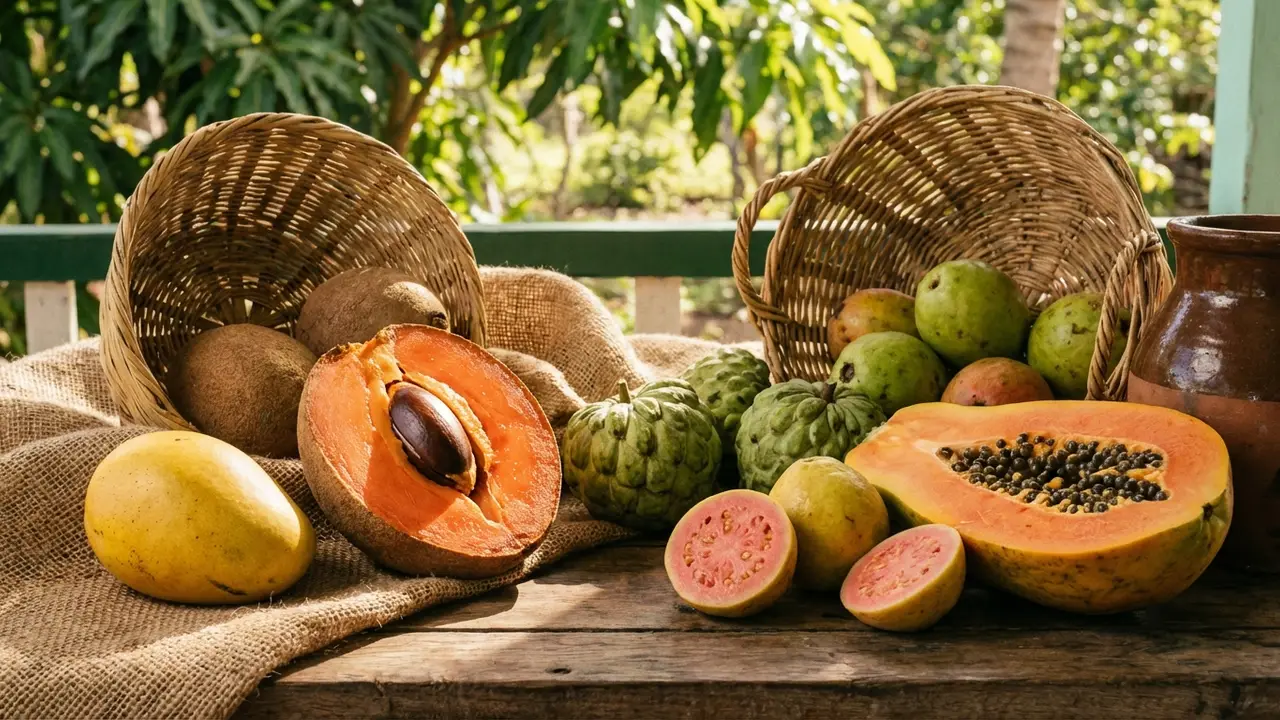
Illustration: Aroma de Cuba (AI)
In Cuba, fruits are more than food—they’re memory, tradition, and sweetness made nature. From orange mamey to pink guava, each fruit tells a story of shaded patios, street vendor calls, and milkshakes that cool the Caribbean heat.
Mamey Sapote: The Orange Jewel
Mamey sapote (Pouteria sapota) reigns supreme among Cuban fruits. Originally from Mexico and Central America, it found a second home in Cuba.
Characteristics
- Flesh: Intense orange, creamy like butter
- Flavor: Sweet with notes of pumpkin, sweet potato, and almond
- Texture: Soft, almost velvety
- Season: February to June
In Cuban Cuisine
Mamey shines in the legendary batido de mamey—fruit, milk, sugar, and ice blended into an irresistible cream. It also stars in ice cream, fruits in syrup, and even artisanal wines.
The seed contains oil traditionally used to strengthen hair—a beauty secret passed down through generations.
Cuban Mango: Summer in Every Bite
Cuba grows over 20 varieties of mango, each with its own personality:
Favorite Varieties
- Mango de bizcocho: Small, super sweet, fiberless—the favorite for eating fresh
- Mango macho: Large, firm, ideal for tropical salads and pickles
- Mango de hilacha: Juicy and aromatic, perfect for juice
- Mango Toledo: Balanced, versatile, excellent for desserts
Golden Season
From May to August, Cuba turns yellow and orange. Mangos fall from trees, children climb the branches, and the sweet aroma floods the neighborhoods. It’s the season to eat mangos until you can’t anymore—a sacred summer tradition.
Guava: Perfumed Pink
Guava (Psidium guajava) has perfumed Cuba since pre-Columbian times. The Taíno people already cultivated it when the Spanish arrived.
Derived Products
- Guava paste: Compact sweet that accompanies cream cheese in the classic “timba” or “cascos de guayaba con queso”
- Jam: For the toasted bread of Cuban breakfast
- Guava juice: Refreshing and rich in vitamin C
- Shells in syrup: Guava halves in sweet syrup
The combination of guava paste with cream cheese is as Cuban as café con leche—appearing in pastries, desserts, and snacks.
Sugar Apple and Cherimoya: Hidden Sweetness
The sugar apple (Annona squamosa), called “anón” in Cuba, looks like a small green brain, but inside hides white, creamy, extremely sweet flesh.
How to Enjoy It
Eaten fresh, separating the segments with your fingers and discarding the black seeds. There’s no elegant way—sugar apple is enjoyed with hands sticky with sweetness.
Its cousin the cherimoya (Annona cherimola) has similar texture but more tart flavor, like natural fruit ice cream.
Papaya (Fruta Bomba)
In Cuba, calling it “papaya” might cause laughs—the preferred name is fruta bomba. This orange, juicy fruit is a typical Cuban breakfast.
Benefits
- Rich in papain, a natural digestive enzyme
- High in vitamins A and C
- Perfect for tropical digestion
Eaten fresh with lime, in milkshakes, or as dessert with Cuban honey.
Other Fruits of the Cuban Tropics
Coconut
Fresh coconut water is sold on Cuban streets—machete, clean cut, straw inserted. The flesh appears in traditional sweets like candied coquito.
Cuban Pineapple
Sweet, juicy, perfect for juices and the famous piña colada. Pineapples from Ciego de Ávila have special fame.
Passion Fruit (Maracuyá)
Tart and aromatic. Its concentrated juice is the base for tropical refreshments.
Tamarind
Brown pod with sweet-and-sour pulp. Used in refreshments, Creole sauces, and candies.
Where to Find Cuban Fruits
In Cuba
- Agricultural markets: Best prices and freshness
- Private farms: Direct purchase from farmers
- Street vendors: “¡Mangoooo!” echoes through neighborhoods
In the United States
- Sedano’s: Cuban supermarket chain in Florida
- Presidente Supermarkets: Tropical fruits in season
- Miami farmer’s markets: Florida-grown mamey and guava
- Melissa’s Produce: Exotic fruits by mail
Online
- Miami Fruit: Tropical fruits grown in Florida
- Amazon Fresh: Frozen guava and mamey pulps
Cuban tropical fruits are flavor ambassadors—each bite transports you to the Caribbean. Whether it’s a mamey milkshake in Miami or a mango under a ceiba tree in Havana, these flavors connect Cubans to their land, wherever they are.
Frequently asked questions
What is the most typical fruit of Cuba?
When is mango season in Cuba?
Which tropical fruits are native to Cuba?
Where can I buy Cuban fruits in the United States?
How we got here
Background
The first thing we published on this topic.
Cuban Coffee Harvest Promises to Be the Best in Decades
The mountains of the Sierra Maestra produce an exceptional harvest thanks to new agricultural techniques.
Habanos: Complete Guide to the Most Prestigious Cuban Cigars
Cohiba, Montecristo, Romeo y Julieta — discover the legendary Cuban cigar brands, how to choose them, and where to buy them.
Related articles
Ropa Vieja: Cuba's National Dish with Centuries of History
Discover the history and recipe of Cuban ropa vieja, the national dish of shredded beef in sofrito that conquered the Caribbean.
Cuban Picadillo: The Ultimate Comfort Food Recipe from Havana
Master authentic Cuban picadillo with olives and raisins. Learn the history, ingredients, and secrets of this beloved Caribbean dish.
Yuca con Mojo: Authentic Cuban Cassava Recipe Guide
Learn to make authentic Cuban yuca con mojo. Complete recipe with the secrets of mojo criollo: garlic, lime, olive oil, and cumin.
Baracoa Chocolate: Cuba's Best-Kept Sweet Secret
Baracoa produces 75% of Cuban cacao. Discover the history, farms, and delicious chorote of this Caribbean chocolate capital.

The Cuban Guayabera: History, Styles and Where to Buy One
Discover the history of the Cuban guayabera, the Caribbean's most elegant shirt. Styles, fabrics, and stores to find yours.

The Cuban Guayabera: History, Style & Tropical Elegance
Discover the Cuban guayabera, the Caribbean's most iconic shirt. Its history from Sancti Spíritus, features, how to choose one, and where to buy.