The Cuban Guayabera: History, Styles and Where to Buy One
Discover the history of the Cuban guayabera, the Caribbean's most elegant shirt. Styles, fabrics, and stores to find yours.
4 min read
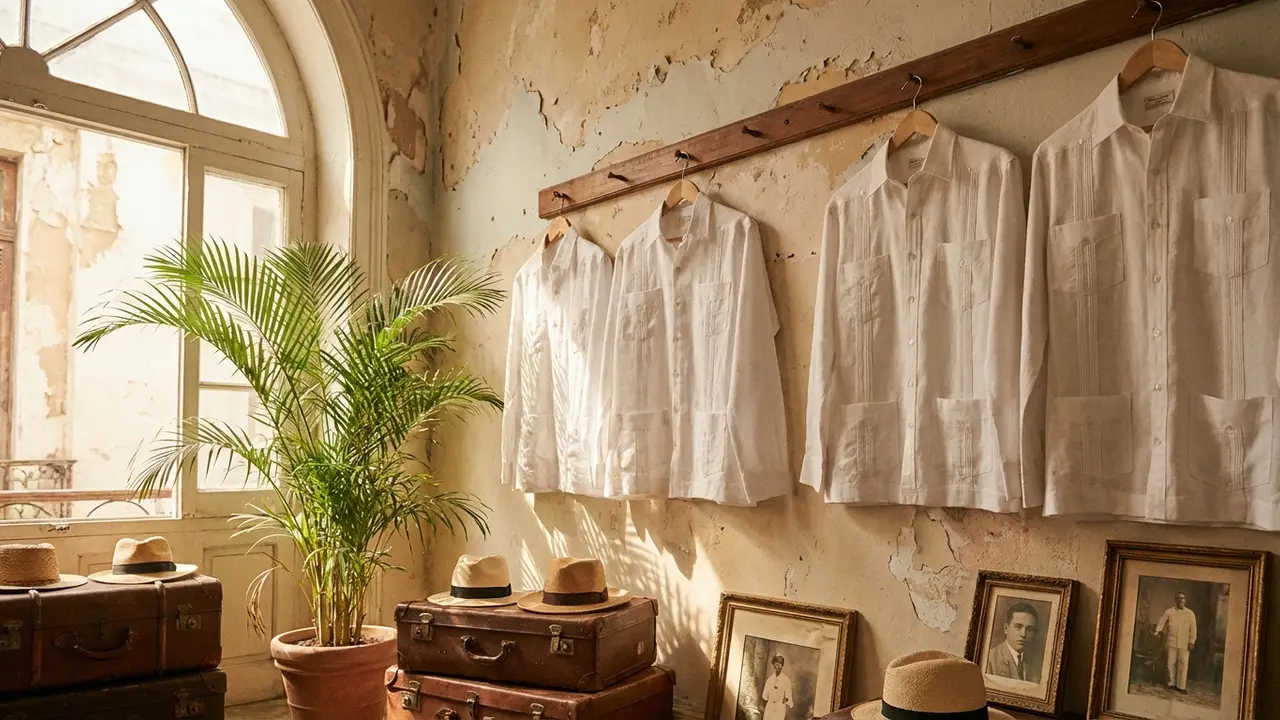
Illustration: Aroma de Cuba (AI)
The guayabera is much more than a shirt: it’s the textile symbol of Cuba and the Caribbean. With its characteristic pintucks, four pockets, and elegant no-tie style, the guayabera has dressed presidents, musicians, writers, and grandfathers alike for over two centuries.
Origins of the Guayabera
The Legend of Sancti Spíritus
The most popular story places the birth of the guayabera in Sancti Spíritus, in central Cuba, in the late 18th century. According to legend, a Spanish landowner asked his wife for a shirt with large pockets to carry guavas from the fields. The garment worked so well that neighbors began copying it.
Although the etymology is debated—some historians associate it with “yayabero,” referring to those who lived near the Yayabo River—the name guayabera became immortalized in the Caribbean.
Evolution and Refinement
By the 19th century, the guayabera had evolved from peasant wear to a symbol of tropical elegance. Cuban tailors perfected the design:
- Four pockets with flaps (two on the chest, two at the waist)
- Vertical pintucks sewn along the front and back
- Buttons from collar to bottom hem
- Straight cut designed to be worn untucked
Anatomy of an Authentic Guayabera
The Pintucks
Pintucks are the narrow vertical seams that visually define the guayabera. A traditional guayabera has two rows of pintucks on the front (one on each side of the buttons) and two on the back. These aren’t just decorative: originally they helped ventilate the garment in tropical heat.
The Pockets
The four pockets are functional and symmetrical. The upper ones usually have pleats that match the pintucks, creating an elegant visual line. Historically, the lower pockets were larger—for those famous guavas, according to legend.
Traditional Materials
Linen is the classic guayabera fabric, valued for its coolness and elegant drape. However, they’re also made in:
- Cotton — more affordable and easier to maintain
- Silk — for very formal occasions
- Synthetic blends — popular for being wrinkle-free
Irish or Belgian linen guayaberas are considered the finest, though Cuban linen had its golden era before 1959.
The Guayabera as Formal Wear
In Cuba, Mexico, the Philippines, and much of the Caribbean, the guayabera has formal dress status. It’s not unusual to see:
- Weddings where the groom and groomsmen wear white guayaberas
- Funerals with black or gray guayaberas as elegant mourning attire
- Diplomatic summits where Latin American leaders wear them officially
In fact, several Mexican presidents have declared the guayabera “national dress” at official events. In Cuba, Fidel Castro frequently wore it at international meetings as an alternative to Western suits.
Famous Guayaberas
Gabriel García Márquez
The Colombian Nobel laureate was famous for his guayaberas, wearing them to interviews, ceremonies, and in daily life. He received the Nobel Prize for Literature in 1982 wearing a liqui-liqui (a related garment), but the guayabera was his usual uniform.
Compay Segundo
The legendary Buena Vista Social Club musician was inseparable from his guayabera, hat, and harmónico. He represented the elegance of the traditional Cuban man.
Celia Cruz
Though better known for her colorful dresses, the Queen of Salsa wore guayaberas on multiple occasions, adapted with her unmistakable style.
Where to Buy Guayaberas
In Miami
Ramón Puig Guayaberas on Calle 8 in Little Havana is the most emblematic store. Founded in 1972 by an exiled tailor, it offers custom-made guayaberas with first-quality linen.
Online
- Cubavera — Commercial brand with designs inspired by the classic guayabera
- D’Accord — Mexican store with quality Yucatecan guayaberas
In Cuba
In Havana, state stores on Calle Obispo and artisan markets offer guayaberas. Quality varies, but genuine linen pieces can be found at good prices.
How to Wear a Guayabera
Basic Rules
- Always untucked — The guayabera is never tucked into pants
- No tie — The collar is buttoned but without accessories
- Dress pants — Pairs with pleated trousers, not jeans
- Formal shoes — Loafers or dress shoes complete the look
Colors
- White — The most traditional, for weddings and daytime events
- Cream or beige — Elegant and versatile
- Black — For funerals or formal evening events
- Pastel colors — Acceptable for less formal occasions
The Guayabera Today
In the 21st century, the guayabera is experiencing a renaissance. Designers like Narciso Rodriguez (Cuban-American) have incorporated guayabera elements into haute couture collections. Meanwhile, a new generation of Cubans in the diaspora is rediscovering the garment as an identity symbol.
At Cuban-American weddings, seeing the groom in a white linen guayabera—perhaps the same one his grandfather wore—is a tribute to roots that exile could never erase.
The guayabera is elegance without pretension, coolness without informality. It’s Cuba transformed into fabric.
Do you have a guayabera with family history? Tell us in the comments.
Related:
Frequently asked questions
Where does the name guayabera come from?
What makes an authentic guayabera?
Can you wear a guayabera to formal events?
Where can I buy authentic Cuban guayaberas?
How we got here
Background
The first thing we published on this topic.
Habanos: Complete Guide to the Most Prestigious Cuban Cigars
Cohiba, Montecristo, Romeo y Julieta — discover the legendary Cuban cigar brands, how to choose them, and where to buy them.
Cuban Rum: Complete Guide to Brands, History, and How to Enjoy It
Discover the world of Cuban rum: from Havana Club to Santiago de Cuba. History, legendary brands, aging types, and secrets to tasting it like an expert.
Related articles
Prú Oriental: Cuba's Most Refreshing Fermented Drink
Discover Prú Oriental, a traditional Cuban fermented beverage made with roots and herbs. History, recipe and ingredients of this Eastern Cuban treasure.
Cuban Sodas: Tropicola, Iron Beer and Bottled Nostalgia
Discover the traditional Cuban soft drinks that shaped generations. History, flavors, and where to find them today.
Cuban Tropical Fruits: Mamey, Mango, Guava and Caribbean Flavors
Discover Cuba's tropical fruits: mamey sapote, Cuban mango, guava, sugar apple and papaya. Complete guide to Caribbean flavors.
Cuban Yarey Hat: Traditional Palm Leaf Artisan Craftsmanship
Discover the sombrero de yarey, an iconic Cuban craft hand-woven from palm leaves. History, techniques, and where to buy.
Baracoa Chocolate: Cuba's Best-Kept Sweet Secret
Baracoa produces 75% of Cuban cacao. Discover the history, farms, and delicious chorote of this Caribbean chocolate capital.
Cuban Honey: The Caribbean's Liquid Gold Conquering the World
Discover why Cuban honey is considered one of the purest in the world. History, varieties, benefits, and where to find this organic treasure from the island.