Prú Oriental: Cuba's Most Refreshing Fermented Drink
Discover Prú Oriental, a traditional Cuban fermented beverage made with roots and herbs. History, recipe and ingredients of this Eastern Cuban treasure.
4 min read
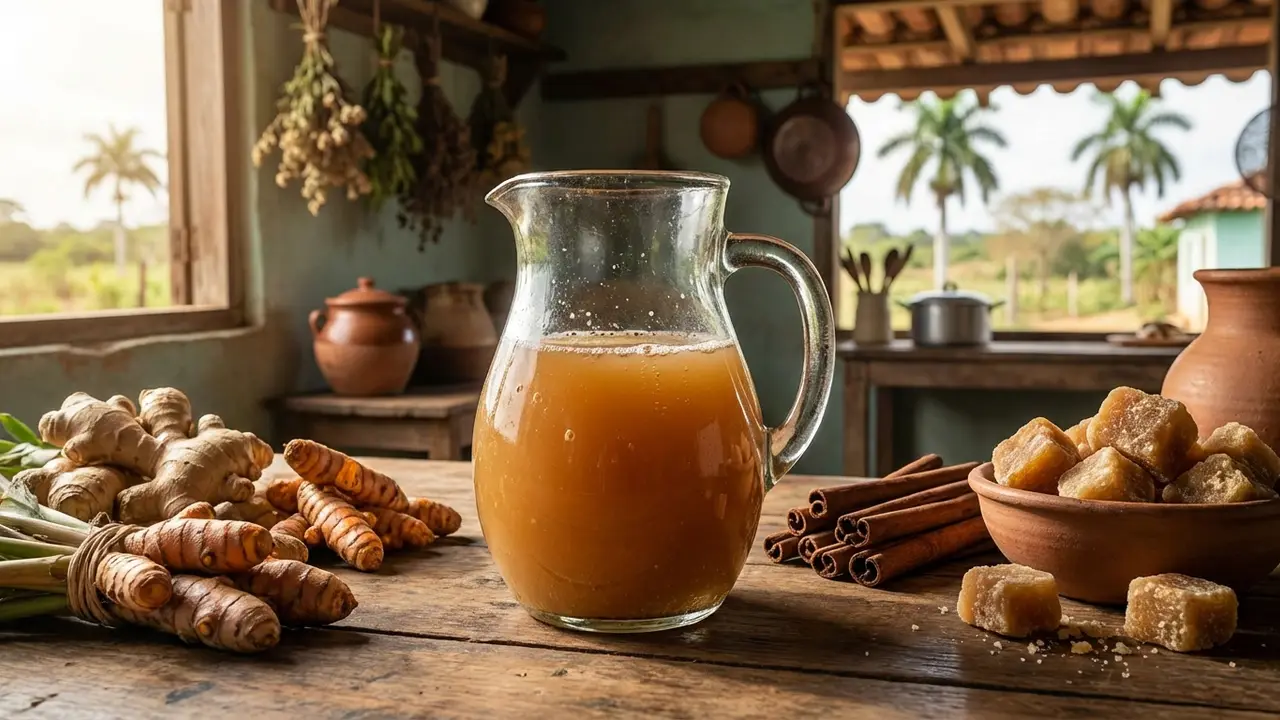
Illustration: Aroma de Cuba (AI)
Prú Oriental: Eastern Cuba’s Refreshing Secret
On the streets of Santiago de Cuba, under the relentless Caribbean sun, there exists a beverage that has refreshed eastern Cubans for over two centuries. Prú Oriental isn’t just a fermented drink: it’s history, Afro-Cuban tradition, and the authentic taste of Cuba’s Oriente region.
Haitian Origins, Cuban Soul
Prú arrived in Cuba after the Haitian Revolution (1791-1804), when thousands of French colonists and their enslaved workers fled to eastern Cuba. They settled mainly in Santiago de Cuba, Guantánamo, and the mountainous region, bringing their customs, coffee cultivation, and this ancestral beverage of African origin.
The name “Prú” apparently comes from West African languages, though its exact etymology has been lost to time. What endures is the recipe, passed down from generation to generation.
What is Prú Oriental?
Prú is a non-alcoholic fermented beverage (or with very low alcohol content), amber-brown in color, slightly carbonated, with a unique flavor combining:
- Sweetness from raw cane sugar (“azúcar prieta”)
- Spices like cinnamon and allspice
- Earthy notes from the fermented roots
- A refreshing finish that relieves tropical heat
Its natural fermentation produces fine bubbles, similar to a soft craft beer or kefir.
Traditional Ingredients
The authentic Prú Oriental recipe includes:
Roots and Herbs
- Bejuco uví (main root, also called bejuco de indio)
- Bejuco de parra or palm roots
- Pine shoots (in some regions)
- Ginger roots
Spices
- Cinnamon sticks (generous amount)
- Allspice (Jamaican pepper)
- Cloves (optional)
Sweeteners
- Azúcar prieta (unrefined raw cane sugar)
- Or cane molasses
The Secret: The “Mother”
Like vinegar or kombucha, Prú needs a “mother” or starter from a previous fermentation. Pruceros (Prú vendors) jealously guard their mother, passing it down through generations.
Traditional Preparation
The ancestral Prú process:
- Boil the roots in water for 1-2 hours until obtaining a dark liquid
- Add spices (cinnamon, allspice) in the final minutes
- Strain and mix with raw cane sugar to taste
- Add the mother (Prú from previous fermentation)
- Ferment for 3-5 days
The Traditional Fermentation Method
Traditionally, Prú was buried underground in clay vessels for 3-5 days. The constant ground temperature favored slow, controlled fermentation.
Today, most pruceros leave the container in the sun during the day, speeding up the process. When fine bubbles appear and the taste is slightly acidic but refreshing, it’s ready.
Properties and Benefits
Prú Oriental is traditionally valued for:
- Refreshing properties against intense heat
- Digestive effects thanks to fermentation
- Natural probiotics (similar to kefir or kombucha)
- Aphrodisiac properties according to folk tradition
- Hydration with natural minerals
Where to Find Prú Oriental
Authentic Prú is sold mainly in:
In Cuba
- Santiago de Cuba: Downtown streets, especially near Parque Céspedes
- Guantánamo: Local markets and street vendors
- Bayamo: Parque Céspedes area and surroundings
- Holguín: Less common, but available
Traditional vendors serve it in glass cups, very cold, directly from clay vessels or plastic pitchers.
Outside Cuba
Finding Prú outside Cuba is nearly impossible. Some Cuban restaurants in Miami or New York occasionally prepare it, but the authentic experience can only be lived in eastern Cuba.
Prú in the Ark of Taste
Prú Oriental was included in the Slow Food Ark of Taste, an international catalog documenting traditional food products at risk of disappearing. This recognition highlights its cultural value and the need to preserve this tradition.
Regional Variants
While the base is similar, variations exist:
- Baracoa Prú: May include cacao and coconut
- Prú with aguardiente: Alcoholic version for adults
- Pineapple Prú: With added fermented pineapple juice
A Living Heritage
Prú Oriental represents the cultural fusion that defines Cuba: African roots, French-Haitian influence, and Creole adaptation. It’s a living heritage that resists the passage of time, prepared the same way as 200 years ago.
Have you tried Prú Oriental? It’s an experience every Cuba lover should have at least once.
More traditional Cuban beverages:
Frequently asked questions
What is Cuban Prú Oriental?
Where does Prú Oriental come from?
How is Prú Oriental made?
Where can I try authentic Prú Oriental?
How we got here
Background
The first thing we published on this topic.
Cuban Coffee Harvest Promises to Be the Best in Decades
The mountains of the Sierra Maestra produce an exceptional harvest thanks to new agricultural techniques.
Ropa Vieja: The Soul of Cuban Cuisine on a Plate
Discover the history, secrets, and traditional recipe of ropa vieja, Cuba's national dish that has conquered palates around the world.
Related articles

The Cuban Guayabera: History, Styles and Where to Buy One
Discover the history of the Cuban guayabera, the Caribbean's most elegant shirt. Styles, fabrics, and stores to find yours.

Cuban Sodas: Tropicola, Iron Beer and Bottled Nostalgia
Discover the traditional Cuban soft drinks that shaped generations. History, flavors, and where to find them today.
Cuban Tostones: The Art of Twice-Fried Green Plantains
Learn to make perfect tostones, the crispy side dish that defines the Cuban table. History, technique, and secrets.

Cuban Yarey Hat: Traditional Palm Leaf Artisan Craftsmanship
Discover the sombrero de yarey, an iconic Cuban craft hand-woven from palm leaves. History, techniques, and where to buy.

Cuban Honey: The Caribbean's Liquid Gold Conquering the World
Discover why Cuban honey is considered one of the purest in the world. History, varieties, benefits, and where to find this organic treasure from the island.

Cuban Rum: Complete Guide to Brands, History, and How to Enjoy It
Discover the world of Cuban rum: from Havana Club to Santiago de Cuba. History, legendary brands, aging types, and secrets to tasting it like an expert.