Moros y Cristianos: Cuba's Story in Every Bite
The history of Cuban Moros y Cristianos, the iconic black beans and rice dish blending Spanish and African heritage. Includes authentic recipe.
4 min read
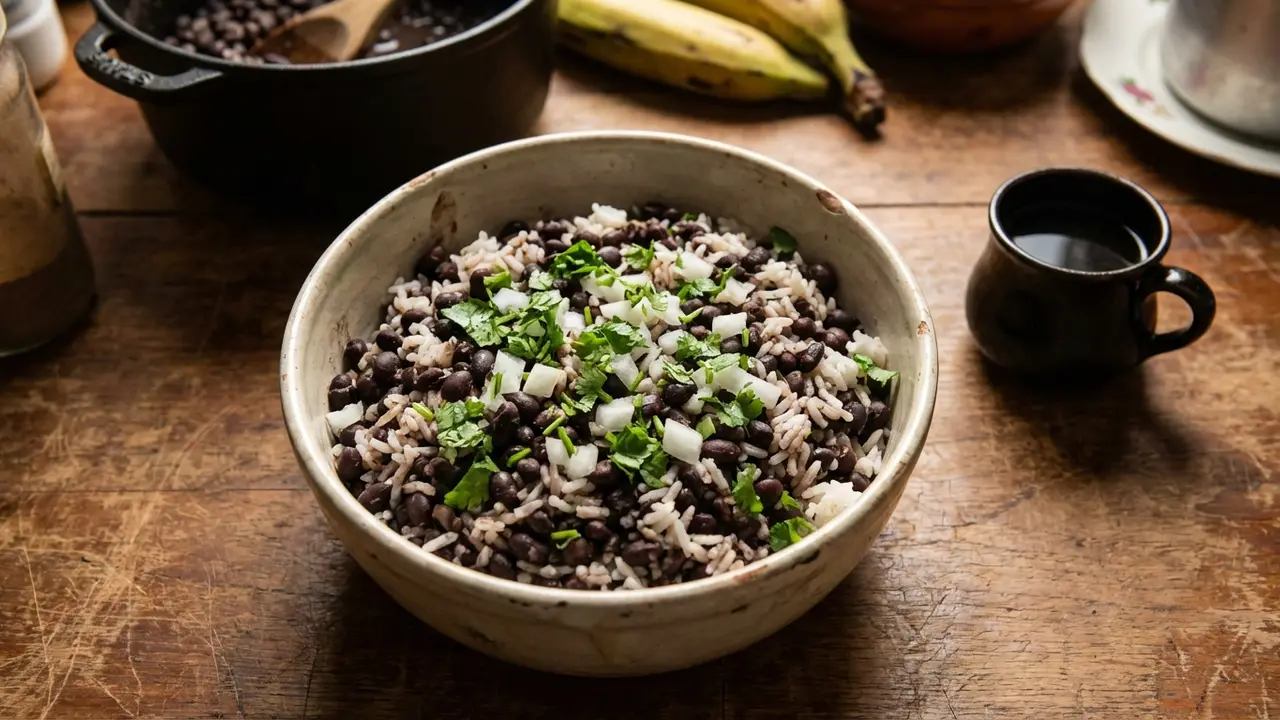
Illustration: Aroma de Cuba (AI)
On every Cuban table, from Havana to Santiago, there exists a dish that transcends mere gastronomy to become a symbol of national identity. Moros y Cristianos —that perfect union of black beans and white rice— tells the story of a people forged through the fusion of cultures in every single grain.
A Story That Crosses Oceans
The dish’s name transports us eight centuries back to the Iberian Peninsula, where Christians and Muslims (Moors) fought battles that would define Spain’s destiny. The black beans, dark as the African night, represent the Moors; the white rice, luminous as European cathedrals, represents the Christians.
But the story doesn’t end in Spain. Colonizers brought this culinary metaphor to the Caribbean, where it merged with African traditions that arrived on slave ships. The result was a mestizo dish, as Cuban as son music and as universal as the love for good food.
“Moros y Cristianos are the perfect metaphor for Cuba: two worlds that seemed incompatible, cooked together until they became inseparable.” — Cuban saying
Moros vs. Congrí: The Great Cuban Debate
Here’s where many get confused, and where Cubans argue with passion:
| Feature | Moros y Cristianos | Congrí |
|---|---|---|
| Beans | Black | Red (kidney) |
| Region | Western Cuba (Havana) | Eastern Cuba (Santiago) |
| Name origin | Spanish Reconquista | Haitian Creole: “congó” + “riz” |
| Flavor | Milder, earthy | More intense, smoky |
Historian Fernando Ortiz, the father of Afro-Cuban studies, documented that the term “congrí” arrived from Haiti, where in Creole it literally means “red beans with rice.”
The Traditional Recipe
Ingredients (serves 6)
For the beans:
- 2 cups dried black beans (or 4 cups pre-cooked)
- 1 bay leaf
- 6 cups water
For the rice:
- 2 cups long-grain rice
- 3 cups bean cooking liquid
- 4-6 tablespoons olive oil (or traditional lard)
- 1 large onion, finely diced
- 1 green bell pepper, diced
- 6 garlic cloves, minced
- 1 teaspoon ground cumin
- 1 teaspoon dried oregano
- 2 bay leaves
- 1 teaspoon white vinegar
- Salt and pepper to taste
Instructions
The day before:
- Soak the beans in cold water for 8-12 hours.
Cooking day:
-
Cook the beans: Drain and place in a large pot with fresh water and bay leaf. Simmer over medium-low heat for 1.5-2 hours until tender but not mushy. Reserve the cooking liquid.
-
Make the sofrito: In a large Dutch oven or caldero, heat the oil over medium heat. Sauté the onion and pepper until translucent (5-7 minutes). Add garlic and cook 1 minute more.
-
Add the spices: Stir in the cumin, oregano, and bay leaves. Cook until fragrant.
-
Bring it together: Add 2 cups of cooked beans, the rice, warm bean liquid, and vinegar. Season with salt and pepper.
-
Cook on high heat until the liquid is partially absorbed. Reduce to low, cover tightly, and cook 20-25 minutes without lifting the lid.
-
The final touch: Let rest covered for 5 minutes. Before serving, fluff gently with a fork.
Grandma’s Secrets
- The vinegar is key: That little acid touch brightens all the flavors and helps keep the rice fluffy.
- Don’t over-stir: Once you add the rice, stir only at the beginning. Then leave it alone.
- The pot matters: A traditional cast-iron caldero creates “pegao” (crispy rice at the bottom), considered a delicacy.
- Lard for purists: Nothing beats the flavor of traditional lard. Olive oil is the modern, healthier alternative.
More Than a Dish: A Family Ritual
In Cuba, Moros y Cristianos aren’t just food —they’re the gravitational center of every celebration. On Nochebuena (Christmas Eve), they accompany roast pork with yuca con mojo. On New Year’s, eating them is believed to bring prosperity (rice represents abundance, beans represent coins).
Every family has their version. Some add bacon or chicharrones for a more intense flavor. Others prefer the clean version, letting the beans and garlic be the stars. What matters isn’t the exact recipe, but the ritual of cooking together, of passing tradition from generation to generation.
Where to Try the Best Moros in Cuba
If you visit the island, don’t miss:
- La Guarida (Havana): Cuba’s most famous paladar, with a refined take on the classic.
- Doña Eutimia (Old Havana): Authentic Creole cooking in the historic heart.
- El Del Frente (Havana): Modern version with top-quality local ingredients.
Sibling Dishes Across the Caribbean
Moros y Cristianos has cousins throughout the region:
- Gallo Pinto (Costa Rica & Nicaragua): Similar but with more cilantro and Lizano sauce.
- Moro de Habichuelas (Dominican Republic): With red beans and coconut.
- Hoppin’ John (Southern USA): With black-eyed peas, direct African heritage.
The next time you prepare or taste Moros y Cristianos, remember that you’re savoring centuries of history, crossed oceans, and intertwined cultures. In that humble plate of rice and beans lives the soul of Cuba.
Do you have your own family recipe for Moros y Cristianos? Share it with us. Every version tells a story.
Frequently asked questions
What's the difference between Moros y Cristianos and Congrí?
Why is the dish called Moros y Cristianos (Moors and Christians)?
How long does it take to make Moros y Cristianos?
What are the best side dishes for Moros y Cristianos?
How we got here
Background
The first thing we published on this topic.
Cuban Coffee Harvest Promises to Be the Best in Decades
The mountains of the Sierra Maestra produce an exceptional harvest thanks to new agricultural techniques.
Ropa Vieja: The Soul of Cuban Cuisine on a Plate
Discover the history, secrets, and traditional recipe of ropa vieja, Cuba's national dish that has conquered palates around the world.
Related articles
Moros y Cristianos: Cuban Black Beans and Rice Recipe
Authentic moros y cristianos recipe from Cuba. Learn the history, technique and secrets of this iconic dish symbolizing cultural fusion.
The Cuban Sandwich: Story of the Bread That United Two Worlds
Discover the fascinating history of the Cuban sandwich, from Tampa's cigar workers to world conquest. Authentic recipe included.

The Daiquiri: Story of the Cocktail Born in Cuba's Iron Mines
Discover the history of the Daiquiri, the Cuban cocktail Hemingway loved. From Santiago's mines to El Floridita in Havana.
Cuban Vaca Frita: The Art of Turning Beef into Crispy Gold
Discover the history and recipe of vaca frita, the Cuban dish where shredded beef is fried until crispy and golden with garlic and lime.
Cuban Tostones: The Perfect Recipe for Crispy Plantain Bliss
Learn to make authentic Cuban tostones with this traditional recipe. Twice-fried green plantains, crispy outside, tender inside.
Cuban Guava Paste: The Dessert That Defines Cuba's Sweetness
Discover Cuban guava paste (dulce de guayaba), its history, how to pair it with cream cheese, and where to buy it.