The Cuban Sandwich: Story of the Bread That United Two Worlds
Discover the fascinating history of the Cuban sandwich, from Tampa's cigar workers to world conquest. Authentic recipe included.
5 min read
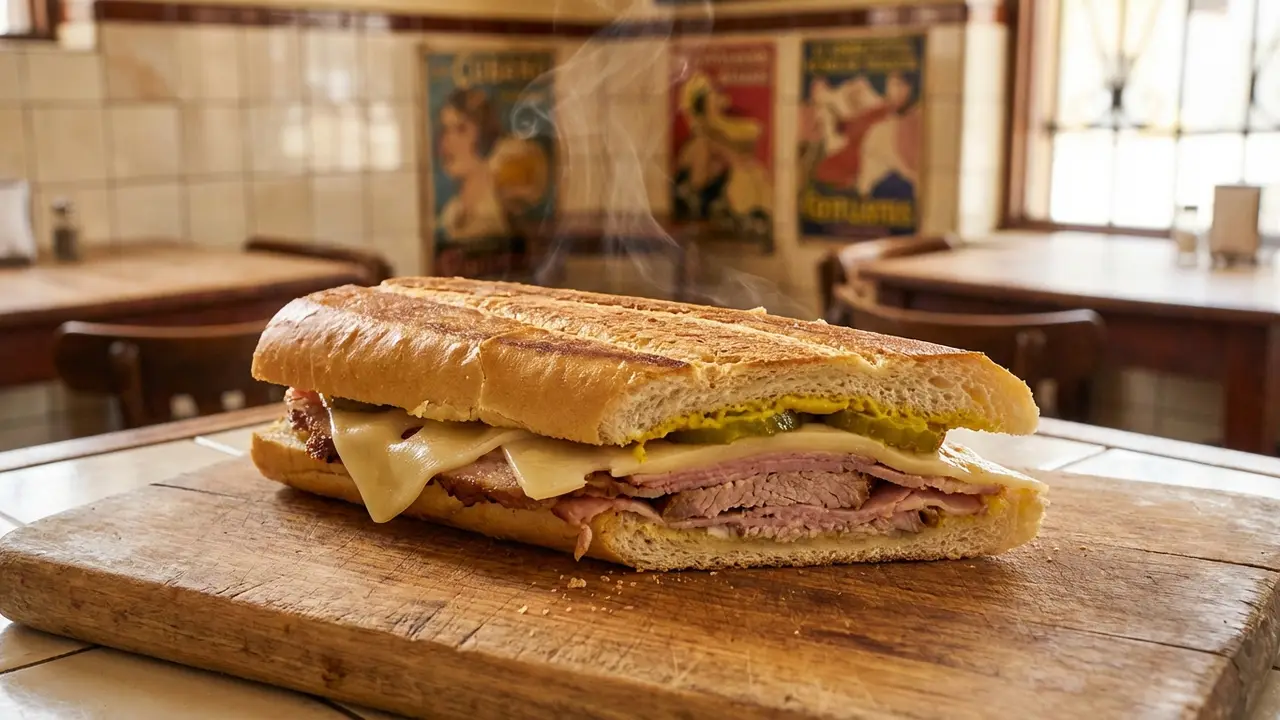
Illustration: Aroma de Cuba (AI)
There’s a sandwich that tells Cuba’s story better than any book. A pressed bread that holds inside not just pork and ham, but the footprints of migration, the sweat of cigar workers, and the survival spirit of a people.
The Cuban sandwich —or simply the Cubano— is much more than food. It’s living heritage.
Born in Tampa’s Cigar Factories
In the late 19th century, Ybor City in Tampa, Florida, buzzed with the smoke of thousands of hand-rolled cigars. Cubans, Spaniards, and Italians worked side by side in tobacco factories, sharing not only their craft but also their food.
Street cafés emerged to feed this workforce. They needed something quick, substantial, easy to eat with one hand while the other held a cigar. Thus the Cuban sandwich was born: the perfect union of culinary traditions in a single bread.
The Original Ingredients
Each element of the Cubano has an origin:
- Roast pork (lechón): The Cuban tradition of slow-roasted pork
- Sweet ham: Spanish heritage
- Genoa salami: The Italian contribution (Tampa only)
- Swiss cheese: Brought by European immigrants
- Dill pickles: The tangy touch that balances everything
- Yellow mustard: The American condiment that completed the fusion
- Cuban bread: The sandwich’s soul
Cuban Bread: A Dying Art
You can’t make a real Cubano with just any bread. Authentic Cuban bread has unique characteristics:
- Thin, crispy crust that cracks when bitten
- Soft, almost cottony interior
- A characteristic ridge on top
- Slightly sweet, with lard in the dough
The ridge comes from an almost-lost tradition: placing a palm leaf on the dough before baking. Today, few bakers maintain this practice.
In Miami, La Rosa Bakery in Little Havana and Karla Bakery are among the last guardians of this tradition. In Tampa, La Segunda Bakery —founded in 1915— continues baking Cuban bread with the original recipe.
Tampa vs. Miami: The Eternal Rivalry
Ask a Cuban from Tampa and one from Miami which is the true Cubano and prepare for a passionate debate.
The Tampa Cuban
In Ybor City, the sandwich includes Genoa salami. Defenders argue this reflects the neighborhood’s multicultural history, where Italians and Cubans created the recipe together. The Columbia Restaurant, open since 1905, serves what many consider the definitive Cubano.
The Miami Cuban
Miamians insist salami is a foreign addition. For them, the Cubano must be pure: pork, ham, cheese, pickles, mustard. Nothing more, nothing less. Versailles Restaurant on Calle Ocho is their cathedral.
In 2012, Tampa officially declared the Cuban sandwich its “Signature Dish,” reigniting the debate.
The Technique: The Art of Pressing
A Cubano isn’t a Cubano until it goes through the plancha (press). This step is sacred:
- Assemble the sandwich with all ingredients
- Spread butter on the outside of the bread
- Place on the hot press
- Press with weight until flat
- Flip and repeat until cheese melts and crust is golden
The result: a compact sandwich where all flavors merge, the cheese embraces the pork, and every bite is a symphony of textures.
Authentic Cuban Sandwich Recipe
Ingredients (makes 2 sandwiches)
- 1 loaf Cuban bread (or soft French bread)
- 200g shredded roast pork (use our lechón tips as a guide)
- 150g sweet ham, sliced
- 100g Swiss cheese, sliced
- 8 dill pickles, sliced lengthwise
- Yellow mustard to taste
- 2 tablespoons softened butter
Preparation
- Cut the bread in half horizontally
- Spread mustard generously on both inside faces
- Layer ingredients: first pickles, then cheese, ham, pork, and more cheese on top
- Close the sandwich and spread butter on the outside
- Press on plancha at medium-high heat for 3-4 minutes per side, until golden and cheese is melted
- Cut diagonally and serve immediately
Cuban tip: A good Cubano never has lettuce, tomato, or mayonnaise. Simplicity is its strength.
The Cubano in Pop Culture
The Cuban sandwich had its moment of glory in the movie Chef (2014), where Jon Favreau —who learned to make them at Coppelia in New York— prepares them in his food truck while traveling from Miami to Los Angeles.
Since then, worldwide interest in the authentic Cubano has exploded.
Where to Eat the Best Cuban Sandwich
In Tampa
- La Segunda Bakery — The most authentic bread in Florida
- The Columbia Restaurant — History in every bite since 1905
- Brocato’s Sandwich Shop — Local Ybor City favorite
In Miami
- Versailles Restaurant — The palace of Cuban exile
- Sanguich de Miami — Gourmet version respecting tradition
- Enriqueta’s Sandwich Shop — Wynwood’s best-kept secret
In Havana
Ironically, finding a good “Cuban sandwich” in Cuba is difficult. There you’ll more commonly find simple pan con lechón or medianoche (sweet bread version). The Cubano as we know it is a product of the diaspora.
A Bridge Between Two Shores
The Cuban sandwich is edible proof that Cuban culture transcends borders. It was born from immigrants meeting and seeking a piece of home, it grew in the streets of Tampa and Miami, and today it conquers palates worldwide.
Every time you bite into a well-pressed Cubano, you’re tasting more than a century of history, migration, and adaptation. You’re eating the dream of thousands who left their island carrying with them the only thing no one could take away: their recipes and their memories.
And that definitely tastes like Cuba.
Looking for more Cuban flavors? Try our authentic Cuban coffee recipe to accompany your sandwich, or discover the history of moros y cristianos, the perfect side dish.
Frequently asked questions
Where was the Cuban sandwich really invented?
What's the difference between Tampa and Miami Cuban sandwiches?
What makes Cuban bread special?
Can you make an authentic Cuban sandwich without a press?
How we got here
Background
The first thing we published on this topic.
Cuban Coffee Harvest Promises to Be the Best in Decades
The mountains of the Sierra Maestra produce an exceptional harvest thanks to new agricultural techniques.
Ropa Vieja: The Soul of Cuban Cuisine on a Plate
Discover the history, secrets, and traditional recipe of ropa vieja, Cuba's national dish that has conquered palates around the world.
Related articles
The Daiquiri: Story of the Cocktail Born in Cuba's Iron Mines
Discover the history of the Daiquiri, the Cuban cocktail Hemingway loved. From Santiago's mines to El Floridita in Havana.
Cuban Yarey Hat: Traditional Palm Leaf Artisan Craftsmanship
Discover the sombrero de yarey, an iconic Cuban craft hand-woven from palm leaves. History, techniques, and where to buy.
Tostones and Maduros: The Fried Plantains of Cuban Cuisine
Discover the history and recipes of crispy tostones and caramelized maduros, the essential sides of any traditional Cuban table.
Cuban Picadillo: The Ultimate Comfort Food Recipe from Havana
Master authentic Cuban picadillo with olives and raisins. Learn the history, ingredients, and secrets of this beloved Caribbean dish.
Guarapo: Cuba's Refreshing Sugarcane Juice You Need to Try
Discover guarapo, the fresh Cuban sugarcane juice. Learn its history, how it's made, and where to find it.
Cuban Malta: The Sweet Malt Beverage Loved by Generations
Discover the history of Cuban malta, from Malta Hatuey to family traditions. Recipe for malta with condensed milk included.