Tostones and Maduros: The Fried Plantains of Cuban Cuisine
Discover the history and recipes of crispy tostones and caramelized maduros, the essential sides of any traditional Cuban table.
4 min read
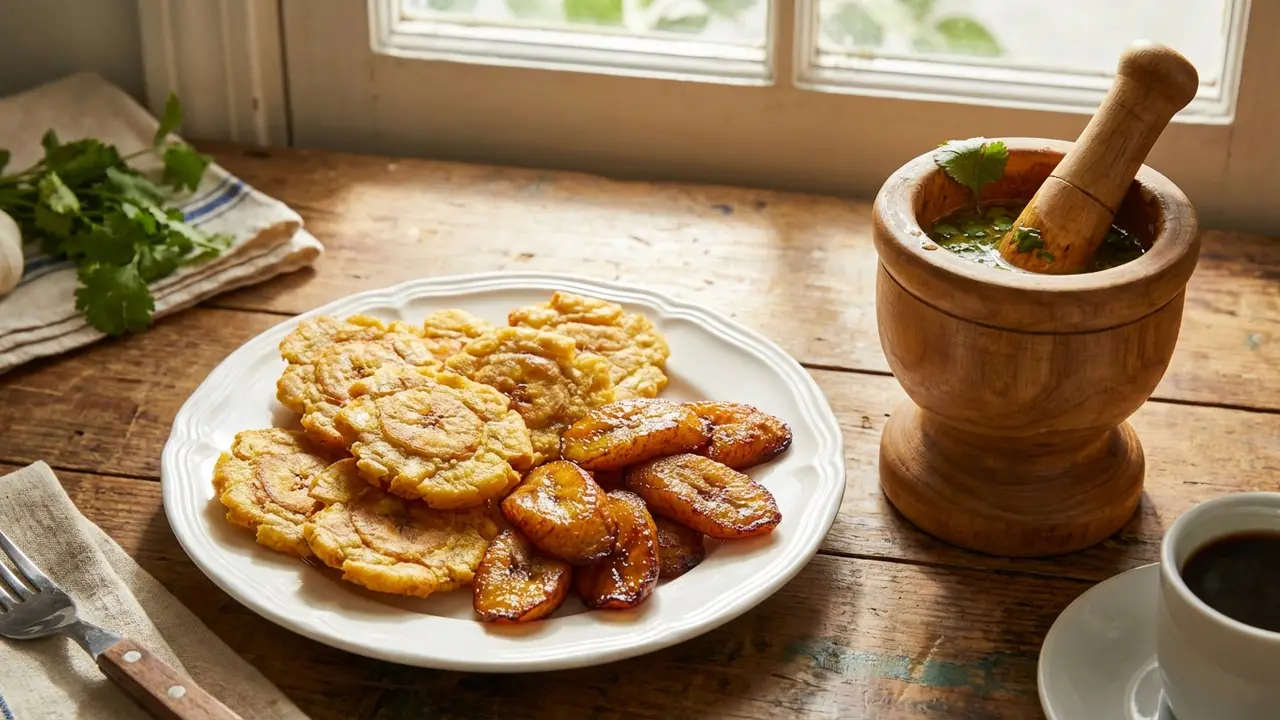
Illustration: Aroma de Cuba (AI)
At any self-respecting Cuban table, alongside rice and beans, you’ll find one of the two great protagonists of fried plantain: tostones or maduros. These two dishes, seemingly simple, hold centuries of culinary history and represent the essence of Creole cooking.
The Plantain: African Heritage in the Caribbean
The plantain arrived in the Caribbean with the Spanish, but it was African slaves who transformed it into a pillar of Cuban cuisine. Unlike the sweet banana we eat as fruit, the cooking plantain requires heat and is used like a vegetable.
From this versatile ingredient come two opposite but complementary preparations: tostones (from green plantains) and maduros (from ripe plantains). Each has its moment, its texture, and its role at the table.
Tostones: The Art of Double-Frying
Tostones, also known as chatinos in eastern Cuba or patacones in other countries, are medallions of green plantain fried twice until crispy on the outside and tender inside.
Traditional Tostones Recipe
Ingredients:
- 2 large green plantains
- Vegetable oil for frying
- Salt to taste
- Garlic water (optional)
Preparation:
-
Peel the plantains - Green plantains have tough skin. Make a lengthwise cut and carefully remove the peel.
-
Cut into rounds - Cut into 1.5-inch (3-4 cm) pieces, diagonal or straight.
-
First fry - In oil at medium temperature (320°F/160°C), fry the pieces for 3-4 minutes until soft but not golden.
-
Flatten - Remove and flatten each piece with a tostonera, the bottom of a glass, or between two plates. Some briefly soak them in garlic water.
-
Second fry - Raise the oil temperature (350°F/180°C) and fry the flattened tostones until golden and crispy, about 2-3 minutes per side.
-
Season - Drain on paper towels and salt immediately.
The Secret of Mojo
In Cuba, tostones are frequently served with mojo criollo: a sauce of mashed garlic, sour orange juice, olive oil, and cumin. This combination of hot toston with fresh mojo is a perfect pairing that elevates the dish.
Maduros: Caramelized Sweetness
Maduros represent the other end of the spectrum. Here the plantain must be very ripe, with almost completely black skin. At this point, the starches have converted to sugars, giving that characteristic sweet flavor.
Perfect Maduros Recipe
Ingredients:
- 2 very ripe plantains (black skin)
- Oil for frying
- Cinnamon (optional)
Preparation:
-
Peel - Ripe peel comes off easily by hand.
-
Cut - In diagonal slices of 0.5-1 inch (1-2 cm), or in long strips for mariquitas.
-
Fry - In oil at medium-high temperature (340°F/170°C), fry until edges are caramelized and golden, about 2-3 minutes per side.
-
Serve - Maduros don’t need salt. Some sprinkle cinnamon for desserts.
The Perfect Ripeness
The secret to good maduros lies in plantain ripeness. According to Caribbean gastronomy experts, the ideal plantain has:
- Black skin with some yellow
- Flesh that yields slightly to pressure
- Perceptible sweet aroma
When to Serve Each One
In Cuban tradition, there are unwritten rules:
-
Tostones - Accompany savory, hearty dishes: roast pork, ropa vieja, fried fish, picadillo.
-
Maduros - Go with moros y cristianos, roast chicken, or alone as a sweet side. They also appear in the famous Cuban complete plate.
Regional Variations
While tostones and maduros are universal in Cuba, each region has its touches:
- Eastern Cuba - Chatinos are thicker and served with spicy mojo.
- Havana - Thinner, crispier tostones, chip-style.
- Camagüey - Maduros baked with grated cheese on top.
Plantains in the Diaspora
In Miami, Tampa, and other cities with Cuban communities, tostones and maduros maintain their sacred place. Restaurants like Versailles on Calle 8 in Miami serve mountains of perfect tostones that transport any Cuban straight to their grandmother’s table.
Whether crispy and salty or sweet and caramelized, tostones and maduros are much more than side dishes. They are memory, tradition, and the taste of Cuba in every bite. 🍌
Frequently asked questions
What is the difference between tostones and maduros?
What kind of plantain is used for tostones?
How do you make tostones crispy?
Can maduros be baked instead of fried?
How we got here
Background
The first thing we published on this topic.
Cuban Coffee Harvest Promises to Be the Best in Decades
The mountains of the Sierra Maestra produce an exceptional harvest thanks to new agricultural techniques.
Ropa Vieja: The Soul of Cuban Cuisine on a Plate
Discover the history, secrets, and traditional recipe of ropa vieja, Cuba's national dish that has conquered palates around the world.
Related articles
The Cuban Sandwich: Story of the Bread That United Two Worlds
Discover the fascinating history of the Cuban sandwich, from Tampa's cigar workers to world conquest. Authentic recipe included.
Cuban Tropical Fruits: Mamey, Mango, Guava and Caribbean Flavors
Discover Cuba's tropical fruits: mamey sapote, Cuban mango, guava, sugar apple and papaya. Complete guide to Caribbean flavors.
Cuban Tostones: The Art of Twice-Fried Green Plantains
Learn to make perfect tostones, the crispy side dish that defines the Cuban table. History, technique, and secrets.
Cuban Picadillo: The Ultimate Comfort Food Recipe from Havana
Master authentic Cuban picadillo with olives and raisins. Learn the history, ingredients, and secrets of this beloved Caribbean dish.
Cuban Malta: The Sweet Malt Beverage Loved by Generations
Discover the history of Cuban malta, from Malta Hatuey to family traditions. Recipe for malta with condensed milk included.
Yuca con Mojo: Authentic Cuban Cassava Recipe Guide
Learn to make authentic Cuban yuca con mojo. Complete recipe with the secrets of mojo criollo: garlic, lime, olive oil, and cumin.