Baracoa Chocolate: Cuba's Best-Kept Sweet Secret
Baracoa produces 75% of Cuban cacao. Discover the history, farms, and delicious chorote of this Caribbean chocolate capital.
4 min read
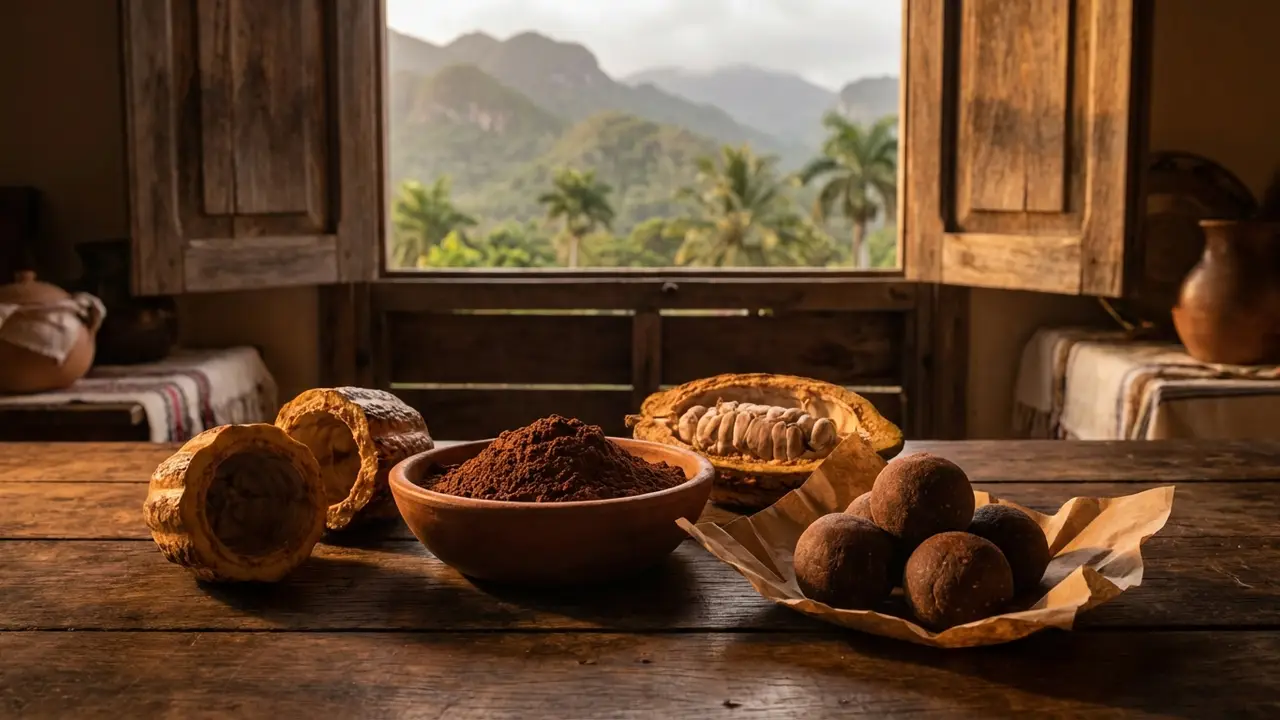
Illustration: Aroma de Cuba (AI)
There’s a corner of Cuba where the air smells like chocolate. This isn’t a metaphor: when you pass the Baracoa chocolate factory, the aroma envelops you and forces you to stop. Welcome to the chocolate capital of the Caribbean.
Baracoa: Where Cuban Chocolate Was Born
Baracoa isn’t just Cuba’s first settlement (1511) — it’s also the beating heart of the island’s cacao production. This small city at the eastern tip, surrounded by mountains and tropical rainforest, produces 75% of all Cuban cacao.
The secret lies in its geography: a humid microclimate, fertile volcanic soils, and mountains that protect the crops. Here, more than 1,800 harvesters work in cooperatives that keep a centuries-old tradition alive.
A History That Crossed the Sea
Cacao arrived in Baracoa in the early 19th century, brought by French refugees fleeing the Haitian Revolution. These colonists crossed the Windward Passage and settled in Cuba’s eastern mountains, bringing advanced cultivation techniques with them.
What began as a survival industry became tradition. Generations of Baracoan families have passed down the art of cacao: how to read the weather, prepare the soil, prune branches, and transform seeds into that magical powder that perfumes mornings.
Che’s Factory
On April 1, 1963, Ernesto “Che” Guevara, then Minister of Industries, inaugurated the “Rubén David Suárez Abella” Cacao Derivatives Company — Cuba’s only chocolate factory. It continues operating today, processing all national cacao.
The factory doesn’t offer tours (it’s a government facility), but passing by is an obligatory ritual for visitors. The aroma escaping from its chimneys is the best marketing that exists.
Chorote: Breakfast of the Gods
No Baracoan starts the day without a gourd of chorote: roasted and ground cacao, mixed with fresh coconut milk and thickened with bananina (artisanal plantain flour). Cinnamon or vanilla is added to taste.
It’s pure energy for farmers working the land and children heading to school. At night, chorote transforms into rumbumba: the same recipe, but with a generous pour of local rum.
The Cacao Routes
Finca Las Mujeres
Deisy, known as the “Cacao Queen,” welcomes visitors with open arms. On her 4 hectares, you can see the entire process: from flower on trunk to chocolate bar. The final tasting — fresh pulp, roasted bean, cacao paste, artisan bonbons — is unforgettable.
Finca Duaba and El Sendero del Cacao
Other farms offer similar experiences. At El Sendero, you’ll learn about Cuban cacao varieties and taste freshly prepared chorote. Entry costs just $2 CUC.
Casa del Cacao
In downtown Baracoa, this small shop sells the famous cacao balls — pure paste spheres to grate and make hot chocolate at home. At $1 CUC each, they’re the perfect souvenir.
Cuban Cacao Around the World
The world’s most demanding chocolatiers have discovered Baracoa:
- Willie’s Cacao (UK) imports Baracoan beans for their premium bars
- Sprüngli (Switzerland) describes notes of blackberry, pear, tobacco, and coffee
- Patrick Roger (France) highlights the peppery finish of his 71% Cuban bar
- Marcolini (Belgium) celebrates the intensity and unique aromas
In 2011, the National Monuments Commission declared Baracoa’s cacao lands a Protected Area, recognizing their heritage value.
Products You Must Try
| Product | Description | Where to Buy |
|---|---|---|
| Cacao balls | Pure paste for grating | Casa del Cacao, farms |
| Chorote mix | Cacao + bananina + spices | Local markets |
| Cacao butter | Natural moisturizer | Visitable farms |
| Artisan bars | 70-80% chocolate | Local producers |
| Bonbons | Filled with honey and coconut | Finca Las Mujeres |
How to Get to Baracoa
Baracoa is isolated from the rest of Cuba by mountains — part of its charm. You can arrive by:
- Plane: Flights from Havana to Gustavo Rizo airport
- Road: The spectacular La Farola Highway from Guantánamo (about 80 km of curves with incredible views)
- Bus: Viazul connects with Santiago de Cuba
Once there, rent a bicycle to explore the nearby farms — they’re just a few kilometers from downtown.
Baracoa is many things: the first city, the most isolated, the rainiest. But above all, it’s the sweetest. Visit and you’ll understand why the zunzuncito also loves these lands.
Frequently asked questions
Why is Baracoa cacao special?
What is Cuban chorote?
Where can I taste authentic chocolate in Baracoa?
Does Cuba export cacao to other countries?
How we got here
Background
The first thing we published on this topic.
Cuban Coffee Harvest Promises to Be the Best in Decades
The mountains of the Sierra Maestra produce an exceptional harvest thanks to new agricultural techniques.
Habanos: Complete Guide to the Most Prestigious Cuban Cigars
Cohiba, Montecristo, Romeo y Julieta — discover the legendary Cuban cigar brands, how to choose them, and where to buy them.
Related articles
Cuban Picadillo: The Ultimate Comfort Food Recipe from Havana
Master authentic Cuban picadillo with olives and raisins. Learn the history, ingredients, and secrets of this beloved Caribbean dish.
Cuban Tropical Fruits: Mamey, Mango, Guava and Caribbean Flavors
Discover Cuba's tropical fruits: mamey sapote, Cuban mango, guava, sugar apple and papaya. Complete guide to Caribbean flavors.
Ropa Vieja: Cuba's National Dish with Centuries of History
Discover the history and recipe of Cuban ropa vieja, the national dish of shredded beef in sofrito that conquered the Caribbean.
The Cuban Guayabera: History, Styles and Where to Buy One
Discover the history of the Cuban guayabera, the Caribbean's most elegant shirt. Styles, fabrics, and stores to find yours.
The Cuban Guayabera: History, Style & Tropical Elegance
Discover the Cuban guayabera, the Caribbean's most iconic shirt. Its history from Sancti Spíritus, features, how to choose one, and where to buy.
The Cuban Sillón: History & Tradition of Cuba's Rocking Chair
Guide to the Cuban sillón, the rocking chair that defines Caribbean life. History, types, craftsmen, superstitions, and where to buy Cuban rocking chairs.