The Cuban Sillón: History & Tradition of Cuba's Rocking Chair
Guide to the Cuban sillón, the rocking chair that defines Caribbean life. History, types, craftsmen, superstitions, and where to buy Cuban rocking chairs.
7 min read
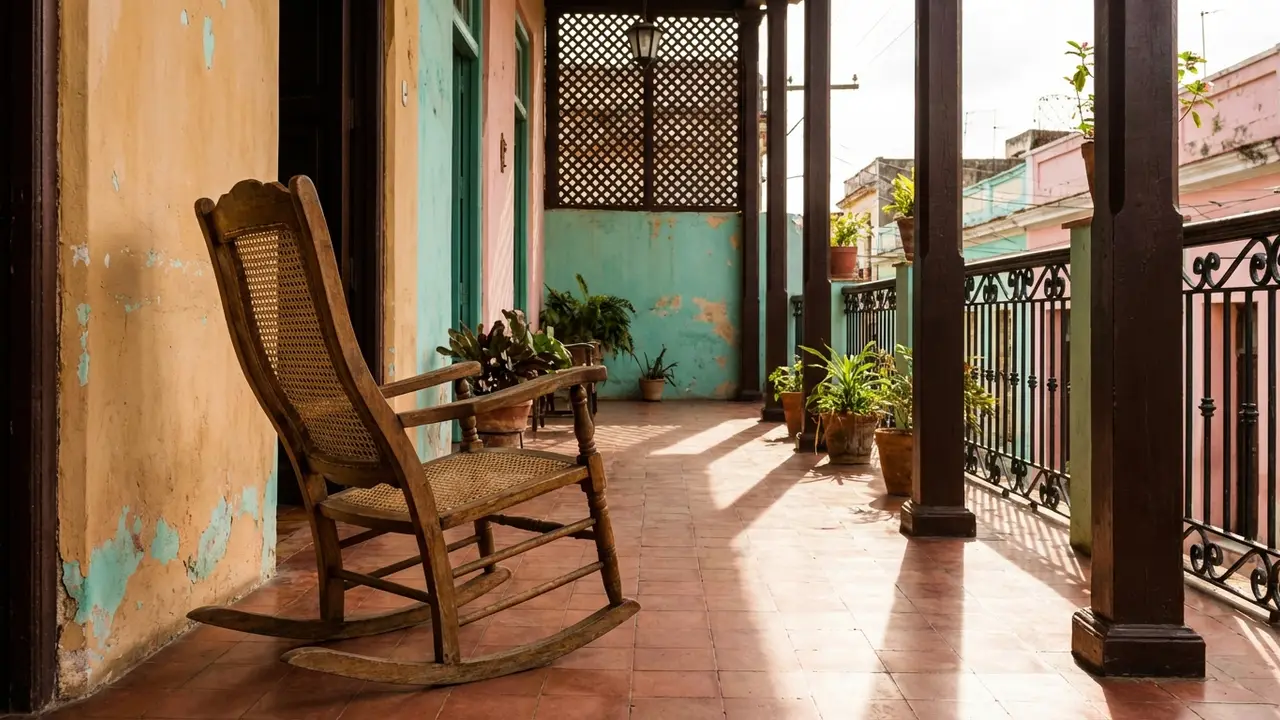
Illustration: Aroma de Cuba (AI)
The One Piece of Furniture That Defines Cuban Life
If there’s one object that captures the essence of Cuban life, it’s not a plate of moros y cristianos or a glass of guarapo. It’s the sillón — that wooden and wicker rocking chair that inhabits every porch, every living room, every corner where a Cuban decides it’s time to sit down and let the world go by.
In Cuba, the sillón isn’t furniture: it’s a social ecosystem. From it, you watch the street, sing lullabies, trade neighborhood gossip, sip Cuban coffee at sunset, and solve the world’s problems. The back-and-forth rhythm of the sillón sets the pace of Cuban life just as much as son music or the claves.
A Linguistic Curiosity
Here’s something fascinating: across all of Latin America and Spain, a sillón is a fixed armchair — a large, stationary seat. But ask any Cuban what a sillón is, and they’ll point to the rocking chair on the porch. This linguistic inversion is unique in the Spanish-speaking world and speaks volumes about Cuba’s relationship with this piece of furniture.
What the rest of the world calls a mecedora or rocking chair, Cuba christened as sillón — elevating it in status, giving it the dignity of the household’s primary seat.
History: From English Gardens to Cuban Porches
Origins (18th Century)
The first rocking chairs appeared in North America in the early 18th century, initially as simple garden chairs with runners attached. By 1725, they crossed the Atlantic and began gaining prestige in England.
The Wicker Revolution
The real boom came with wicker rockers — chairs that combined lightness, ventilation, and artisanal beauty. For the tropical Caribbean climate, they were perfect: the woven wicker allowed air circulation, essential on an island without air conditioning.
Michael Thonet and Bentwood (1860)
German craftsman Michael Thonet revolutionized design with his steam-bent wood technique, creating elegant, lightweight rocking chairs that were massively exported to the Caribbean. Many antique Cuban sillones are original Thonet pieces or direct inspirations.
Cuba Makes Them Its Own (19th-20th Century)
While other countries let the rocking chair fall out of fashion, Cuba adopted it as the centerpiece of the home. Cuban artisans developed their own styles, adapting European designs to local woods like cedar, mahogany, and majagua.
Types of Cuban Sillones
The Portal Sillón
The classic. Large, sturdy, typically made of dark wood with woven wicker or leather seat and back. Designed for the spacious porches of colonial homes, where families would enjoy the evening breeze.
La Comadrita
A smaller, lower version, without arms or with short arms. The name says it all — it’s the chair of the comadres (neighborhood women) who would sit and chat. More intimate and lighter than the portal sillón.
El Balance
In some regions of Cuba, especially the east, the rocking chair is called a balance — directly referencing the rocking motion. Eastern balances tend to be wider with more pronounced runners.
The Wicker Sillón
Entirely woven in wicker or vine, with no visible wooden frame. Lighter and with better ventilation, ideal for the tropical heat. The finest examples came from Pinar del Río province.
The Craftsmen: Guardians of Tradition
Sillón-making in Cuba is a hereditary trade. Entire families dedicate themselves to rocking chair carpentry, passing techniques from father to son across generations.
Traditional Materials
- Cuban cedar: Aromatic, insect-resistant — the noble wood par excellence
- Mahogany: For luxury pieces, with its characteristic reddish hue
- Majagua: Flexible wood ideal for curved runners
- Wicker and vine: For weaving seats and backs
- Leather: For more formal versions, especially for living rooms
Artisanal Process
- Wood selection: Must be properly cured (6-12 months of drying)
- Cutting and turning: Balusters and legs are hand-turned on a lathe
- Runner bending: Using steam or heat, the wood is shaped into curves
- Assembly: Mortise and tenon joints, no nails
- Weaving: The seat and back are woven with wicker, nylon, or leather
- Finishing: Varnish or lacquer to protect the wood
The Sillón in Cuban Culture
The Portal: Cuba’s Social Living Room
The Cuban portal — that columned gallery running along the front of houses — is inseparable from the sillón. Together they form the quintessential social space of Cuban culture. Before television, before telephones, the portal with its rocking chairs was the original social network.
In interior towns, families would bring their sillones to the portal every afternoon. Neighbors would stop to chat, children played on the sidewalk, and the rhythm of rocking marked the hours until nightfall.
Sillón Superstitions
Cuba wouldn’t be Cuba without its superstitions, and the sillón has its share:
- Never rock an empty sillón: It invites spirits and brings bad luck
- If it rocks on its own: A spirit has sat down to rest (or to scare you)
- A new, unbroken-in sillón: The eldest person in the house must sit first
- Placing a sillón facing the door: Guards against bad energy
- Rocking fast: Sign of nervousness or urgent gossip to share
In Literature and Film
The sillón appears as a recurring element in Cuban culture:
- In the novels of Alejo Carpentier, characters reflect from colonial rocking chairs
- Cuban funeral homes traditionally arranged rows of facing sillones for wakes
- In medical waiting rooms, like the old Spanish mutual clinics, sillones defined the space
The Sillón Today: Between Tradition and Scarcity
In Cuba
The economic crisis has hit sillón production hard. Quality wood is scarce, weaving materials are difficult to import, and many artisans have emigrated. Yet the sillón persists — repaired again and again, inherited across generations, because a Cuban home without a sillón simply isn’t complete.
Surviving private workshops charge between 3,000 and 15,000 Cuban pesos for a new sillón (equivalent to several months of average salary), making each rocking chair a significant family investment.
In the Diaspora
In Little Havana (Miami), Union City, and other Cuban communities in the U.S., the portal sillón remains an identity symbol. Specialty stores sell Cuban-style rocking chairs, and many families treasure sillones brought from Cuba decades ago.
Where to Buy Cuban-Style Rocking Chairs
In Cuba
- Private workshops: In Pinar del Río, Villa Clara, Camagüey, and Havana
- Craft fairs: FIART and provincial fairs
- Direct commission: Through local artisans (ask around the neighborhood)
In the United States
- Cracker Barrel: Classic porch rockers (similar Southern style)
- Troutman Chair Co.: Handcrafted wooden rockers
- Amazon: Variety of wicker and wooden rocking chairs
- Etsy: Artisanal and vintage pieces
Care and Maintenance
- Protect from prolonged direct sun (dries out wood and wicker)
- Oil the wood every 6 months with tung or linseed oil
- Check joints periodically and retighten if needed
- Wicker can be cleaned with a damp cloth and hydrated with coconut oil
- Runners can be reinforced with leather strips if they wear down
A Piece of Furniture with a Soul
The Cuban sillón is more than carpentry: it’s collective memory made wood. Each one holds the conversations of endless afternoons, the lullabies that rocked generations to sleep, the shared cafecitos between neighbors, the sound of the radio playing Cuban music in the background.
In a world that moves ever faster, the Cuban sillón reminds us of the art of sitting down, rocking, and letting time pass. Because sometimes, the best technology for living is a pair of curved runners, a tropical breeze, and good company.
As Cubans say: “Give me a sillón, a cafecito, and good conversation, and I need nothing more.” ☕🪑
Frequently asked questions
What is a Cuban sillón?
Was the rocking chair invented in Cuba?
Why is it bad luck to rock an empty chair in Cuba?
Where can I buy Cuban-style rocking chairs?
How we got here
Background
The first thing we published on this topic.
Habanos: Complete Guide to the Most Prestigious Cuban Cigars
Cohiba, Montecristo, Romeo y Julieta — discover the legendary Cuban cigar brands, how to choose them, and where to buy them.
Cuban Rum: Complete Guide to Brands, History, and How to Enjoy It
Discover the world of Cuban rum: from Havana Club to Santiago de Cuba. History, legendary brands, aging types, and secrets to tasting it like an expert.
Related articles
Cuban Chocolate and Baracoa Cacao: The Caribbean's Best-Kept Secret
Discover Baracoa cacao, the heart of Cuban chocolate. History, international brands, and the new Baracocoa venture reviving Cuba's chocolate industry.
Natilla Cubana: The Creamy Cuban Custard That Tastes Like Home
Discover natilla cubana, the cinnamon-infused custard that defines Cuban comfort. History, step-by-step recipe, and abuela's secrets.
Cuban Bread: History, Recipe, and the Palmetto Leaf Secret
Discover the history of Cuban bread from Ybor City to your table. Traditional recipe, palmetto leaf technique, and where to find it.
Cuban Casabe: The Ancient Taíno Cassava Bread, UNESCO Heritage
Complete guide to Cuban casabe, the cassava flatbread inherited from the Taínos. History, preparation, UNESCO 2024 recognition, and where to buy.
Arroz Imperial: Cuba's Showstopping Layered Rice Casserole
Discover arroz imperial, the Cuban layered rice casserole with chicken, mayo, and melted cheese. History, step-by-step recipe, and tips.
Cuban Medicinal Plants: A Guide to Cuba's Green Medicine Tradition
Discover Cuba's most popular medicinal plants, from aloe vera to lemongrass. History, uses, and traditions of Cuban green medicine.