Natilla Cubana: The Creamy Cuban Custard That Tastes Like Home
Discover natilla cubana, the cinnamon-infused custard that defines Cuban comfort. History, step-by-step recipe, and abuela's secrets.
4 min read
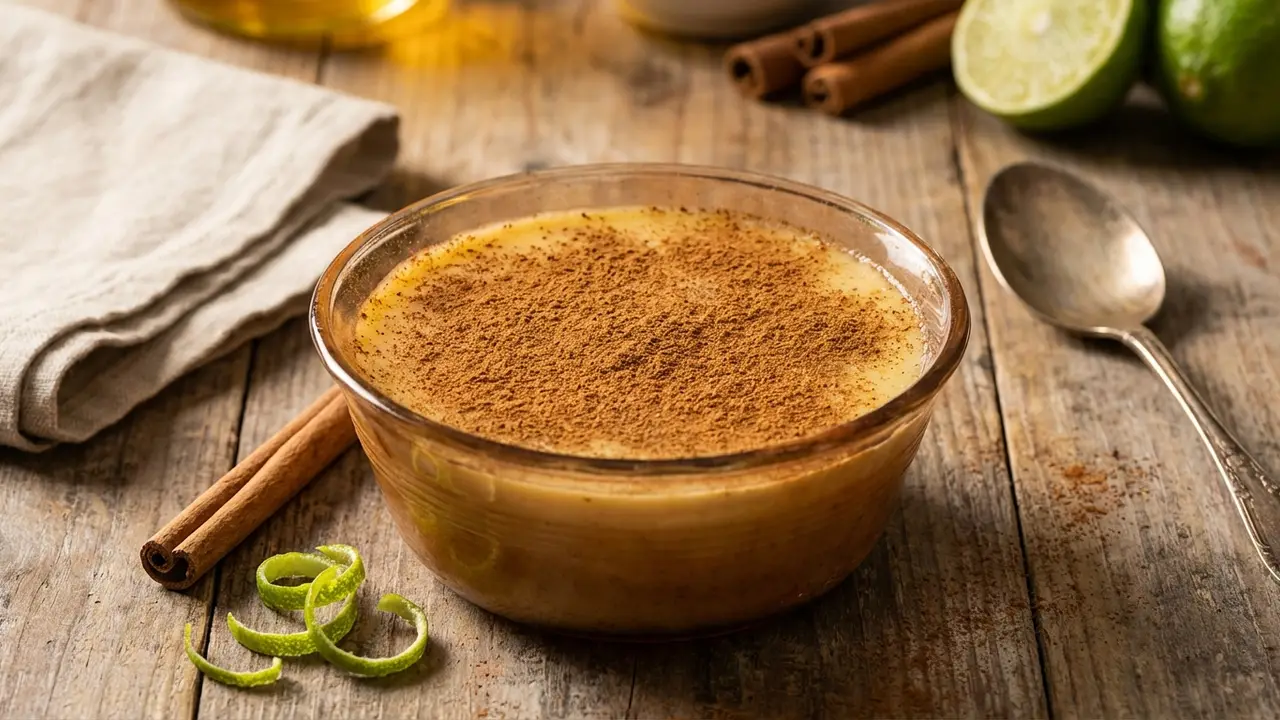
Illustration: Aroma de Cuba (AI)
The dessert every Cuban grandmother mastered
If there’s one dessert that defines a Cuban childhood, it’s natilla. That sweet, cinnamon-scented cream that appeared at snack time, after Sunday lunch, or simply because abuela decided it was a good day to make it.
Cuban natilla isn’t a pretentious dessert. It doesn’t need an oven, special molds, or imported ingredients. It’s milk, sugar, cornstarch, cinnamon, and love — cooked slowly over low heat, stirred without rest until it thickens into that perfect texture between pudding and pastry cream.
Spanish roots, Cuban soul
Natilla arrived in Cuba with Spanish colonizers, a direct descendant of the natillas de Castilla prepared in convents and manor houses across the Iberian Peninsula. In Spain, the traditional recipe uses egg yolks as the primary thickener.
But in Cuba, as with everything, the recipe transformed. Cornstarch replaced eggs partially or entirely — a practical change born from tropical domestic economy where eggs weren’t always abundant but corn starch was accessible.
The result was a lighter, silkier dessert that adapted perfectly to Cuban tastes and climate. The addition of green lime peel and a cinnamon stick infused in warm milk gave it that unmistakable flavor no Cuban ever forgets.
Traditional Cuban natilla recipe
Ingredients (6-8 servings)
- 1 liter (4 cups) whole milk
- ¾ cup sugar
- 4 tablespoons cornstarch
- 1 cinnamon stick
- Peel of 1 lime (green part only, no pith)
- 1 teaspoon vanilla extract
- Pinch of salt
- Ground cinnamon for garnish
Step-by-step preparation
-
Infuse the milk: Heat ¾ of the milk over medium heat with the cinnamon stick and lime peel. When it begins to simmer, remove from heat and let it steep for 10 minutes. Remove the cinnamon and peel.
-
Dissolve the cornstarch: In a separate bowl, mix the cornstarch with the remaining ¼ of cold milk until completely smooth, no lumps.
-
Combine: Return the infused milk to medium heat. Add the sugar and salt. As it warms, pour in the cornstarch mixture in a thin stream, stirring constantly with a wooden spoon.
-
Cook: Keep stirring without stopping for 8-10 minutes until the mixture thickens and coats the back of the spoon. Remove from heat and add vanilla.
-
Serve: Pour into individual glasses or a serving dish. Dust generously with ground cinnamon. Cover with plastic wrap touching the surface (to prevent a skin) and refrigerate at least 2 hours.
Abuela’s secret: Some Cuban families stir in a beaten egg yolk at the end for extra richness. Others add a tablespoon of butter. Every household has its version, and they’re all right.
Natilla in Cuban culture
In Cuban homes, natilla holds a special place. It’s not the dessert of grand celebrations — that honor belongs to flan or guava shells. Natilla is the everyday dessert, the one made on a random Tuesday, the one children request when they come home from school.
During the Special Period in the 1990s, when Cuba faced devastating economic crisis, natilla survived in more austere versions — sometimes made with reconstituted powdered milk and less sugar, but it never disappeared from Cuban kitchens.
In the diaspora, natilla is liquid nostalgia. In Miami, Tampa, and New Jersey, Cuban grandmothers still prepare it exactly as they did in Havana, Camagüey, or Santiago. It’s an invisible thread connecting generations and geographies.
Popular variations
- Chocolate natilla: Add 2 tablespoons of cocoa powder to the mix. A hit with children.
- Coconut natilla: Replace part of the milk with coconut milk for a tropical twist.
- Natilla with cookies: Alternate layers of natilla with María cookies in a dish — a version reminiscent of tiramisu but entirely Cuban.
- Cuban crème brûlée: Sprinkle sugar over cold natilla and caramelize with a torch — a modern fusion that works surprisingly well.
Where to try natilla cubana
In Havana, the most traditional paladares often offer it as the dessert of the day. In Miami, restaurants like Versailles on Calle 8 and La Carreta serve it as part of their Creole dessert menu. You’ll also find it at the ventanitas (coffee windows) in Hialeah and Little Havana.
Cuban natilla proves the best desserts don’t need complication — just good ingredients, patience, and the memory of a kitchen that always smelled like cinnamon. If you love Cuban baking, check out our Cuban buñuelos and guava pastries.
Frequently asked questions
What is the difference between natilla cubana and flan?
Can you make natilla cubana without eggs?
How long does natilla cubana last in the fridge?
Why does my natilla have lumps?
How we got here
Background
The first thing we published on this topic.
Cuban Coffee Harvest Promises to Be the Best in Decades
The mountains of the Sierra Maestra produce an exceptional harvest thanks to new agricultural techniques.
Ropa Vieja: The Soul of Cuban Cuisine on a Plate
Discover the history, secrets, and traditional recipe of ropa vieja, Cuba's national dish that has conquered palates around the world.
Related articles
Cuban Bread: History, Recipe, and the Palmetto Leaf Secret
Discover the history of Cuban bread from Ybor City to your table. Traditional recipe, palmetto leaf technique, and where to find it.

The Cuban Sillón: History & Tradition of Cuba's Rocking Chair
Guide to the Cuban sillón, the rocking chair that defines Caribbean life. History, types, craftsmen, superstitions, and where to buy Cuban rocking chairs.
Cuban Casabe: The Ancient Taíno Cassava Bread, UNESCO Heritage
Complete guide to Cuban casabe, the cassava flatbread inherited from the Taínos. History, preparation, UNESCO 2024 recognition, and where to buy.
Arroz Imperial: Cuba's Showstopping Layered Rice Casserole
Discover arroz imperial, the Cuban layered rice casserole with chicken, mayo, and melted cheese. History, step-by-step recipe, and tips.
Cuban Medicinal Plants: A Guide to Cuba's Green Medicine Tradition
Discover Cuba's most popular medicinal plants, from aloe vera to lemongrass. History, uses, and traditions of Cuban green medicine.
Cuban Flan: The Caramel Custard That Steals the Show at Every Table
Traditional Cuban flan recipe with condensed milk and caramel. History, tips, and step-by-step guide to this iconic Cuban dessert.