Casquitos de Guayaba: Cuba's Sweetest Guava Shell Dessert
Traditional Cuban guava shells in syrup with cream cheese. Learn the authentic recipe, history, and secrets of this beloved Caribbean dessert.
4 min read
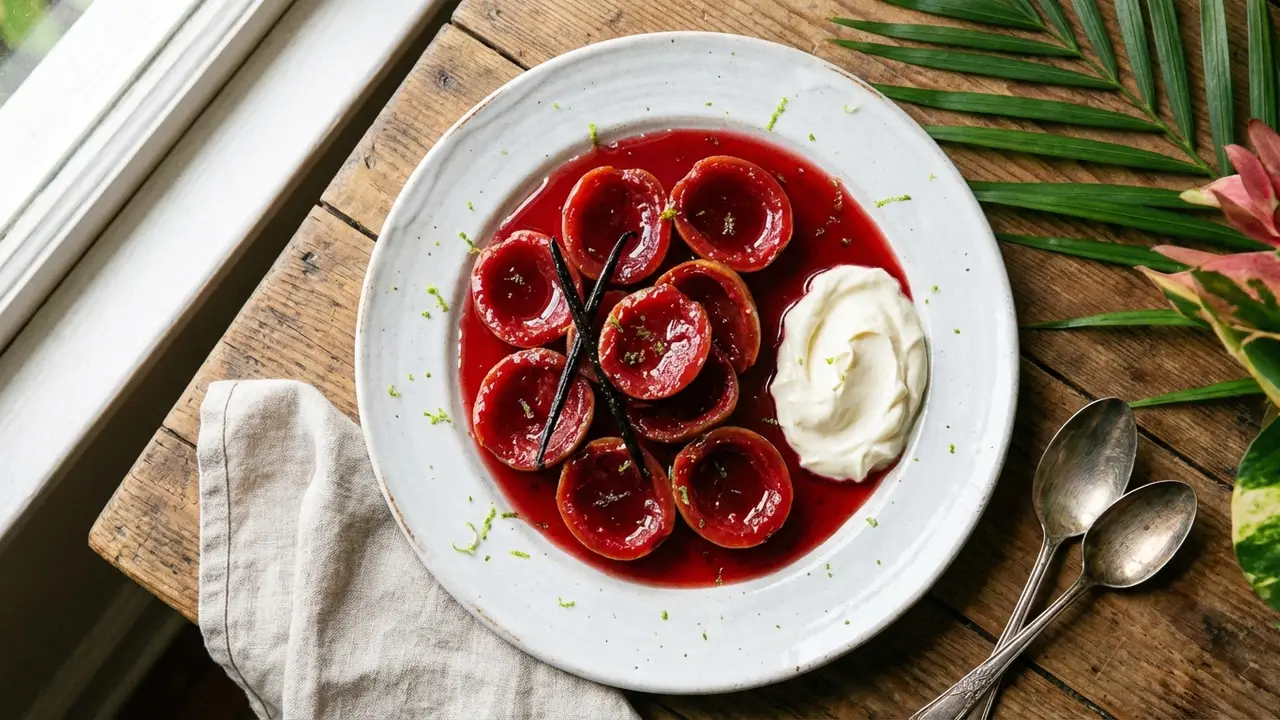
Illustration: Aroma de Cuba (AI)
Some desserts transcend the kitchen and become memory itself. Casquitos de guayaba — halved guavas slowly cooked in fragrant syrup with cinnamon and cloves, served alongside generous slices of cream cheese — are exactly that. One bite contains all the sweetness of the Cuban tropics.
Guava: Cuba’s queen fruit
The guava (Psidium guajava) is one of Cuba’s most abundant and beloved fruits. It grows wild in fields and backyards, perfuming the air with its unmistakable aroma when ripe. The Taíno people consumed it long before the Spanish arrived, and it has since become essential to Cuban pastry traditions.
From guava comes pasta de guayaba (the firm paste served with cheese), marmalade, the famous guava pastries, and of course, casquitos — the simplest and perhaps most perfect guava dessert of all.
Traditional casquitos de guayaba recipe
Ingredients (serves 4)
- 500 g pink guavas, ripe but firm
- 1½ cups sugar (300 g)
- 3 cups water
- 1 cinnamon stick
- 3 whole cloves
- Zest of half a lemon
- Pinch of salt
- Cream cheese for serving
Instructions
-
Peel and clean: Peel the guavas with a vegetable peeler. Cut in half and scoop out the seeds with a small spoon, leaving hollow shells. Save the seeds — strain them to make juice.
-
Initial cooking: Place the shells in a medium pot with 3 cups of water. Cook on high heat for 20 minutes until they begin to soften.
-
The syrup: Add the sugar, cinnamon stick, cloves, lemon zest, and salt. Reduce heat to medium-low and cook, stirring gently, for 40-50 minutes. The syrup should thicken and the shells turn a deep ruby red.
-
The right moment: The casquitos are ready when a fork slides through easily and the syrup coats the back of a spoon. Remove from heat and let cool in the pot.
-
Serve: Present the shells bathed in syrup alongside slices of cream cheese. Cuban tradition dictates that the cheese is never optional.
Grandmother’s tips
- Don’t stir roughly — the shells break easily. Instead, swirl the pot in gentle circular motions.
- Salt is the secret: That pinch of salt enhances all the sweetness without being noticed.
- Never use green guavas: They stay hard and bitter. Look for ones that yield slightly to pressure and smell intensely fragrant.
- For a darker, deeper syrup, substitute part of the white sugar with turbinado or muscovado sugar.
Guava and cheese: the perfect marriage
In Cuba, we say guava and cheese are married. This pairing appears across the island: in pastelitos, in bars of guava paste sliced beside white country cheese, and in these shells with their cream cheese.
Science explains it: the fat in the cheese softens the guava’s acidity while the syrup’s sweetness contrasts with the saltiness. But Cubans need no explanation — it simply works.
Modern variations
Casquitos de guayaba have been reimagined in kitchens from Miami to Havana:
- Shells stuffed with cream cheese and briefly baked
- Over vanilla ice cream — warm syrup against cold ice cream
- With Greek yogurt for a tropical breakfast
- Syrup reduction as a glaze for pork dishes, like Cuban roast pork
A dessert of patience and love
Casquitos de guayaba cannot be rushed. They require low heat, constant attention, and the willingness to let time do its work. Perhaps that’s why they taste like home, like a Sunday afternoon, like a Cuban grandmother’s kitchen where the best things in life are cooked slowly.
If you can find fresh guavas, there’s no excuse not to try. And if you can only find canned guavas, it works too — though Cubans will look at you with a certain pity. The cream cheese, however, is non-negotiable.
Love Cuban desserts? Don’t miss our recipes for boniatillo, Cuban flan, and yuca and malanga buñuelos.
Frequently asked questions
What are casquitos de guayaba?
How do you make Cuban guava shells?
How long do guava shells in syrup last?
Why are guava shells served with cream cheese in Cuba?
How we got here
Background
The first thing we published on this topic.
Cuban Coffee Harvest Promises to Be the Best in Decades
The mountains of the Sierra Maestra produce an exceptional harvest thanks to new agricultural techniques.
Ropa Vieja: The Soul of Cuban Cuisine on a Plate
Discover the history, secrets, and traditional recipe of ropa vieja, Cuba's national dish that has conquered palates around the world.
Related articles
Cuban Picadillo: The Ultimate Comfort Food Recipe from Havana
Master authentic Cuban picadillo with olives and raisins. Learn the history, ingredients, and secrets of this beloved Caribbean dish.
Cuban Guarapo: The Island's Most Refreshing Natural Drink
Discover guarapo, Cuba's beloved fresh sugarcane juice. Learn its history, how it's made with a trapiche, and where to find it.

The Cuban Sillón: History & Tradition of Cuba's Rocking Chair
Guide to the Cuban sillón, the rocking chair that defines Caribbean life. History, types, craftsmen, superstitions, and where to buy Cuban rocking chairs.
Ropa Vieja: The Story Behind Cuba's Beloved National Dish
Discover ropa vieja, Cuba's national dish. From Sephardic origins to Caribbean kitchens, the history and authentic recipe.
Cuban Fufú de Plátano: African Heritage in Every Bite
Cuban fufú de plátano traces its roots to West Africa. Learn the history, traditional recipe with pork cracklings, and mojo criollo.
The Cuban Guayabera: History, Style & Tropical Elegance
Discover the Cuban guayabera, the Caribbean's most iconic shirt. Its history from Sancti Spíritus, features, how to choose one, and where to buy.