Cuban Casabe: The Ancient Taíno Cassava Bread, UNESCO Heritage
Complete guide to Cuban casabe, the cassava flatbread inherited from the Taínos. History, preparation, UNESCO 2024 recognition, and where to buy.
5 min read
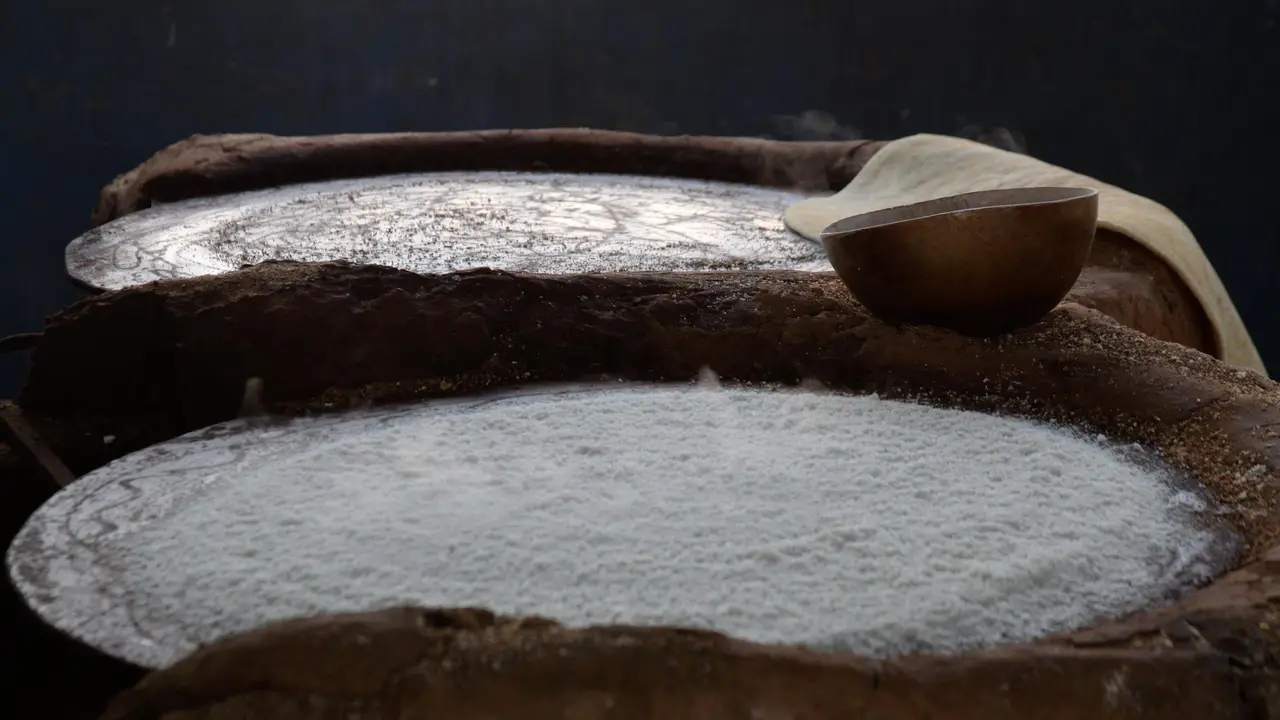
The Oldest Bread in the Americas
Long before Christopher Columbus set foot on Caribbean soil, the Taíno people had spent thousands of years transforming cassava into a flat, crispy, remarkably durable bread they called casabe. This ancient food — possibly the oldest bread in the Americas — didn’t just survive the conquest: it made it possible.
So central was cassava to the Taínos that their chief deity was named Yocahu Vagua Maorocoti, roughly translating to “Great Lord of Cassava.” In Cuba, casabe has endured five centuries after colonization, and in December 2024 it received the highest recognition possible: UNESCO declared it Intangible Cultural Heritage of Humanity.
From the Taínos to the Conquest
The Taínos crafted casabe through an ingenious process that remains virtually identical today:
- Grate the bitter cassava using a guayo — a wooden board embedded with sharp stones
- Squeeze the grated pulp in a cibucán (woven plant-fiber sleeve) to extract the toxic juice containing hydrocyanic acid
- Dry the resulting flour in the sun
- Cook on a burén — a clay or stone griddle heated over direct fire
When the Spanish arrived at Hispaniola in 1492, they discovered this “bread of the Indies” had an extraordinary advantage: it didn’t go moldy or stale. Unlike European wheat bread, casabe could last months or even years if kept dry.
This durability made casabe the perfect ration for expeditions of conquest. The conquistadors carried casabe from the Antilles to Mexico, Venezuela, and across the continent. It’s said with good reason that the conquest of the Americas was powered by casabe.
Casabe in Cuba: Camagüey, Capital of Casabe
In Cuba, the casabe tradition found its deepest roots in Camagüey, where casaberas — the women who craft casabe by hand — have kept the technique alive for generations.
The San Juan Camagüeyano Festivals
Every June, during the San Juan Camagüeyano festivals, casabe takes center stage. This celebration — dating back to the 17th century — features:
- Casabera competitions to craft the largest, most perfect rounds
- Casabe with guava paste and cream cheese as the signature festival snack
- Processions and street parties where casabe is shared among revelers
Other Production Centers
Beyond Camagüey, casabe is made in:
- Holguín — especially in rural inland communities
- Guantánamo — where the tradition blends with Haitian influences
- Baracoa — Cuba’s first Spanish settlement, where Taíno descendants preserved indigenous traditions longest
UNESCO Heritage: A Historic Recognition
In December 2024, UNESCO inscribed the “knowledge, techniques and practices associated with the production and consumption of casabe” on the Representative List of Intangible Cultural Heritage. The candidacy was jointly presented by five countries:
- 🇨🇺 Cuba
- 🇻🇪 Venezuela
- 🇭🇳 Honduras
- 🇭🇹 Haiti
- 🇩🇴 Dominican Republic
This recognition doesn’t just celebrate a food: it honors an indigenous knowledge system that includes cassava cultivation, processing techniques to remove toxins, artisanal tools (guayo, cibucán, burén), and communal preparation practices.
How Cubans Eat Casabe
Casabe is extraordinarily versatile. In Cuba, it’s enjoyed in many ways:
Classic Pairings
- With mojo criollo — casabe soaks up the garlic and sour orange sauce beautifully
- With guava paste and cream cheese — the perfect snack
- With butter and salt — the simplest countryside breakfast
- With black beans — replacing bread or rice
Modern Preparations
- Casabe with Baracoa chocolate — an irresistible combination
- Toasted casabe as chips — perfect with guacamole or salsas
- Gluten-free pizza base — a contemporary adaptation gaining popularity
Nutrition and Benefits
Casabe has an interesting nutritional profile:
| Nutrient | Per 100g |
|---|---|
| Calories | ~330 kcal |
| Carbohydrates | 82g |
| Fiber | 1.8g |
| Protein | 0.5g |
| Fat | 0.3g |
| Sodium | Very low |
Nutritional Advantages
- 100% gluten-free — ideal for celiacs
- No added fat — just cassava and water
- Low sodium — suitable for hypertension diets
- Long shelf life — no refrigeration or preservatives needed
- Highly energetic — quick source of carbohydrates
Where to Buy Casabe
In the United States
- Amazon - La Fe Casabe — Dominican brand available in multipacks
- Cuban Food Market — artisanal Caribbean casabe
- Sedano’s and Presidente Supermarkets — in Florida’s Latin sections
- Caribbean markets — in Miami, New York, and New Jersey
In Cuba
- Artisanal casaberas in Camagüey — sold at agricultural markets
- Paladares (private restaurants) offering it as a side
- Food festivals and fairs across the island
A Legacy That Transcends Time
Cuban casabe is much more than bread: it’s a direct bridge to the original peoples of the Caribbean. Every crispy round broken at a Cuban table repeats a gesture performed in exactly the same way for over five millennia.
In an era where gluten-free has become a global trend, it’s both ironic and beautiful that the Taínos solved that equation thousands of years ago. Casabe didn’t need reinventing — the world simply took a while to recognize what the Caribbean’s indigenous peoples always knew.
From the guayo to the burén, from the Taíno to your table — casabe lives on. 🌺
Frequently asked questions
What is Cuban casabe?
Is casabe gluten-free?
Where is casabe produced in Cuba?
Was casabe declared UNESCO Heritage?
How we got here
Background
The first thing we published on this topic.
Habanos: Complete Guide to the Most Prestigious Cuban Cigars
Cohiba, Montecristo, Romeo y Julieta — discover the legendary Cuban cigar brands, how to choose them, and where to buy them.
Cuban Rum: Complete Guide to Brands, History, and How to Enjoy It
Discover the world of Cuban rum: from Havana Club to Santiago de Cuba. History, legendary brands, aging types, and secrets to tasting it like an expert.
Related articles
Cuban Bread: History, Recipe, and the Palmetto Leaf Secret
Discover the history of Cuban bread from Ybor City to your table. Traditional recipe, palmetto leaf technique, and where to find it.
Natilla Cubana: The Creamy Cuban Custard That Tastes Like Home
Discover natilla cubana, the cinnamon-infused custard that defines Cuban comfort. History, step-by-step recipe, and abuela's secrets.
Cuban Chocolate and Baracoa Cacao: The Caribbean's Best-Kept Secret
Discover Baracoa cacao, the heart of Cuban chocolate. History, international brands, and the new Baracocoa venture reviving Cuba's chocolate industry.
The Cuban Sillón: History & Tradition of Cuba's Rocking Chair
Guide to the Cuban sillón, the rocking chair that defines Caribbean life. History, types, craftsmen, superstitions, and where to buy Cuban rocking chairs.
Arroz Imperial: Cuba's Showstopping Layered Rice Casserole
Discover arroz imperial, the Cuban layered rice casserole with chicken, mayo, and melted cheese. History, step-by-step recipe, and tips.
Cuban Medicinal Plants: A Guide to Cuba's Green Medicine Tradition
Discover Cuba's most popular medicinal plants, from aloe vera to lemongrass. History, uses, and traditions of Cuban green medicine.