Mojo Criollo: The Sauce That Defines Cuban Cuisine
Discover Cuban mojo criollo: origins, traditional recipe with sour orange, uses for lechón and yuca. Where to buy authentic mojo sauce.
4 min read
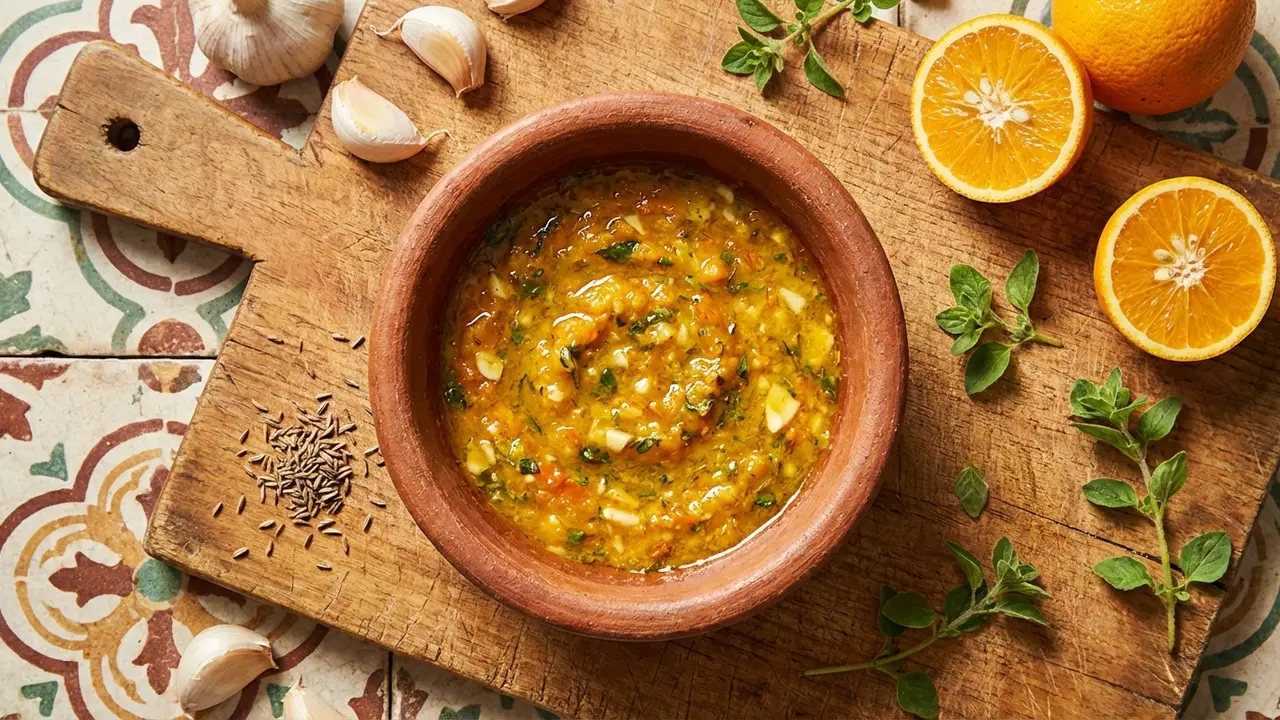
Illustration: Aroma de Cuba (AI)
If there’s one flavor that defines Cuban cuisine, it’s mojo criollo. This aromatic sauce of garlic, sour orange, and spices is the soul of iconic dishes like roast pork (lechón) and yuca con mojo. Without mojo, there simply is no Cuban Christmas Eve.
Origins of Mojo Criollo
The word mojo comes from the Portuguese molho (sauce). It arrived in Cuba through the Canary Islands, where Canarian mojos—green and red—accompany potatoes and meats. In Cuba, mojo transformed with local ingredients: sour orange (Citrus aurantium), abundant on the island, gave it its unique character.
African slaves and Cuban peasants perfected the technique of marinating meats with this mixture, creating a flavor that today is synonymous with cubanía (Cuban identity).
Traditional Ingredients
The Mojo Base
| Ingredient | Amount | Function |
|---|---|---|
| Fresh garlic | 10-12 cloves | Main flavor |
| Sour orange | 1 cup juice | Characteristic acidity |
| Olive oil | ½ cup | Flavor vehicle |
| Ground cumin | 1 teaspoon | Earthy depth |
| Dried oregano | 1 teaspoon | Herbal aroma |
| Salt | To taste | Enhances flavors |
Sour Orange: The Secret Ingredient
Sour orange (Citrus aurantium) is the ingredient that makes Cuban mojo unique. Its juice combines the acidity of lemon with floral notes of orange, creating a profile impossible to replicate exactly.
If you can’t find sour orange:
- Mix ¾ cup sweet orange juice + ¼ cup lime juice
- Or use ½ cup grapefruit juice + ½ cup lime juice
- Goya sells bottled sour orange juice in Latin supermarkets
Traditional Mojo Criollo Recipe
Ingredients
- 12 large garlic cloves
- 1 cup sour orange juice
- ½ cup extra virgin olive oil
- 1 teaspoon ground cumin
- 1 teaspoon dried oregano
- 1 teaspoon salt
- ½ teaspoon black pepper
Preparation
-
Crush the garlic in a pilón (mortar) with salt until it forms a paste. The mortar releases more oils than a processor.
-
Heat the oil over medium heat in a pan. It shouldn’t smoke.
-
Sauté the garlic paste for 30 seconds, stirring constantly. The garlic should lightly brown, never burn.
-
Remove from heat and immediately add the sour orange juice. Careful: it will splatter.
-
Add the spices (cumin, oregano, pepper) and mix well.
-
Let it rest at least 30 minutes before using. Mojo improves with time.
Cuban grandmother’s tip: The mojo should “sing” when the juice hits the hot oil. That sound means it’s at its perfect point.
Uses for Mojo Criollo
Roast Pork (Lechón Asado)
The most emblematic use. Mojo is injected into the pork and marinated for 24-48 hours before roasting. During cooking, it’s constantly basted with more mojo.
Yuca con Mojo
Boiled cassava is served covered in hot mojo. The yuca’s starch absorbs the flavors creating a perfect accompaniment. It’s the mandatory side dish in any traditional Cuban meal.
Grilled Chicken
Marinate chicken breasts for 2-4 hours before grilling. The result is juicy and full of flavor.
Tostones and Maduros
A drizzle of mojo over freshly fried tostones elevates this snack to another level.
Where to Buy Mojo Criollo
Commercial Brands
| Brand | Style | Availability |
|---|---|---|
| Goya Mojo Criollo | Mild, versatile | Supermarkets, Amazon |
| Badia Mojo | Intense, more garlic | Latin stores |
| La Lechonera | Traditional thick | Amazon, Florida |
| Iberia Mojo | Homestyle | Hispanic supermarkets |
In Miami and Cuban Communities
The best mojos are found in Cuban butcher shops that prepare it fresh. Look in:
- Calle 8 (Little Havana): Butcher shops with mojo of the day
- Hialeah: Family stores with traditional recipes
- Westchester: Latin supermarkets with Cuban section
Regional Variations
Mojo de Ajo (garlic only)
Simplified version without citrus, popular for dipping Cuban bread.
Cilantro Mojo
Incorporates fresh cilantro, influenced by Mexican Yucatecan cuisine.
Mojo Isleño
From the Canary Islands, uses vinegar instead of citrus and adds paprika.
Storage
- Refrigerated: Lasts 2-3 weeks in an airtight jar
- Frozen: Up to 3 months in ice cube trays for portions
- Room temperature: Only a few hours; raw garlic is perishable
Mojo criollo isn’t just a sauce: it’s liquid memory. Each spoonful contains centuries of tradition, the fusion of cultures that created Cuban cuisine. Whether over Christmas Eve lechón or simple boiled yuca, mojo transforms the ordinary into extraordinary.
Do you have your own family mojo recipe? Cuban cuisine lives in those variations passed down from generation to generation.
Frequently asked questions
What is Cuban mojo criollo?
Can I substitute sour orange?
How long should lechón marinate in mojo?
Where can I buy authentic mojo criollo?
How we got here
Background
The first thing we published on this topic.
Cuban Coffee Harvest Promises to Be the Best in Decades
The mountains of the Sierra Maestra produce an exceptional harvest thanks to new agricultural techniques.
Ropa Vieja: The Soul of Cuban Cuisine on a Plate
Discover the history, secrets, and traditional recipe of ropa vieja, Cuba's national dish that has conquered palates around the world.
Related articles

The Cuban Guayabera: History, Styles and Where to Buy One
Discover the history of the Cuban guayabera, the Caribbean's most elegant shirt. Styles, fabrics, and stores to find yours.
Cuban Daiquiri: History of the Cocktail That Conquered the World
Discover the origins of the daiquiri in Santiago de Cuba, its perfection at Havana's El Floridita, and the original recipe of Cuba's most famous cocktail.
Cuban Lechón Asado: The King of Feasts and Family Traditions
Discover the history, techniques, and secrets of Cuban roast pork, the essential dish for Christmas Eve and family celebrations.

Cuban Sodas: Tropicola, Iron Beer and Bottled Nostalgia
Discover the traditional Cuban soft drinks that shaped generations. History, flavors, and where to find them today.
Cuban Ajiaco: The Stew That Tells Cuba's Story
Discover ajiaco cubano, Cuba's symbol of cultural fusion. History, traditional recipe, and secrets of this unique stew.
Ropa Vieja: Cuba's National Dish with Centuries of History
Discover the history and recipe of Cuban ropa vieja, the national dish of shredded beef in sofrito that conquered the Caribbean.