Cuban Ajiaco: The Stew That Tells Cuba's Story
Discover ajiaco cubano, Cuba's symbol of cultural fusion. History, traditional recipe, and secrets of this unique stew.
4 min read
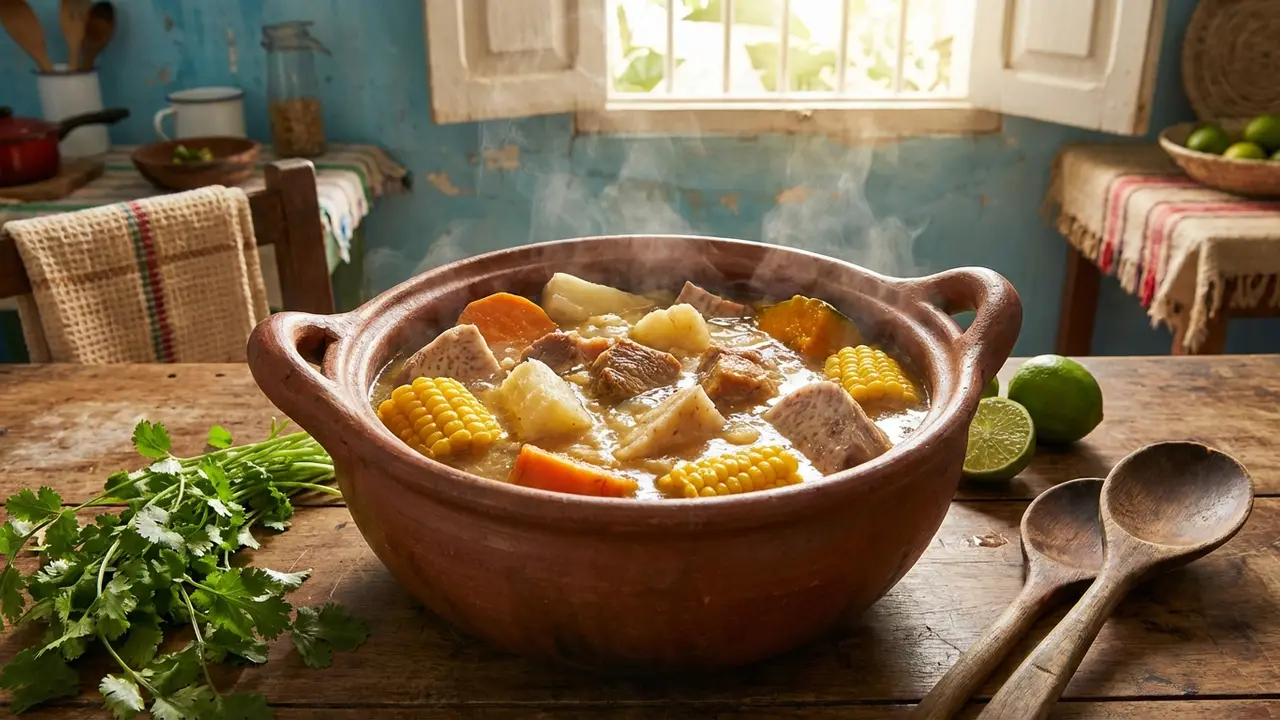
Illustration: Aroma de Cuba (AI)
Cuban Ajiaco: The Stew That Tells Cuba’s Story
In Cuban cuisine, one dish transcends mere food to become a national metaphor: the ajiaco. This thick stew, brimming with tropical root vegetables and meats, was called by anthropologist Fernando Ortiz the perfect symbol of Cuban identity—a broth where cultures blend, just as they did on the island itself, forging a nation.
Ajiaco as National Symbol
Ortiz wrote in 1940: “Cuba is an ajiaco.” This wasn’t merely culinary poetry. Ajiaco contains Taíno ingredients (yuca, corn, boniato), Spanish elements (pork, oil), African contributions (yam, slow-cooking techniques), and Chinese additions (garden vegetables). Every spoonful tells five centuries of encounters, fusions, and transformations.
Unlike ropa vieja, which has clear Canary Islands origins, ajiaco defies classification. It belongs to no mother culture: it was born here, from the mixing itself.
Traditional Ajiaco Ingredients
The Viandas (heart of the dish)
- Yuca (cassava): 500g, in large chunks
- White malanga: 300g
- Yellow malanga (isleña): 300g
- Boniato: 400g (Cuban sweet potato)
- Ñame (yam): 300g
- Calabaza (Cuban pumpkin): 400g
- Semi-ripe plantain: 2 units
- Tender corn: 3 ears, cut into wheels
The Meats
- Tasajo (salt-dried beef): 300g
- Pork belly: 500g
- Pork ribs: 400g
The Sofrito
- Large onion: 1
- Garlic: 6 cloves
- Ají cachucha peppers: 4-5 (or bell pepper if unavailable)
- Tomato: 2 medium
- Cumin: 1 teaspoon
- Oregano: 1 teaspoon
Other
- Cuban lime: for serving
- Salt to taste
- Water or broth: 4 liters
Step-by-Step Preparation
The Day Before
- Soak the tasajo in cold water for 12-24 hours, changing the water 2-3 times to remove excess salt.
Cooking Day
Step 1: The Meats (30 minutes)
- In a large pot, place the desalted tasajo and pork cuts.
- Cover with 4 liters of cold water and bring to a boil.
- Skim off any foam that rises to the surface.
- Cook over medium heat for 45 minutes.
Step 2: The Sofrito (15 minutes)
- In a separate pan, sauté the chopped onion in oil.
- Add the crushed garlic and ají cachucha.
- Incorporate the grated tomato, cumin, and oregano.
- Cook until the tomato releases its juices.
- Pour the sofrito into the pot with the meats.
Step 3: Viandas in Stages (1.5-2 hours)
This is the secret to great ajiaco: each root vegetable is added according to its cooking time.
- First (need more time): yam and malanga. Cook 30 minutes.
- Second: yuca and boniato. Cook 25 more minutes.
- Third: plantain and calabaza. Cook 20 minutes.
- Finally: tender corn. Cook 15 minutes.
Step 4: Final Touch
- Adjust salt (careful—tasajo adds saltiness).
- Some viandas will have broken down, naturally thickening the broth.
- Let rest 15 minutes before serving.
How to Serve Ajiaco
Ajiaco is served in deep bowls, with plenty of broth and a variety of viandas. The table should have:
- Cuban limes cut in quarters
- Casabe (cassava flatbread) or Cuban bread
- A bottle of hot sauce for those who want it
Some families add a squeeze of lime directly to their bowl. Others prefer the pure flavor of the broth.
Regional Variations
Havana-Style Ajiaco
Lighter, emphasizing refined viandas (malanga, boniato) with less meat.
Eastern Cuban Ajiaco
From Santiago and eastern Cuba, heartier, with more pork and sometimes green plantain alongside the semi-ripe.
Country-Style Ajiaco
From the Cuban countryside, it uses whatever the farm has: might include yard-raised chicken, local aromatic herbs, yuca freshly dug from the earth.
Ajiaco in Cuban Literature
Ajiaco appears in the works of Nicolás Guillén, in Ortiz’s essays, in Afro-Cuban poetry. It’s a dish that Cuban writers have used repeatedly to speak of identity, mixture, and belonging.
Guillén wrote about “the kitchen where the Creole ajiaco bubbles” as an image of Cuba in constant ebullition, always transforming.
Where to Try Ajiaco in Cuba
- La Guarida (Havana): refined version of the classic
- Paladares in Centro Habana: more homestyle and abundant versions
- Casas particulares in the countryside: the most authentic ajiaco
Ajiaco in the Diaspora
In Miami, Tampa, and other cities with Cuban communities, ajiaco keeps the island’s flavor alive. Root vegetables are available at Latin markets, though traditional tasajo is harder to find. Many use corned beef or Latin American dried meat as substitutes.
Finding tropical viandas in the US has become easier with specialty markets like Sedano’s and online suppliers.
Ajiaco isn’t just a stew: it’s an act of faith in mixing as virtue. Every pot is a small Cuba, where diversity becomes unity without losing its essence.
Have you made ajiaco at home? Tell us about your family’s version in the comments.
You might also like:
Frequently asked questions
What makes Cuban ajiaco different from other Latin American versions?
Why is ajiaco considered Cuba's most symbolic dish?
How long does it take to make traditional Cuban ajiaco?
Can ajiaco be made without pork?
How we got here
Background
The first thing we published on this topic.
Cuban Coffee Harvest Promises to Be the Best in Decades
The mountains of the Sierra Maestra produce an exceptional harvest thanks to new agricultural techniques.
Ropa Vieja: The Soul of Cuban Cuisine on a Plate
Discover the history, secrets, and traditional recipe of ropa vieja, Cuba's national dish that has conquered palates around the world.
Related articles
Boniatillo: Cuba's Beloved Sweet Potato Dessert That Warms the Soul
Traditional Cuban boniatillo recipe - a creamy sweet potato pudding with cinnamon. History, step-by-step guide, and grandmother's secrets.
Cuban Daiquiri: History of the Cocktail That Conquered the World
Discover the origins of the daiquiri in Santiago de Cuba, its perfection at Havana's El Floridita, and the original recipe of Cuba's most famous cocktail.

Cuban Sodas: Tropicola, Iron Beer and Bottled Nostalgia
Discover the traditional Cuban soft drinks that shaped generations. History, flavors, and where to find them today.
Prú Oriental: Cuba's Most Refreshing Fermented Drink
Discover Prú Oriental, a traditional Cuban fermented beverage made with roots and herbs. History, recipe and ingredients of this Eastern Cuban treasure.
Cuban Mojito: History, Recipe and Secrets of the Iconic Cocktail
Discover the history of the mojito, Cuba's most famous cocktail. Authentic recipe, origins, and where to try it.
Cuban Tostones: The Art of Twice-Fried Green Plantains
Learn to make perfect tostones, the crispy side dish that defines the Cuban table. History, technique, and secrets.