Arroz Imperial: Cuba's Showstopping Layered Rice Casserole
Discover arroz imperial, the Cuban layered rice casserole with chicken, mayo, and melted cheese. History, step-by-step recipe, and tips.
5 min read
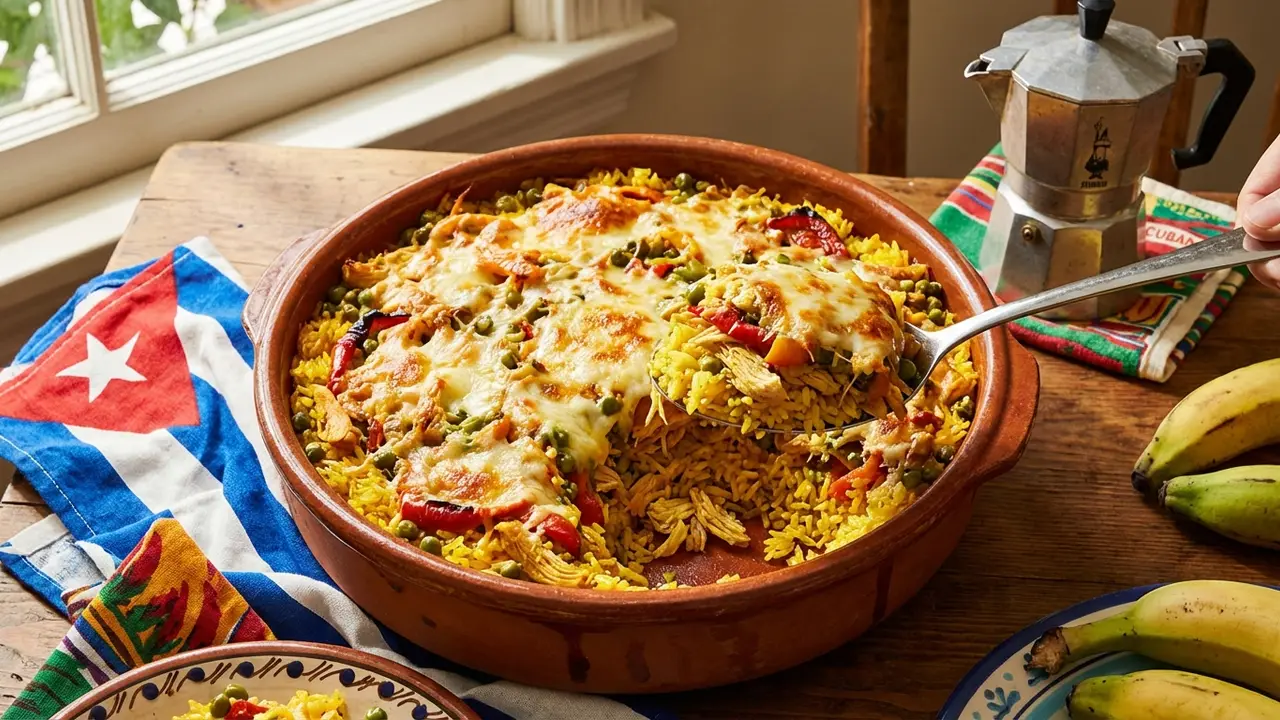
Illustration: Aroma de Cuba (AI)
If arroz con pollo is the Sunday staple of Cuban cooking, arroz imperial is its dressed-up cousin—the one that shows up when there’s something to celebrate. Baptisms, weddings, quinceañeras, Nochebuena—wherever there’s a big table and hungry guests, this golden casserole holds court.
What is arroz imperial?
Picture a lasagna, but instead of pasta, you have generous layers of yellow rice tinted with bijol (annatto). Between each layer: shredded chicken braised with tomatoes and peppers, a creamy spread of mayonnaise, and a shower of grated cheese that bakes into an irresistible golden crust.
It’s hearty, festive, and deeply comforting. This isn’t everyday food—it’s celebration food.
A Mysterious Origin: Matanzas or Miami?
The history of arroz imperial is as hazy as the steam that rises when you pull it from the oven. One popular theory—though without solid documentation—places it in Matanzas, Cuba, where a woman named María Arroz supposedly first served it at her restaurant in the early 1900s.
Other culinary researchers argue that arroz imperial is actually a creation of the Cuban diaspora in Miami: a casserole version of arroz con pollo, adapted to American ovens and the need to feed crowds at church potlucks and community gatherings.
Whatever its birthplace, arroz imperial today belongs to both Cuba and its diaspora. You’ll find it at paladares in Havana and ventanitas on Calle Ocho alike.
The Key Ingredients
Yellow rice (arroz amarillo)
The foundation is long-grain rice cooked in chicken broth with bijol or Cuban saffron, which gives it that deep golden color. Bijol comes from the achiote tree (Bixa orellana), native to the Americas and used by Indigenous peoples long before colonization.
Shredded chicken
The chicken is boiled whole or in pieces, shredded, then simmered in a sofrito of onion, garlic, peppers, tomato, and dry white wine. It’s essentially the same technique used in fricasé de pollo, minus the potatoes, with the chicken pulled apart.
Mayonnaise
Yes, mayonnaise. It’s the ingredient that sparks the most debate. But trust me: that layer of mayo between the rice and chicken is what makes this dish imperial. It adds creaminess and moisture, preventing the rice from drying out in the oven.
Cheese
Grated Gouda is the classic choice. Some use mozzarella or a blend. The key is that it melts beautifully and forms that golden crust that is the dish’s signature.
Recipe: Cuban Arroz Imperial
Prep time: 45 minutes
Baking time: 25-30 minutes
Serves: 8-10
Ingredients
For the yellow rice:
- 3 cups long-grain rice
- 5 cups chicken broth
- 2 tablespoons olive oil
- 1 teaspoon bijol (or ½ teaspoon turmeric)
- Salt to taste
For the chicken:
- 2 lbs chicken breast
- 1 large onion, finely diced
- 4 garlic cloves, minced
- 1 green bell pepper, diced
- 1 red bell pepper, diced
- 1 can crushed tomatoes (14 oz)
- ¼ cup dry white wine (vino seco)
- 2 tablespoons olive oil
- Salt, pepper, and cumin to taste
For assembly:
- 1 cup mayonnaise
- 3 cups grated Gouda cheese
- Stuffed olives (optional, for garnish)
Instructions
-
The rice: Heat oil in a heavy pot. Add rice and bijol, stir for 2 minutes. Pour in hot broth and salt. Cover and cook on low heat for 20-22 minutes until dry and fluffy.
-
The chicken: Boil chicken breasts in salted water for 25 minutes. Shred. In a skillet, sauté onion, garlic, and peppers in oil. Add tomatoes, wine, and spices. Stir in shredded chicken and cook 10 minutes.
-
Assembly: Preheat oven to 350°F (180°C). In a greased deep baking dish, spread half the rice as the base. Cover with half the mayo, all the chicken, and half the cheese. Add the second layer of rice, remaining mayo, and finish with cheese.
-
Bake: Cook 25-30 minutes until the cheese is golden and bubbling. Let rest 10 minutes before slicing.
Abuela’s tip: For the de luxe version, add a layer of fried sweet plantains between the chicken and the second rice layer. You’ll thank me later.
Arroz Imperial at the Cuban Table Today
In Cuba, where finding Gouda cheese can be a logistical challenge, families improvise with cream cheese or even artisanal goat cheese. Mayo is sometimes replaced with a mixture of evaporated milk and egg. The essence endures: layers, flavor, and generosity.
In Miami, arroz imperial is mandatory at Versailles Restaurant, in the cafeterias of Hialeah, and at practically every Cuban celebration worth attending. It has become a symbol of culinary identity as powerful as the Cuban sandwich itself.
Perfect Pairings
Arroz imperial calls for a fresh avocado salad with tomato, onion, and lime. To drink, an ice-cold beer or a glass of guarapo. And for dessert, a classic Cuban flan to end on the sweetest note.
Arroz imperial isn’t just a dish—it’s a love letter made of food. It’s the grandmother who cooks for twenty even when only ten are coming. It’s the table that always has room for one more. It’s Cuba, generous and festive, in every golden layer.
Frequently asked questions
What is the difference between arroz imperial and arroz con pollo?
Can you make arroz imperial ahead of time?
What cheese is used in Cuban arroz imperial?
Is arroz imperial Cuban or Cuban-American?
How we got here
Background
The first thing we published on this topic.
Cuban Coffee Harvest Promises to Be the Best in Decades
The mountains of the Sierra Maestra produce an exceptional harvest thanks to new agricultural techniques.
Ropa Vieja: The Soul of Cuban Cuisine on a Plate
Discover the history, secrets, and traditional recipe of ropa vieja, Cuba's national dish that has conquered palates around the world.
Related articles
Cuban Medicinal Plants: A Guide to Cuba's Green Medicine Tradition
Discover Cuba's most popular medicinal plants, from aloe vera to lemongrass. History, uses, and traditions of Cuban green medicine.
Cuban Flan: The Caramel Custard That Steals the Show at Every Table
Traditional Cuban flan recipe with condensed milk and caramel. History, tips, and step-by-step guide to this iconic Cuban dessert.

The Cuban Guayabera: History, Style & Tropical Elegance
Discover the Cuban guayabera, the Caribbean's most iconic shirt. Its history from Sancti Spíritus, features, how to choose one, and where to buy.
Cuban Casabe: The Ancient Taíno Cassava Bread, UNESCO Heritage
Complete guide to Cuban casabe, the cassava flatbread inherited from the Taínos. History, preparation, UNESCO 2024 recognition, and where to buy.
Cuban Bread: History, Recipe, and the Palmetto Leaf Secret
Discover the history of Cuban bread from Ybor City to your table. Traditional recipe, palmetto leaf technique, and where to find it.
Natilla Cubana: The Creamy Cuban Custard That Tastes Like Home
Discover natilla cubana, the cinnamon-infused custard that defines Cuban comfort. History, step-by-step recipe, and abuela's secrets.