Cuban Bread: History, Recipe, and the Palmetto Leaf Secret
Discover the history of Cuban bread from Ybor City to your table. Traditional recipe, palmetto leaf technique, and where to find it.
6 min read
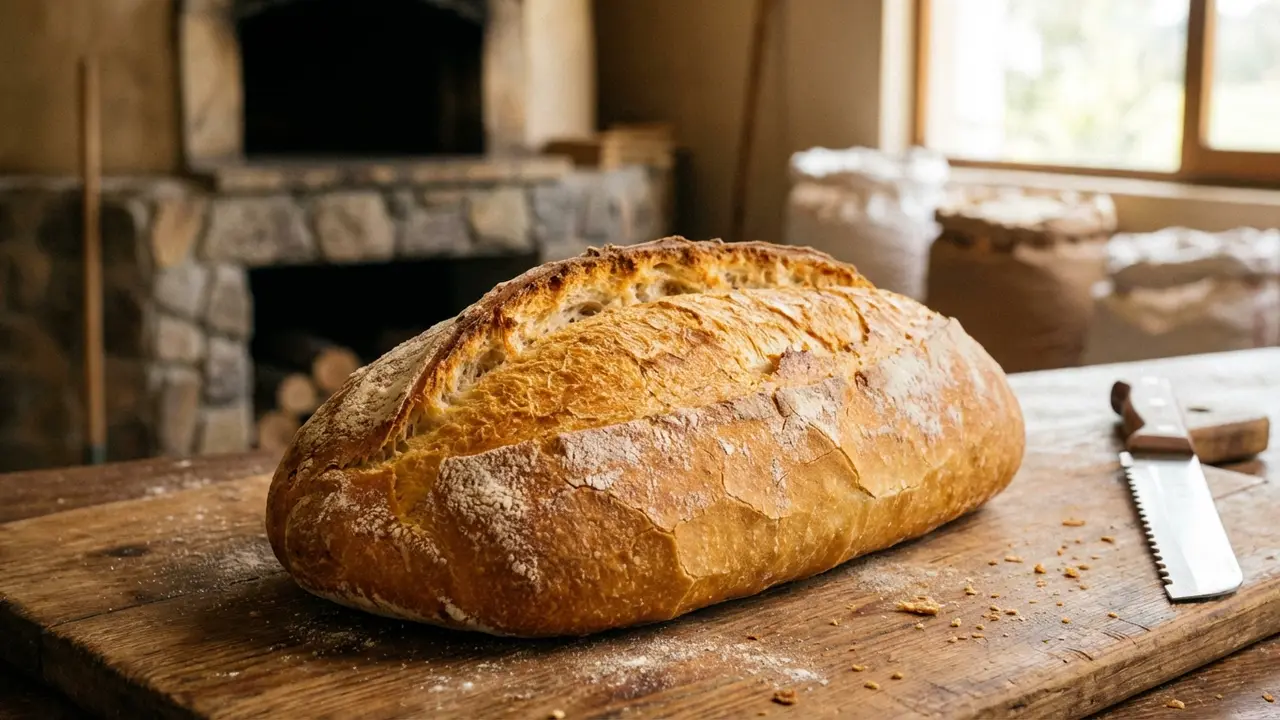
Illustration: Aroma de Cuba (AI)
Cuban Bread: History, Recipe, and the Palmetto Leaf Secret
There are breads that nourish and breads that tell stories. Cuban bread does both. With its golden crust that shatters when you break it and a crumb so soft it feels like cotton, this humble bread has been the inseparable companion of Cuban coffee, the star of the Cuban sandwich, and the silent witness to over a century of Cuban-American history.
But what truly makes it unique isn’t just its flavor — it’s a palmetto leaf placed on the dough before baking, a detail that seems minor but defines its entire identity.
From Colonial Ovens to Ybor City’s Cigar Workers
The history of Cuban bread begins in the colonial bakeries of Havana, where bakers crafted a long, crusty loaf influenced by Spanish and French traditions. But it was in Tampa, Florida, where this bread found its true fame.
In the late 19th century, Ybor City was a multicultural melting pot of Cuban, Spanish, and Italian cigar workers. The tobacco factories needed to feed thousands of workers, and Cuban bread became the daily sustenance of the entire community.
Juan Moré and La Segunda Central Bakery
In 1915, a Spanish soldier named Juan Moré — born in Catalonia and smitten with Cuban bread during the Spanish-American War — co-founded three cooperative bakeries with fellow bakers and cigar makers: La Primera, La Segunda, and La Tercera. When the other two folded, Moré purchased La Segunda Central Bakery, which still stands today as the oldest Cuban bakery in the United States.
Four generations later, La Segunda produces over 18,000 loaves daily and ships Cuban bread to restaurants and markets across the country. And yes, they still use palmetto leaves.
The Palmetto Leaf Secret
What separates real Cuban bread from any baguette or Italian loaf is a technique as simple as it is ingenious: before the dough goes into the oven, bakers place a palmetto leaf lengthwise along each loaf.
What does the leaf do? Three things:
- Retains moisture during baking, creating that thin, crispy crust (not thick like a baguette)
- Creates the characteristic split — that line running from end to end
- Allows the dough to expand uniformly, producing an airy, light crumb
As the oven’s heat dries the leaf, it separates naturally, leaving its signature on every loaf. It’s poetic baking.
However, this tradition is at risk. Modern health regulations and the difficulty of sourcing fresh leaves threaten a practice that has defined Tampa’s Cuban bread for over a century.
Ingredients: The Beauty of Simplicity
Cuban bread is a bread of humble ingredients — and therein lies its greatness:
| Ingredient | Amount | Purpose |
|---|---|---|
| Bread flour | 500 g (4 cups) | Structure and gluten |
| Warm water | 300 ml (1¼ cups) | Hydration |
| Lard | 30 g (2 tbsp) | Softness and flavor |
| Sugar | 15 g (1 tbsp) | Food for yeast |
| Salt | 10 g (2 tsp) | Flavor |
| Active dry yeast | 7 g (1 packet) | Fermentation |
Notice what’s not there: no eggs, no milk, no olive oil, no butter. Lard is the ingredient that separates Cuban bread from French or Italian bread, giving it that characteristic soft texture.
Traditional Recipe Step by Step
1. Prepare the Dough
Dissolve the yeast and sugar in warm water. Let rest 5 minutes until bubbly. In a large bowl, mix flour and salt. Add the lard and yeast water. Knead 10-12 minutes until you get an elastic, smooth dough.
2. First Rise
Cover with a damp cloth and let rest 1 hour in a warm place until doubled in size.
3. Shape the Loaves
Gently deflate the dough. Divide into 2-3 portions and shape into long loaves about 14-16 inches long. The shape is oval, wider in the center and tapered at the ends.
4. The Palmetto Leaf (or Alternative)
If you can get fresh palm leaves, place one lengthwise along each loaf. If not, make a half-inch deep lengthwise slash with a sharp blade.
5. Second Rise
Let the loaves rest on a greased baking sheet for 30-40 more minutes, covered with a cloth.
6. Bake
- Preheat oven to 200°C (400°F)
- Place a pan of water on the bottom rack (steam = crispy crust)
- Bake 25-30 minutes until golden
- The bread should sound hollow when you tap the bottom
7. Cool
Let cool on a wire rack for at least 15 minutes. The crust will keep crackling as it cools — that’s the sign of good Cuban bread.
Cuban Bread vs. Other Breads: Key Differences
| Feature | Cuban Bread | French Baguette | Italian Bread |
|---|---|---|---|
| Fat | Lard | None | Olive oil |
| Crust | Thin, crispy | Thick, crispy | Variable |
| Crumb | Soft, airy | Irregular, holey | Dense |
| Shape | Oval with split | Long and thin | Round or oblong |
| Eggs/milk | No | No | Sometimes |
Cuban Bread on the Table
Cuban food doesn’t exist without Cuban bread. It’s the perfect vehicle for:
- The Cuban sandwich — ham, roast pork, Swiss cheese, pickles, and mustard, pressed on a plancha
- Cuban toast — bread flattened and griddled with butter, the obligatory companion to morning café con leche
- Pan con bistec — palomilla steak with onions in Cuban bread
- Pan con lechón — shredded roast pork with mojo criollo, simple and perfect
- Bread for dipping — to soak up the broth from chicken fricassee or red bean stew
Where to Get Authentic Cuban Bread
In Tampa
- La Segunda Central Bakery — Ybor City, since 1915. The cathedral of Cuban bread.
In Miami
- Bakeries on Calle Ocho — Multiple options in the heart of Little Havana
- Karla Bakery — Locations throughout Miami-Dade
Nationwide Shipping (USA)
- La Segunda on Goldbelly — They ship frozen Cuban bread nationwide
More Than Just Bread
Cuban bread is a baked cultural document. In its crispy crust lives the history of Ybor City’s cigar workers, the creativity of bakers who used palmetto leaves when they didn’t have blades, and the stubbornness of a community that never stopped doing things their own way.
Every loaf that comes out of the oven is a reminder: the best traditions are the simplest ones.
Have you tried authentic Cuban bread? Do you bake it at home or buy it from your favorite bakery? Cuban bread is best fresh, so if you have the chance to bake it yourself, don’t think twice.
Frequently asked questions
What makes Cuban bread different from other breads?
Can you make Cuban bread without a palmetto leaf?
Why is La Segunda Bakery so famous?
Does Cuban bread contain eggs or milk?
How we got here
Background
The first thing we published on this topic.
Cuban Coffee Harvest Promises to Be the Best in Decades
The mountains of the Sierra Maestra produce an exceptional harvest thanks to new agricultural techniques.
Ropa Vieja: The Soul of Cuban Cuisine on a Plate
Discover the history, secrets, and traditional recipe of ropa vieja, Cuba's national dish that has conquered palates around the world.
Related articles
Natilla Cubana: The Creamy Cuban Custard That Tastes Like Home
Discover natilla cubana, the cinnamon-infused custard that defines Cuban comfort. History, step-by-step recipe, and abuela's secrets.
Cuban Chocolate and Baracoa Cacao: The Caribbean's Best-Kept Secret
Discover Baracoa cacao, the heart of Cuban chocolate. History, international brands, and the new Baracocoa venture reviving Cuba's chocolate industry.
Cuban Casabe: The Ancient Taíno Cassava Bread, UNESCO Heritage
Complete guide to Cuban casabe, the cassava flatbread inherited from the Taínos. History, preparation, UNESCO 2024 recognition, and where to buy.
The Cuban Sillón: History & Tradition of Cuba's Rocking Chair
Guide to the Cuban sillón, the rocking chair that defines Caribbean life. History, types, craftsmen, superstitions, and where to buy Cuban rocking chairs.
Arroz Imperial: Cuba's Showstopping Layered Rice Casserole
Discover arroz imperial, the Cuban layered rice casserole with chicken, mayo, and melted cheese. History, step-by-step recipe, and tips.
Cuban Medicinal Plants: A Guide to Cuba's Green Medicine Tradition
Discover Cuba's most popular medicinal plants, from aloe vera to lemongrass. History, uses, and traditions of Cuban green medicine.